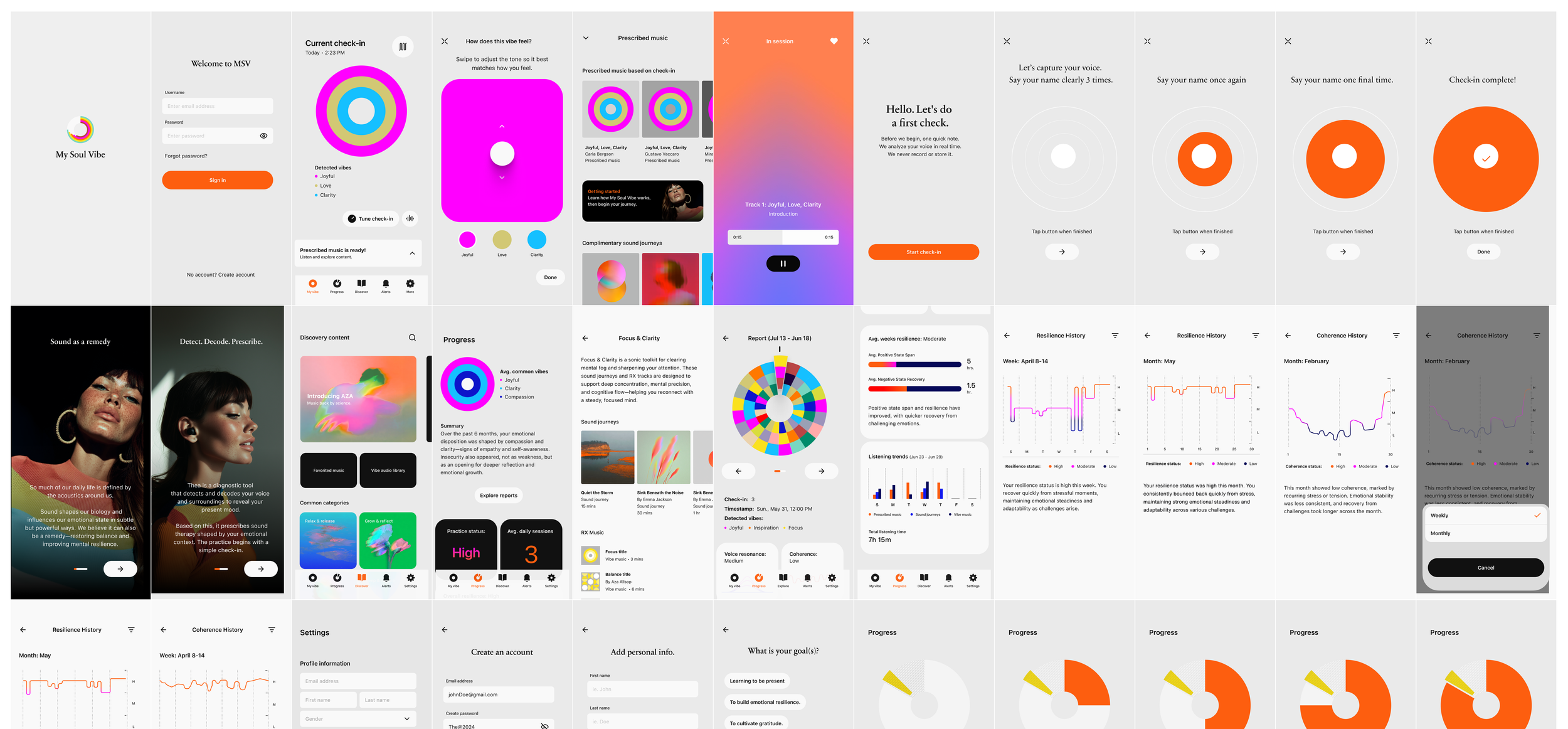
How do you design an interface for something people can't actually see? That question shaped nearly every design decision we made while building the MSV (My Soul Vibe) app.
Role: Founding Product Designer
Client: Lightbrite Inc.
Type: 0→1 Product Design, Interaction Design, UX, SwiftUI Dev.
Year: Oct 2023 - April 2026
Tools: Figma, Xcode, Github Desktop, Claude
Introduction
MSV (My Soul Vibe) explored a simple question: how can we help people better understand and develop their emotional intelligence? At the time, most wellness experiences focused on delivering content or tracking engagement, but few attempted to measure emotional state and provide personalized guidance.
MSV used voice analysis to identify emotional patterns and recommend personalized sound therapy in response. As the Founding Product Designer, I led the product from early concept to a shipped iOS MVP, defining the product experience, interaction model, design system, and ultimately building the production iOS interface in SwiftUI alongside our lead engineer.
Project Note:
This case study reflects the product and design work completed during my time at Lightbrite (October 2023–April 2026). Since my departure, the product has continued to evolve. The designs, workflows, and implementation documented here represent the work I led and delivered as Founding Product Designer.
Parent and Sub-Brand Architecture
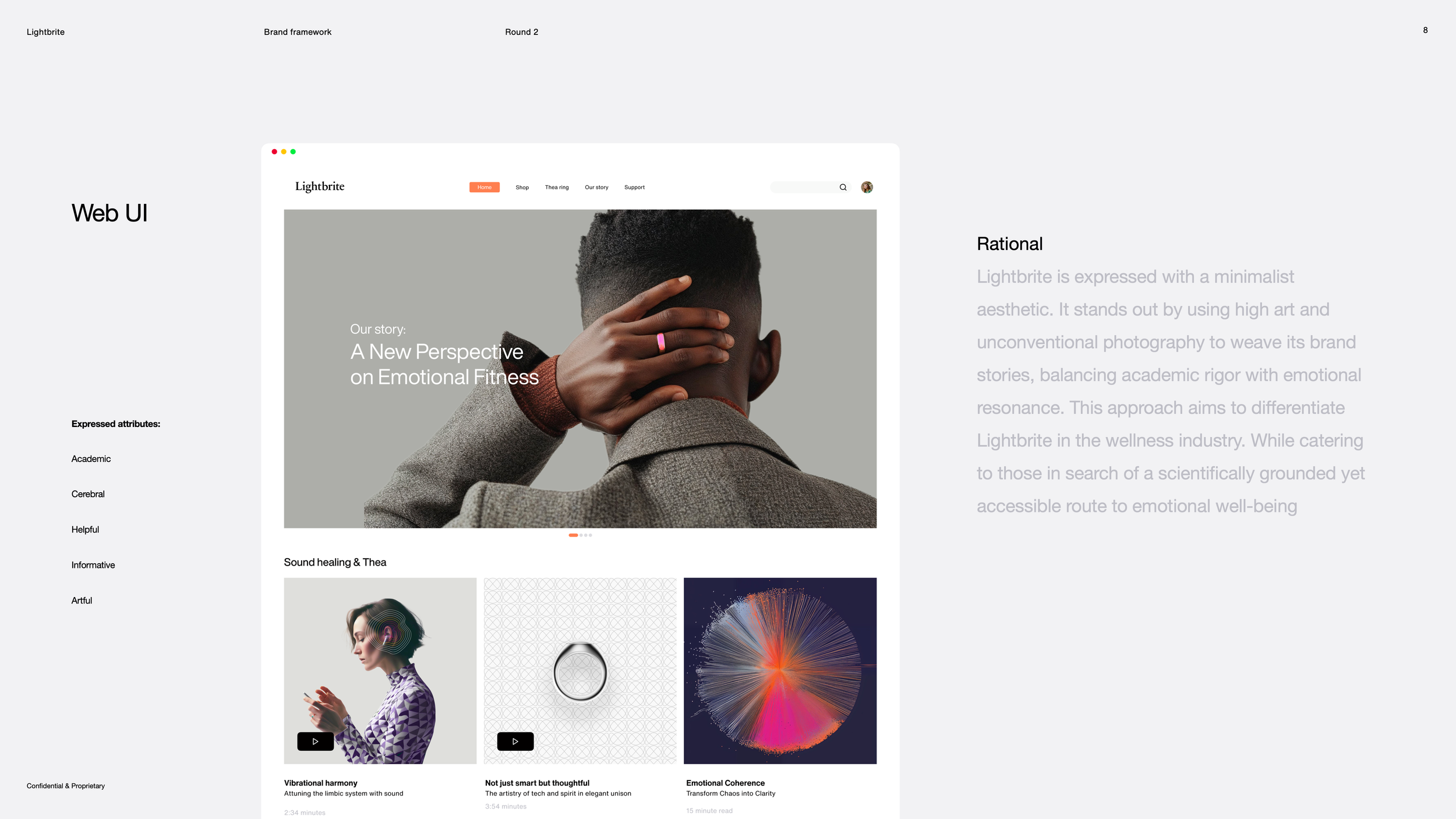
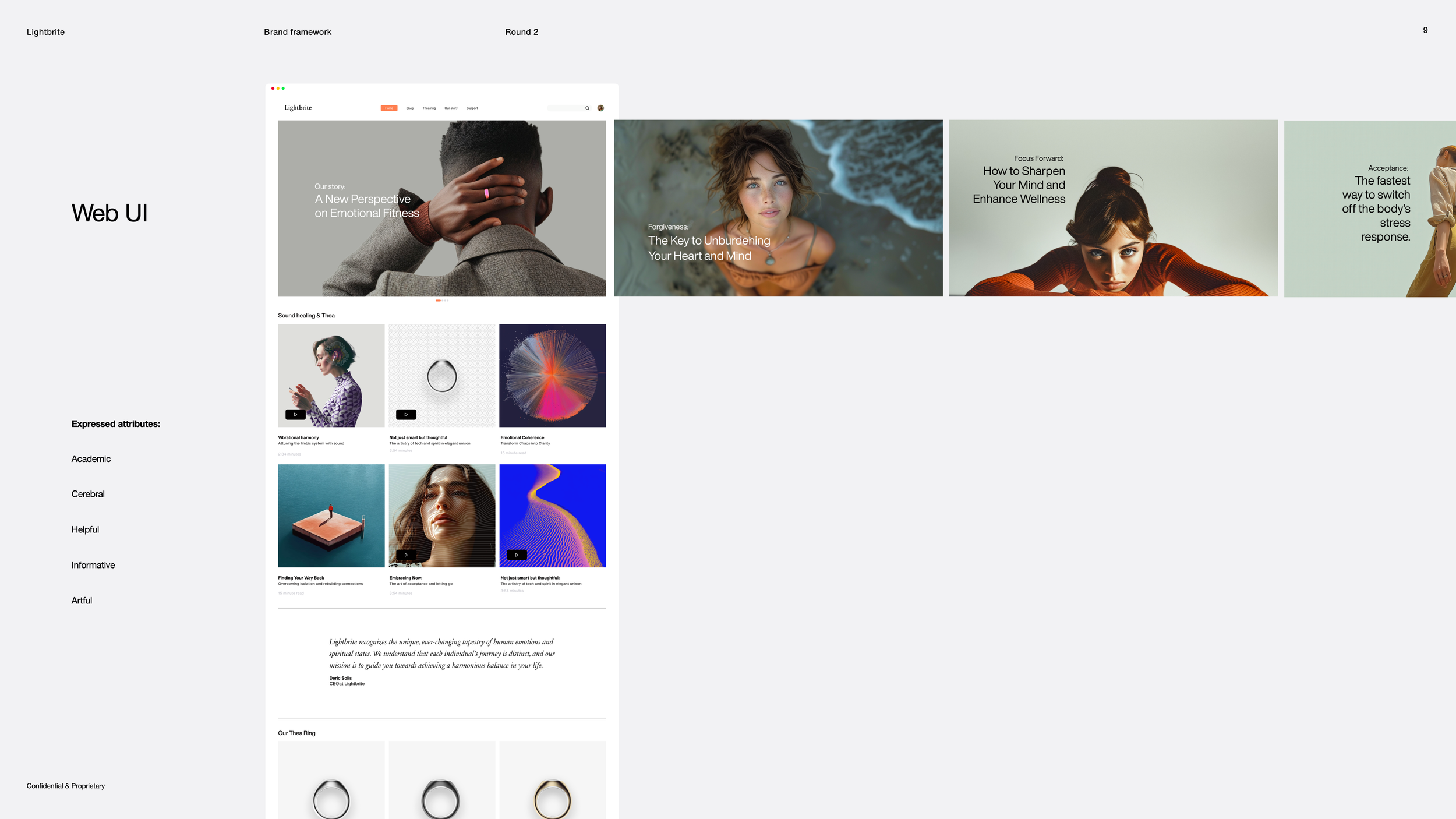
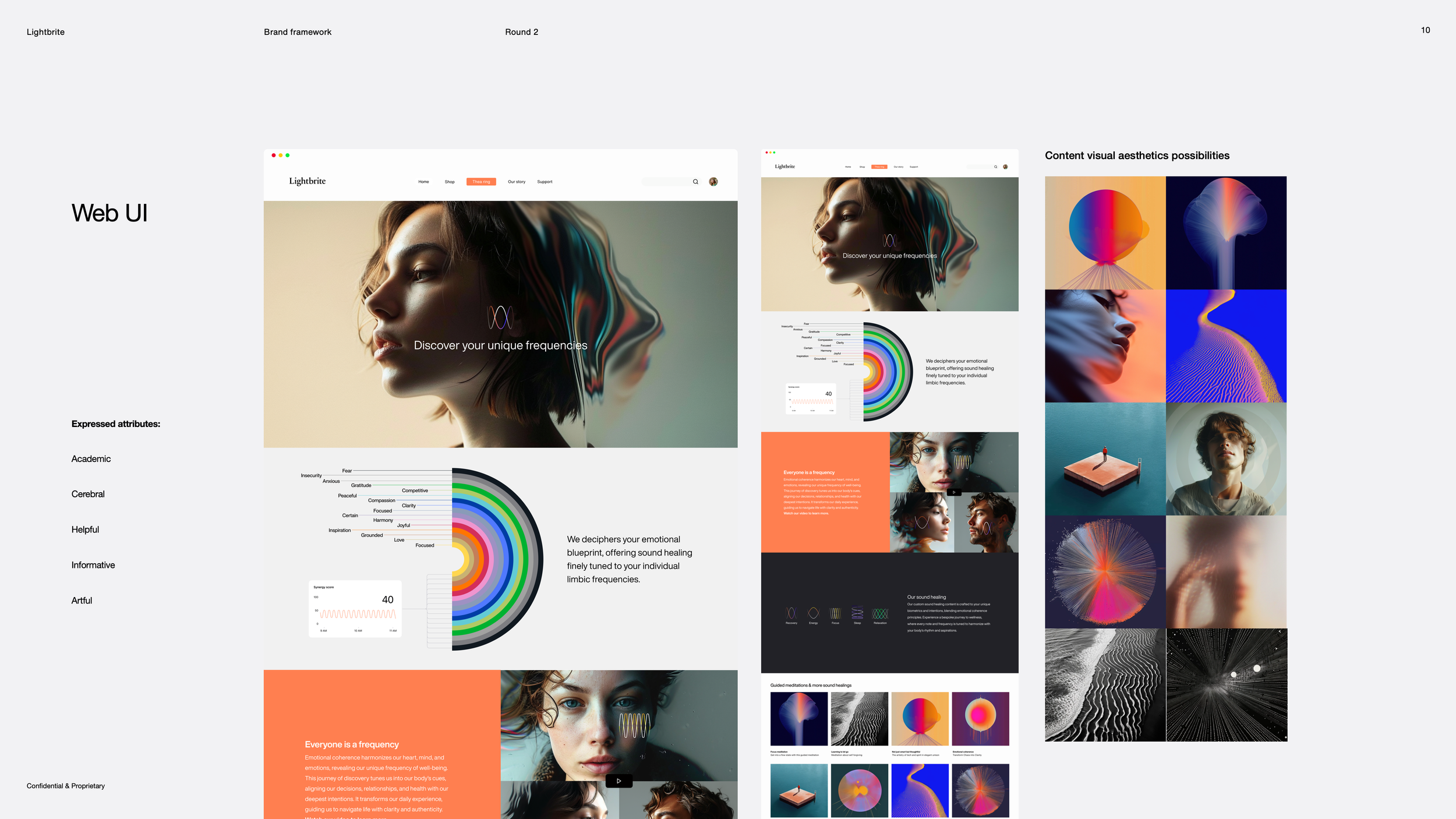
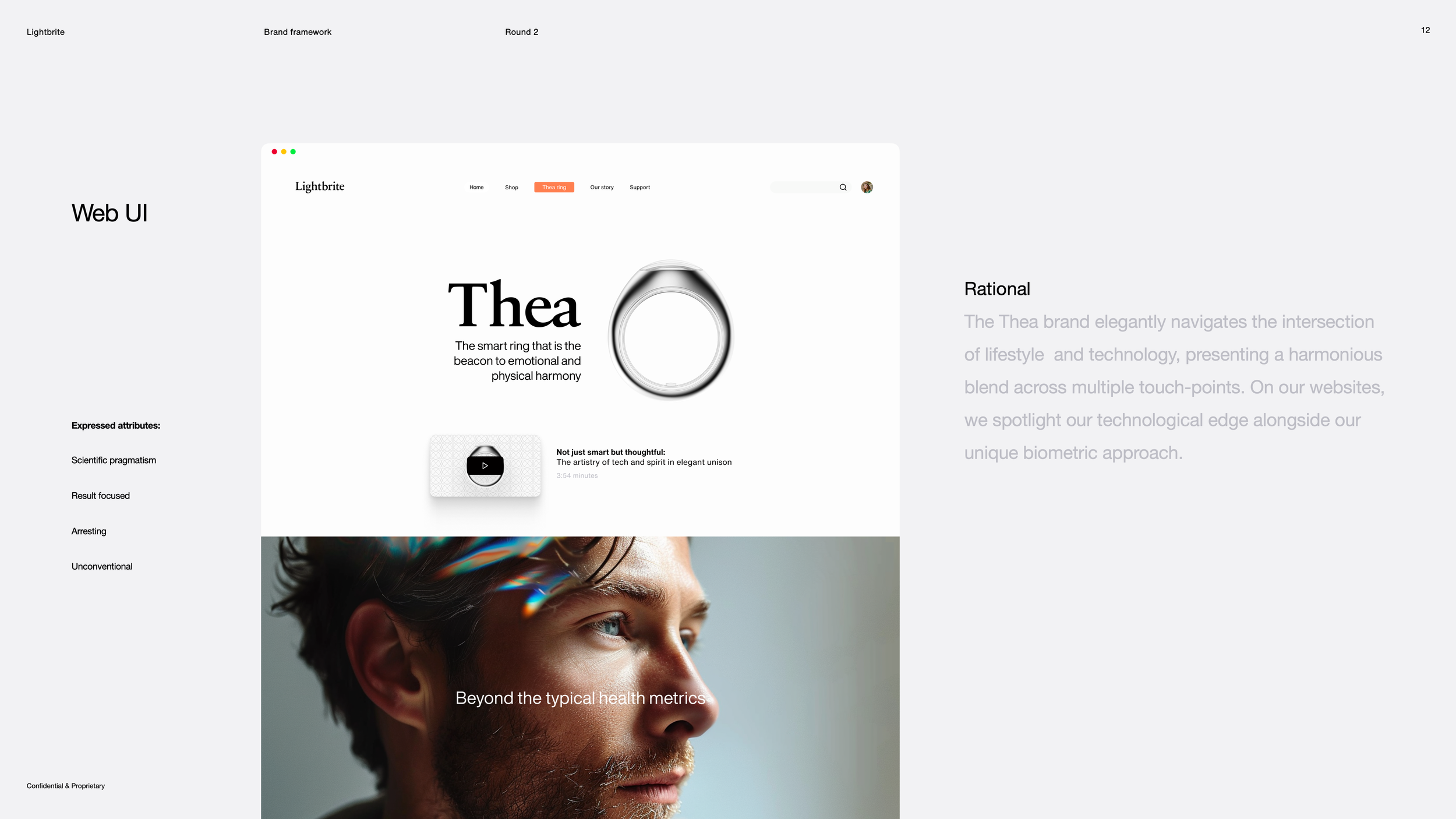
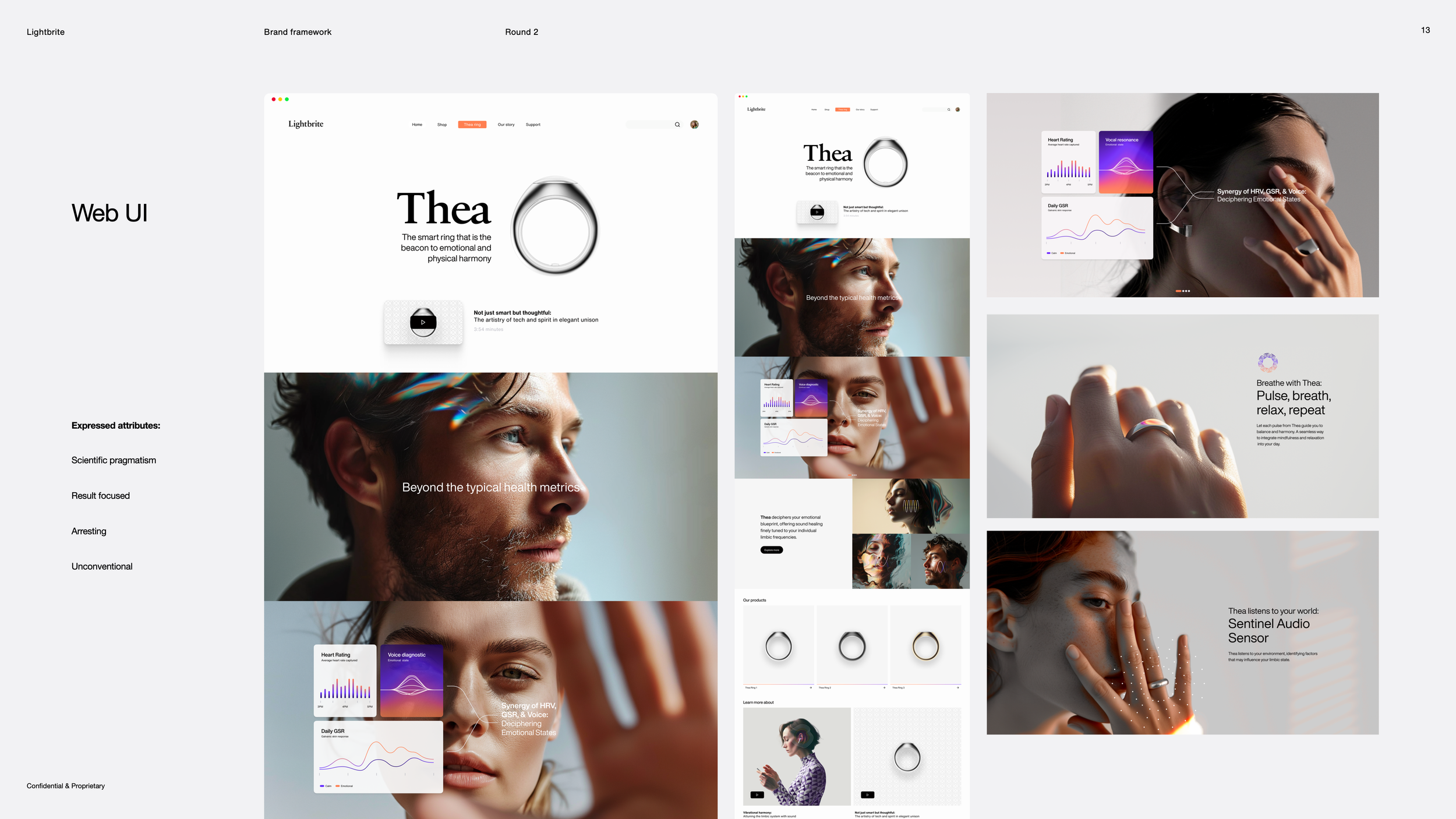
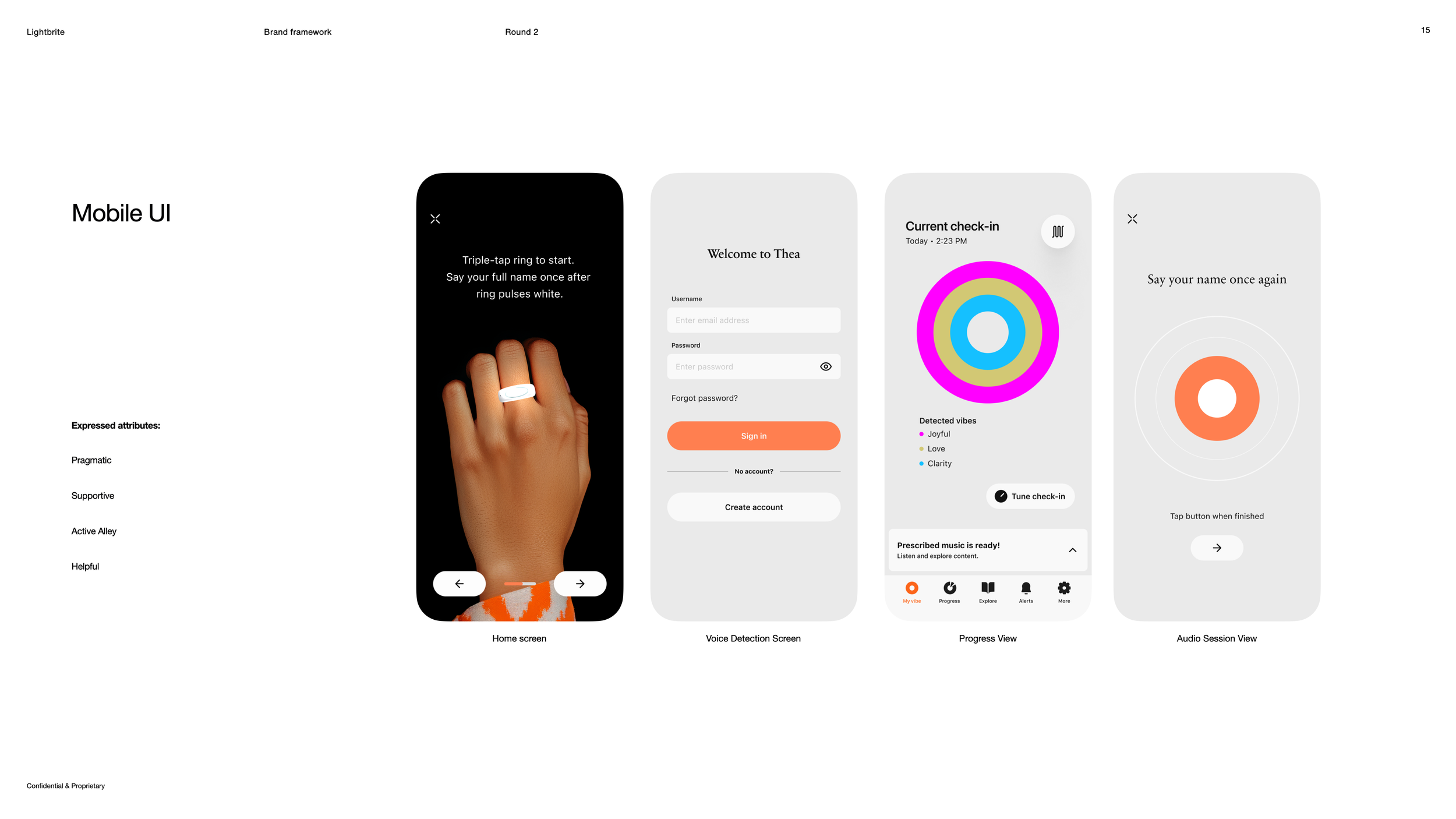
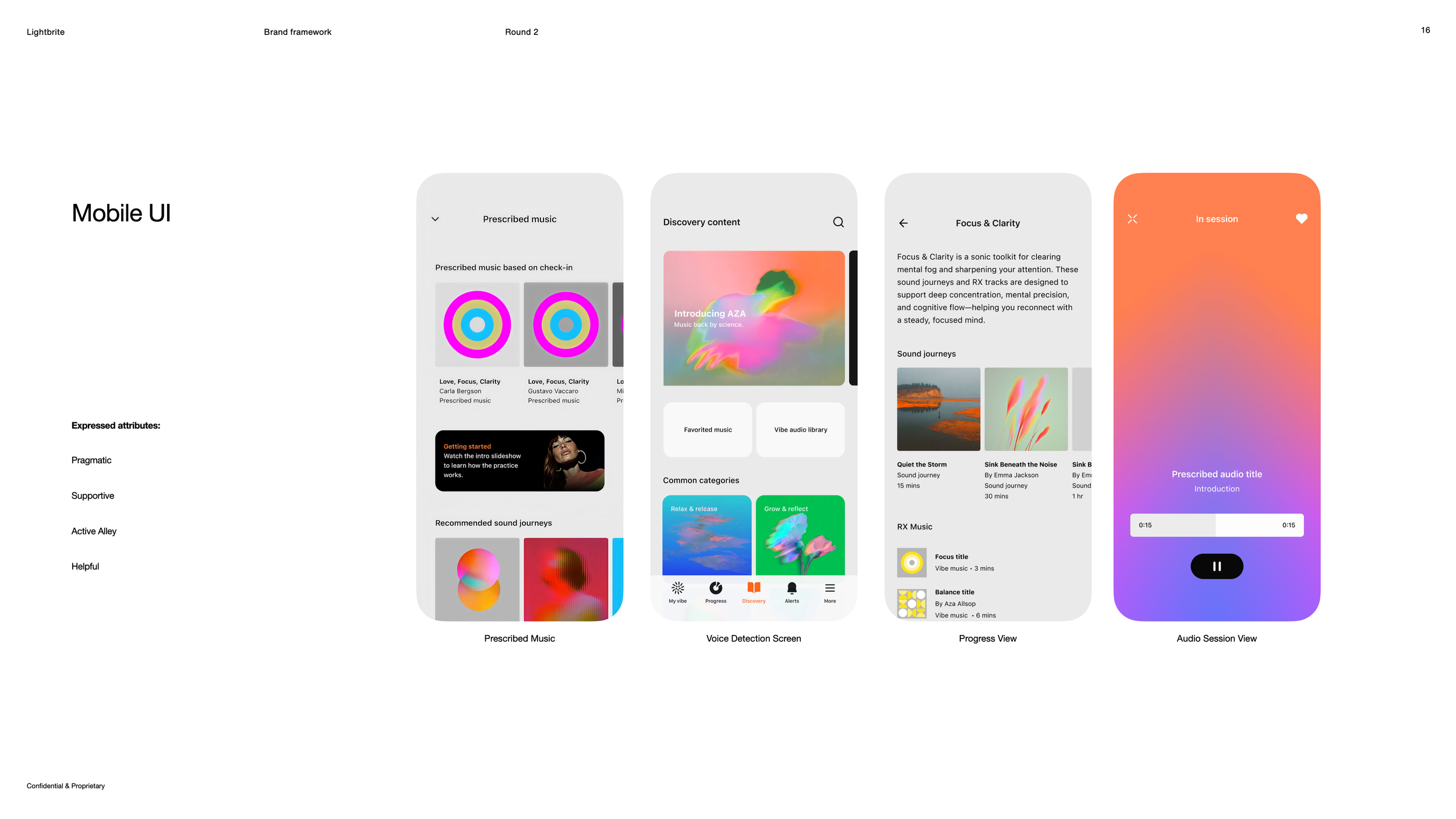
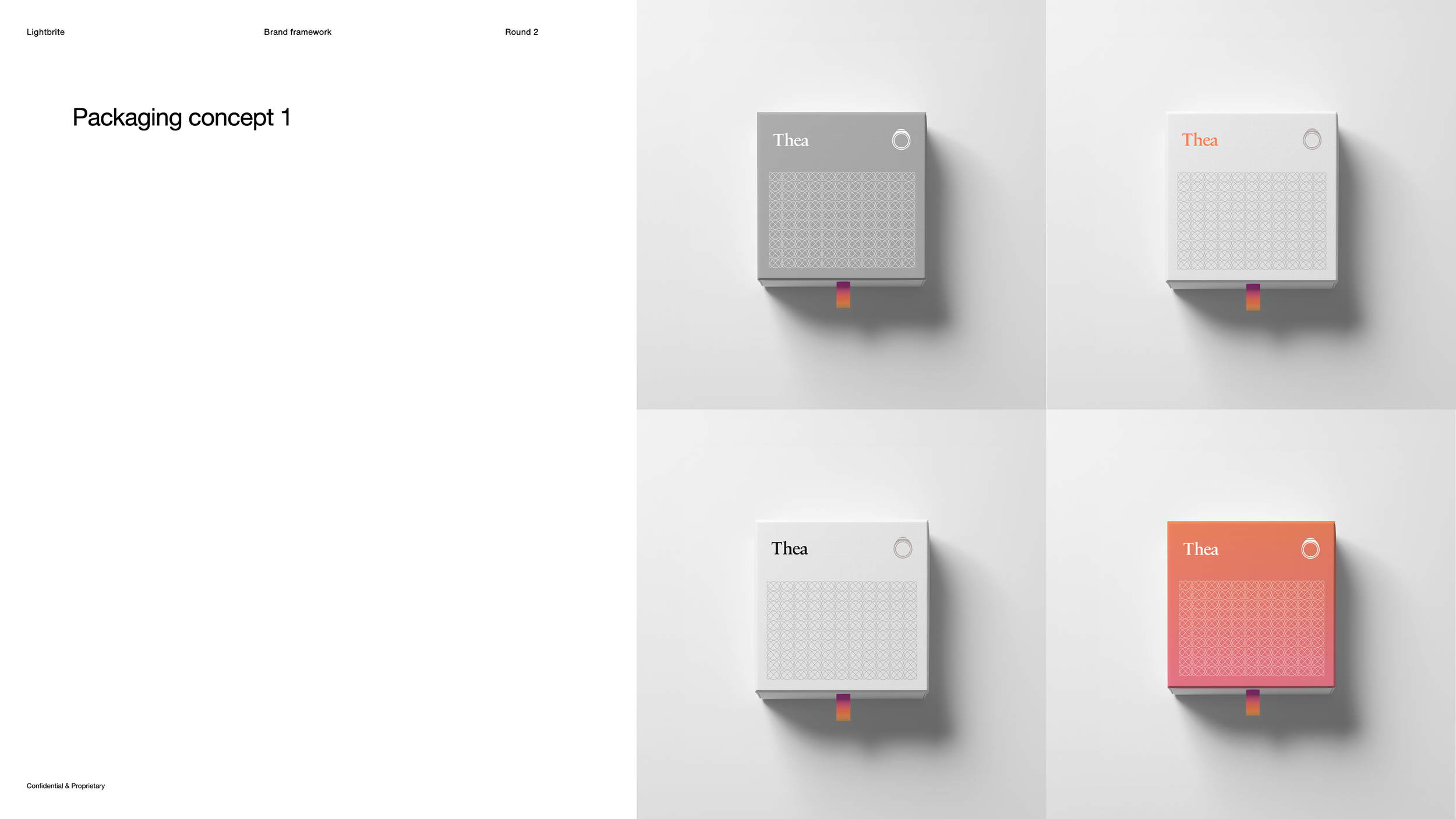
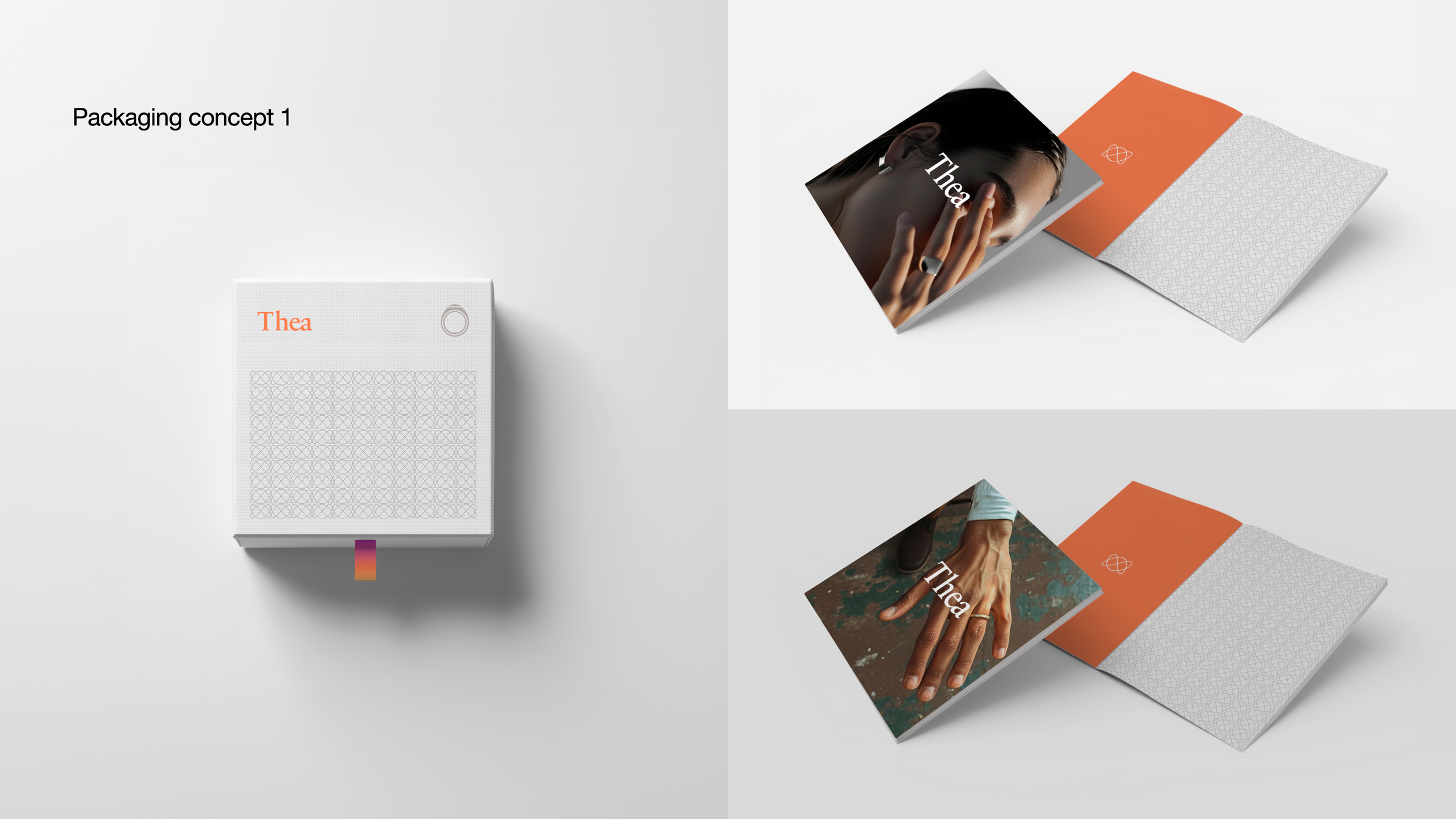
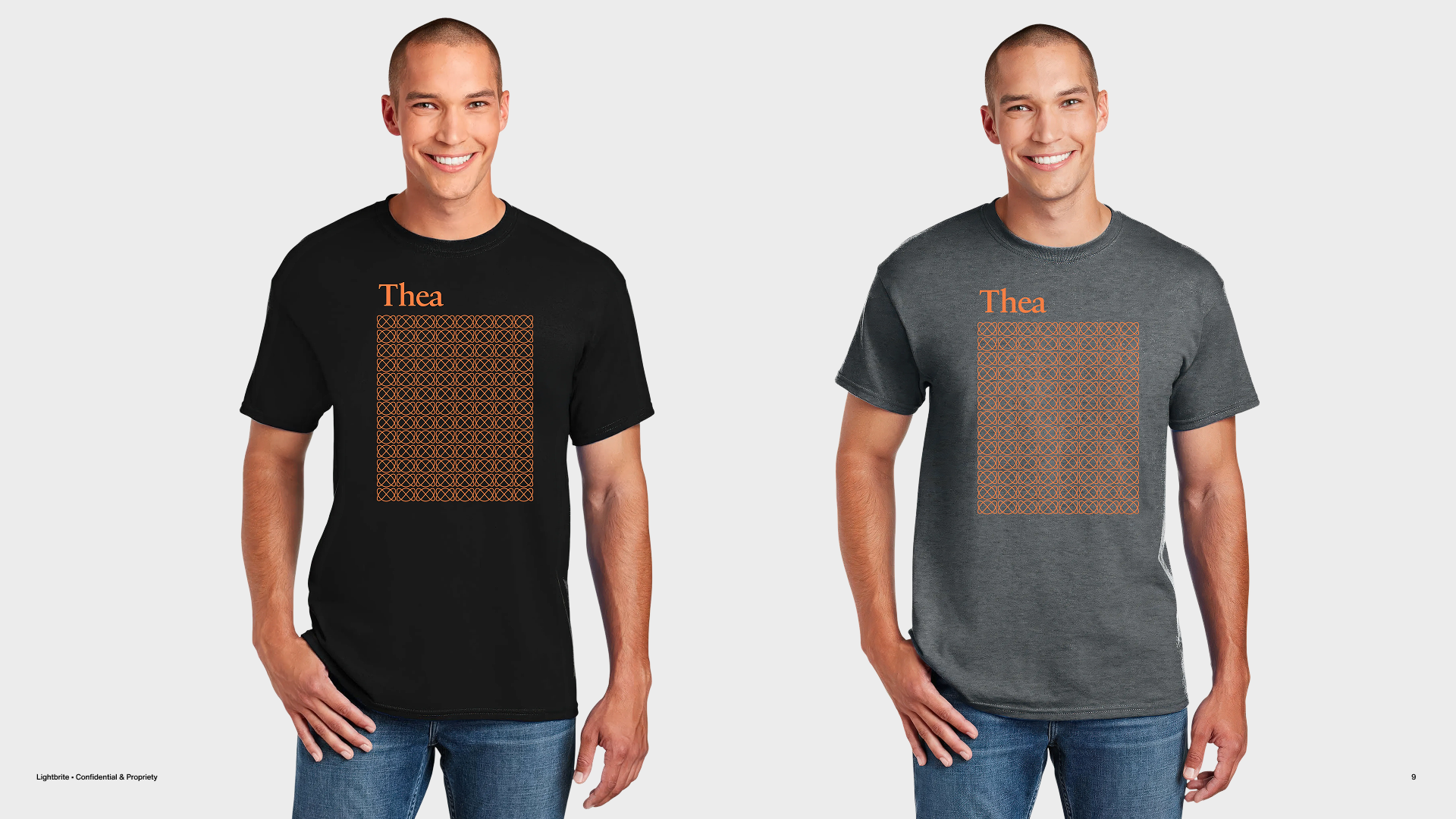
The framework resolved how Lightbrite and Thea operated together and independently. Lightbrite carried the science-led, corporate voice — minimalist in expression, using high art and unconventional photography to balance academic rigor with emotional resonance, and positioning the company as a scientifically grounded yet accessible voice in wellness (aligned with Fearless Innovation and Scientific Pragmatism). Thea expressed the human, consumer-facing experience — living at the intersection of lifestyle and technology, foregrounding the bio-metric approach and technological edge while staying warm and approachable across touch points (aligned with Active Ally and Expressive Artistry). Showing both across real applications made the architecture practical rather than theoretical.
Touchpoint Applications
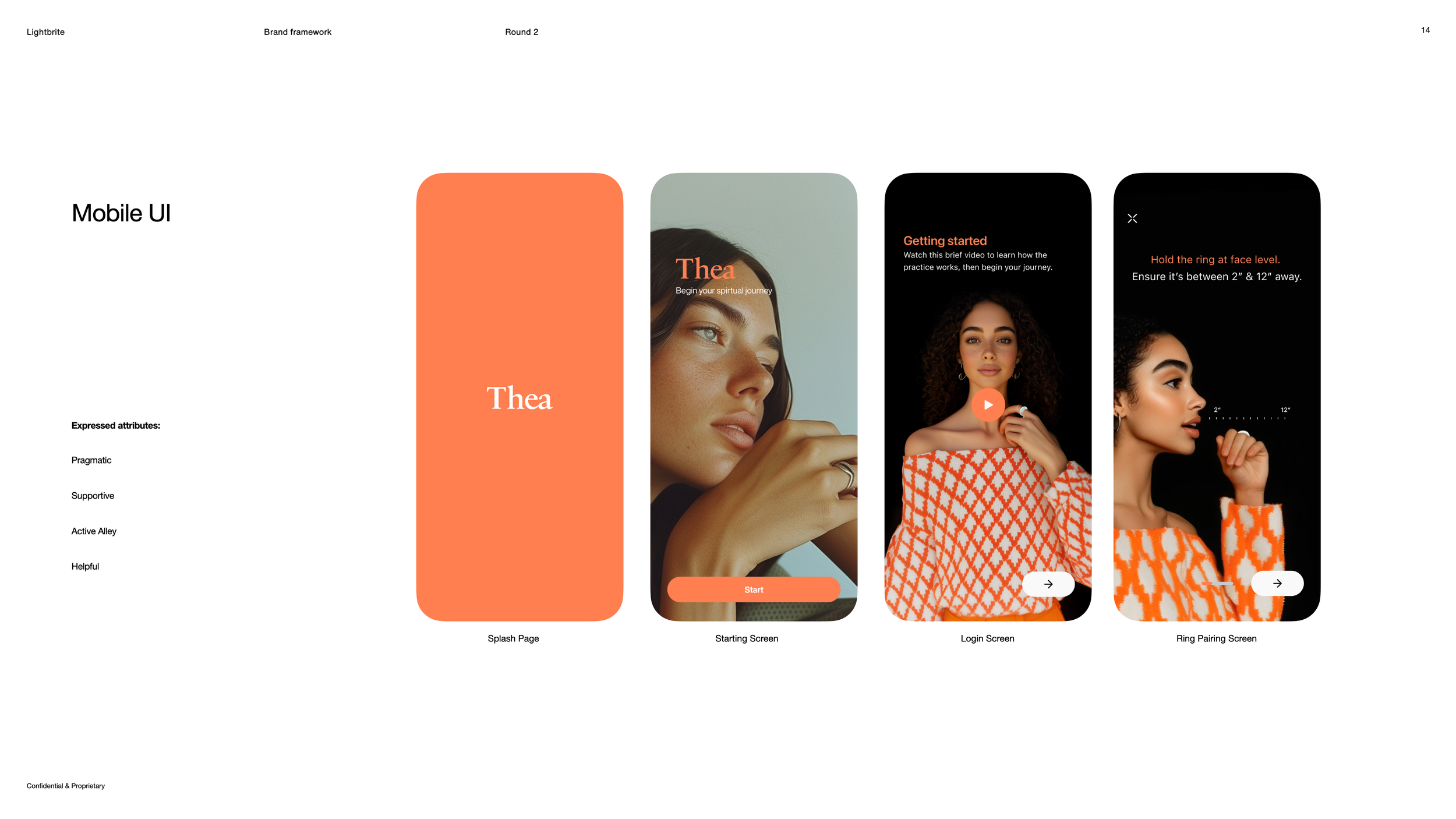
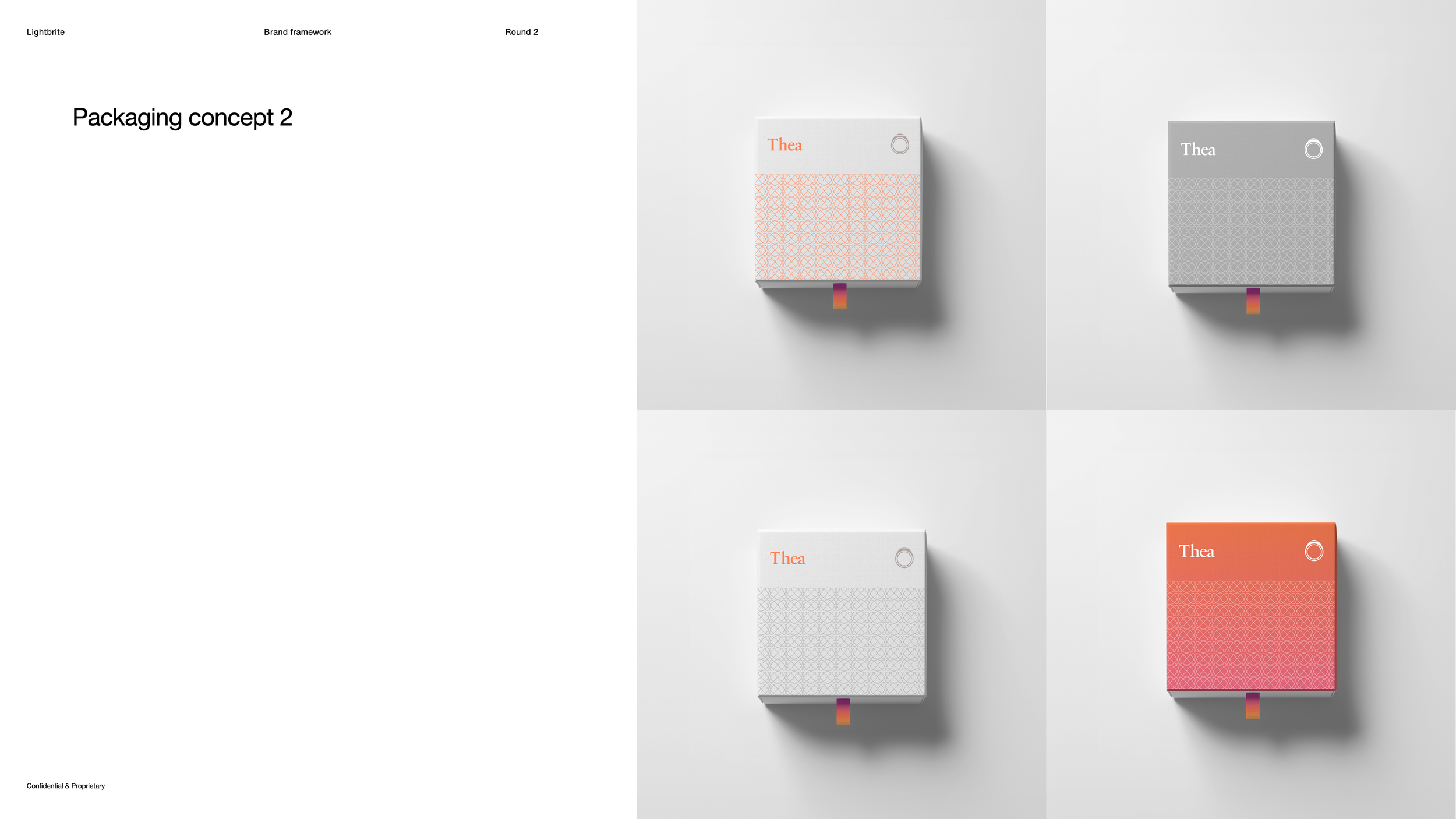
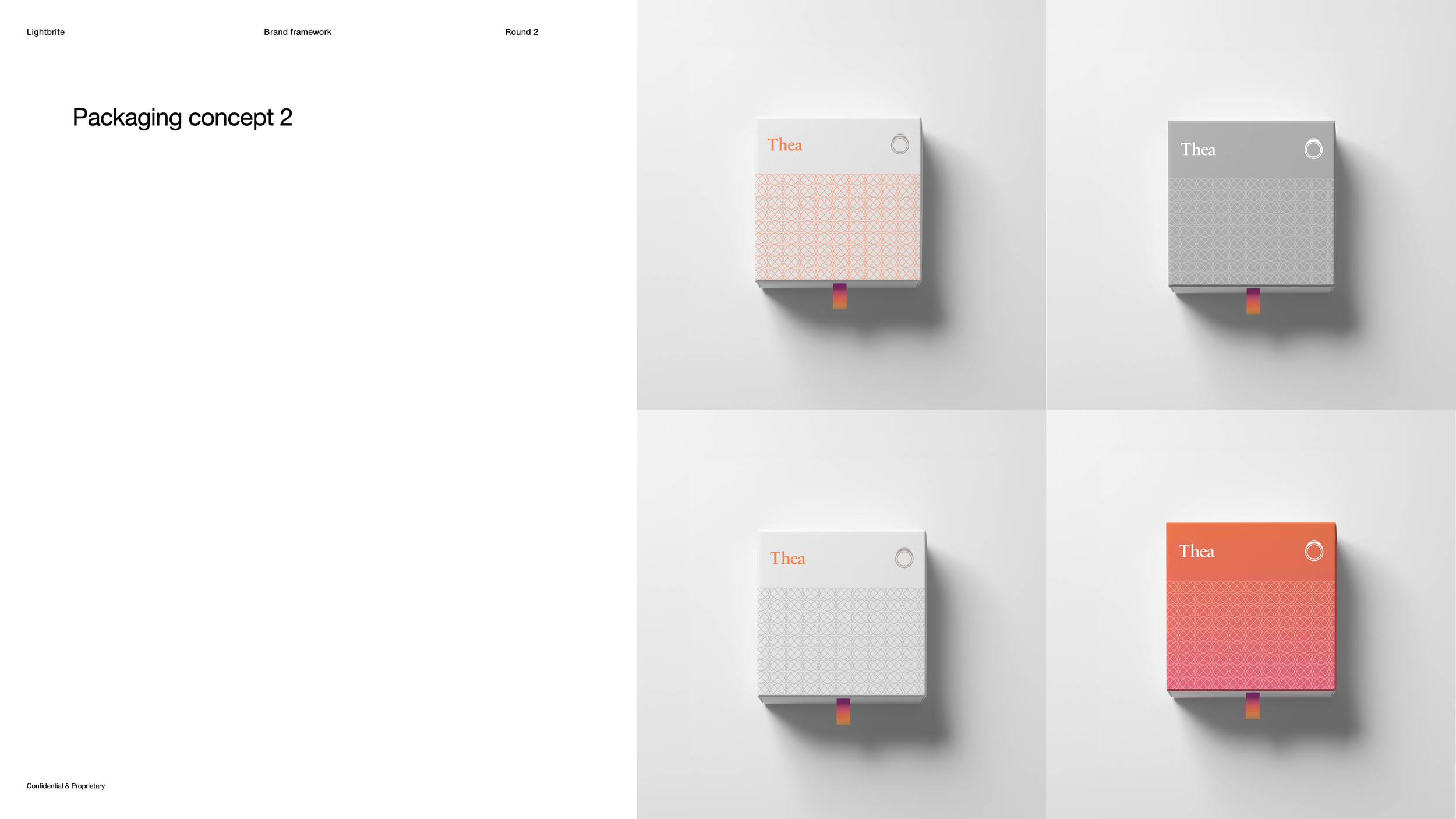
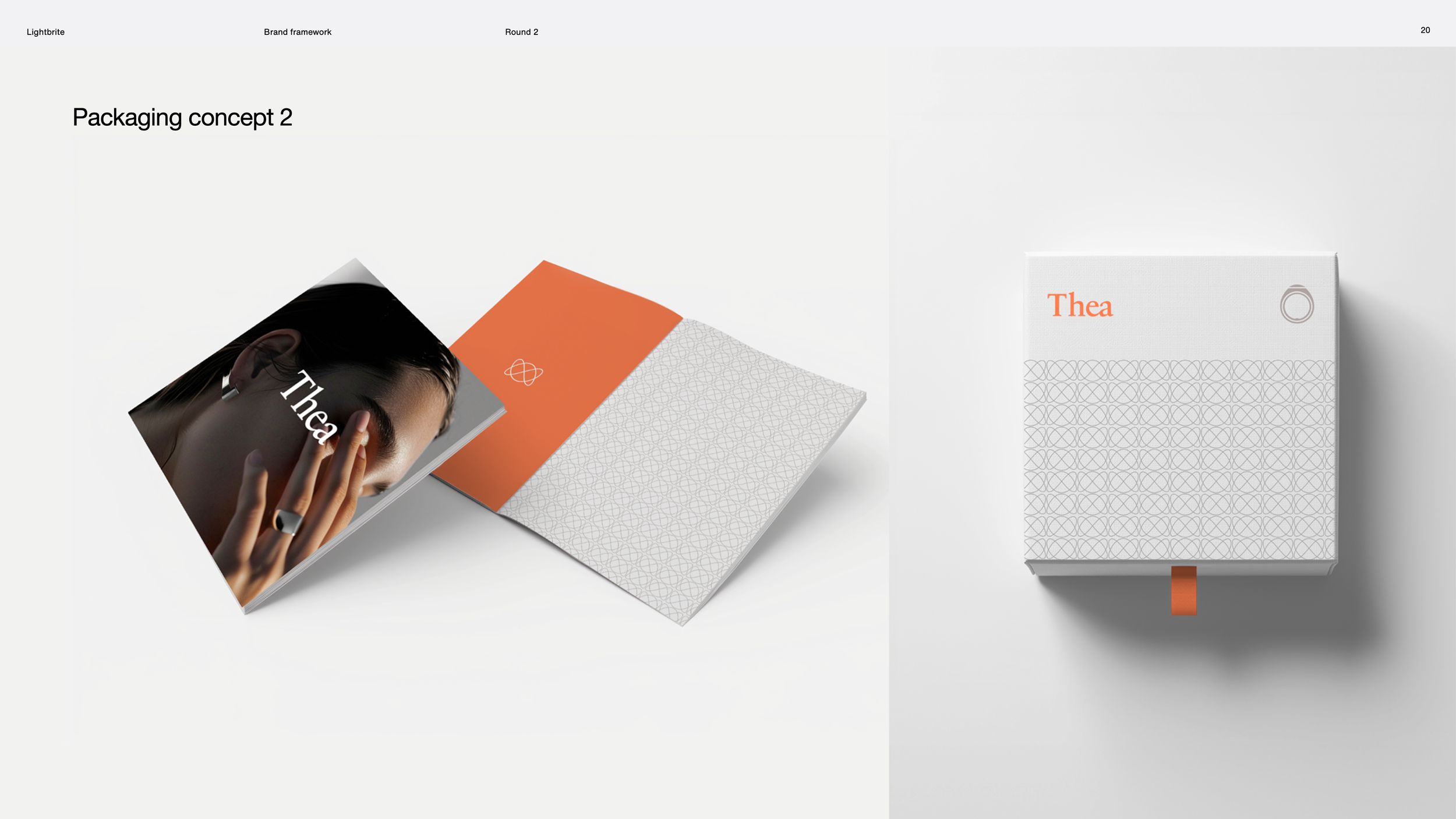
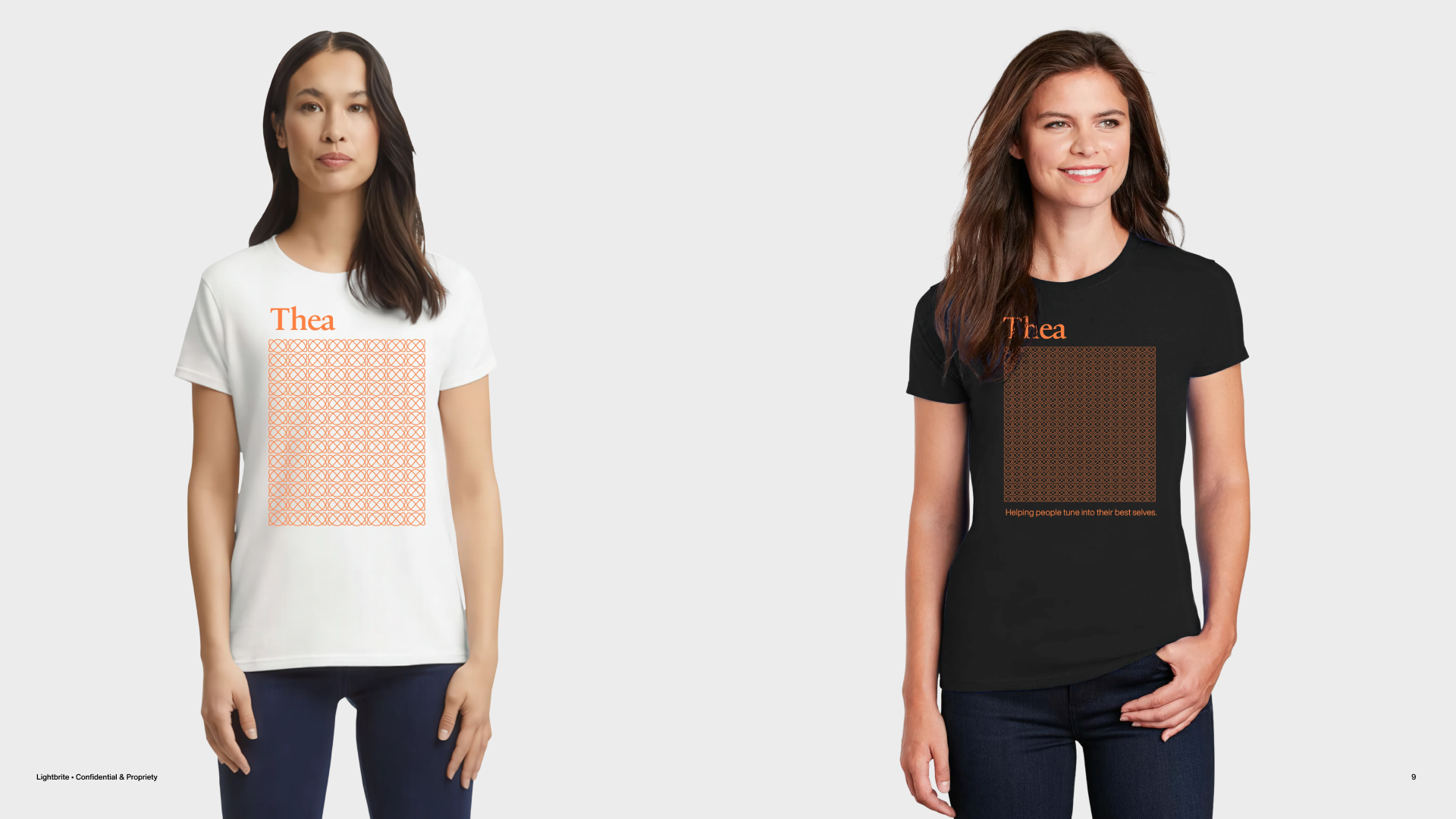
The framework showed the brand performing across a full range of touch points: web and mobile interfaces, print collateral, and packaging design. Each application was treated as a working expression of the system — demonstrating that the brand was buildable, consistent, and ready to be put to work.
Voice, Tone, and Copy
Rather than documenting copy principles in isolation, voice and tone were demonstrated through the actual copywriting used throughout the framework. This spanned web, mobile, and print contexts — making the verbal identity tangible and showing how it integrated with the visual system rather than existing separately from it. The verbal system was anchored by a vision statement, mission statement, brand statement, and tagline
Visual System
The complete visual system was documented across the full range of brand expressions — logo usage, color system, typography hierarchy, and brand mark — demonstrating how each element behaved individually and in combination across a variety of contexts.
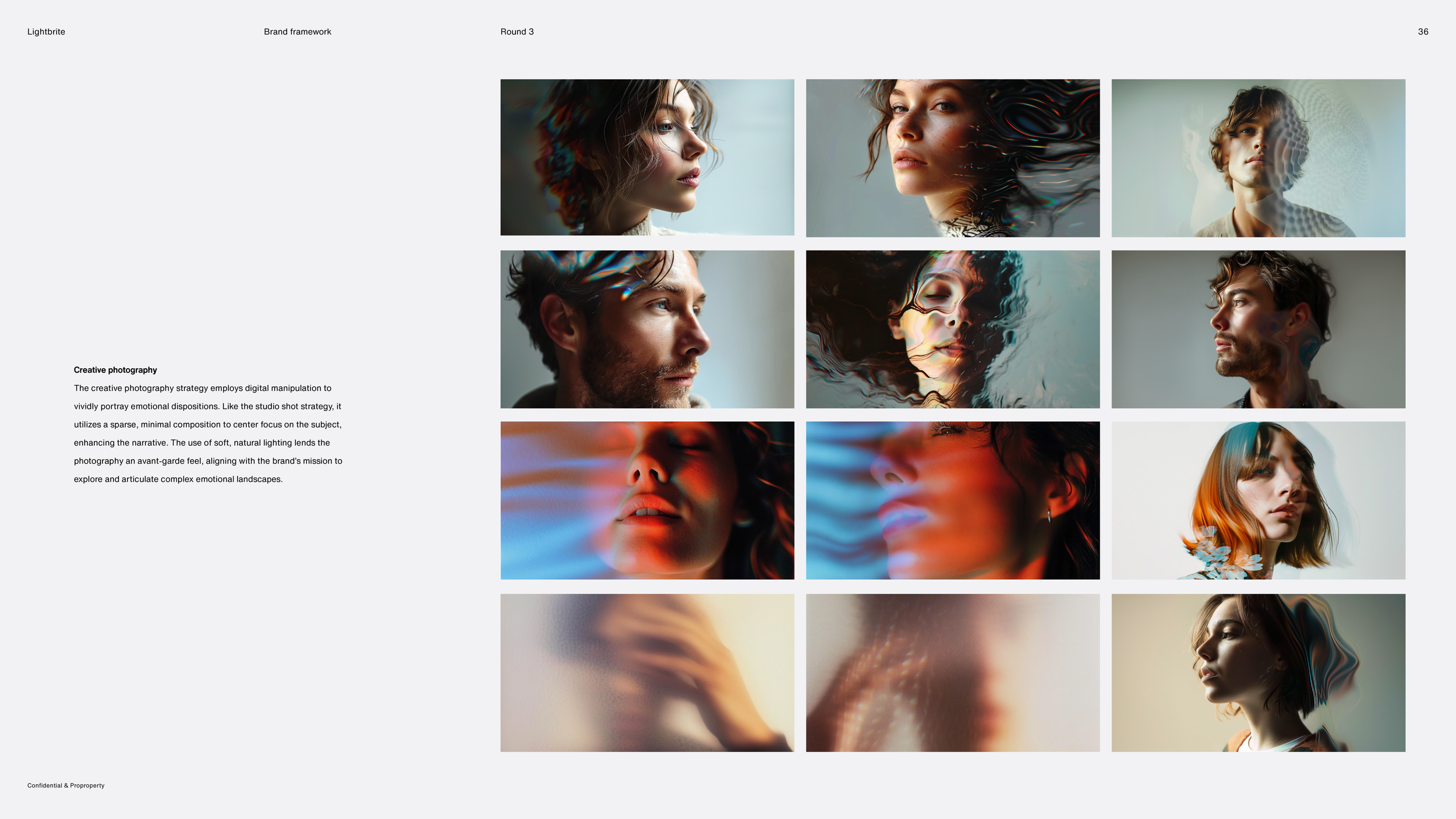
Photography Direction
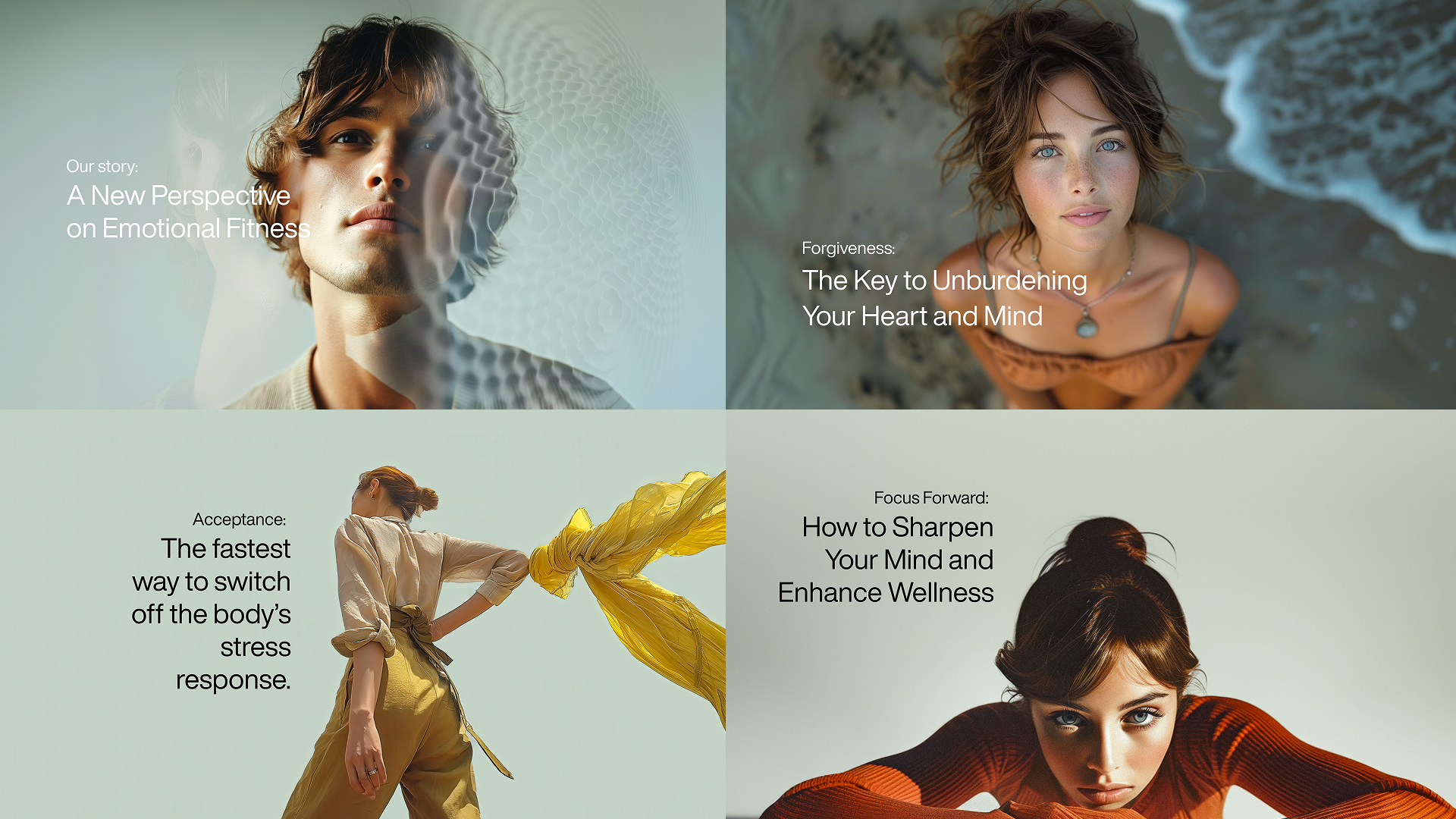
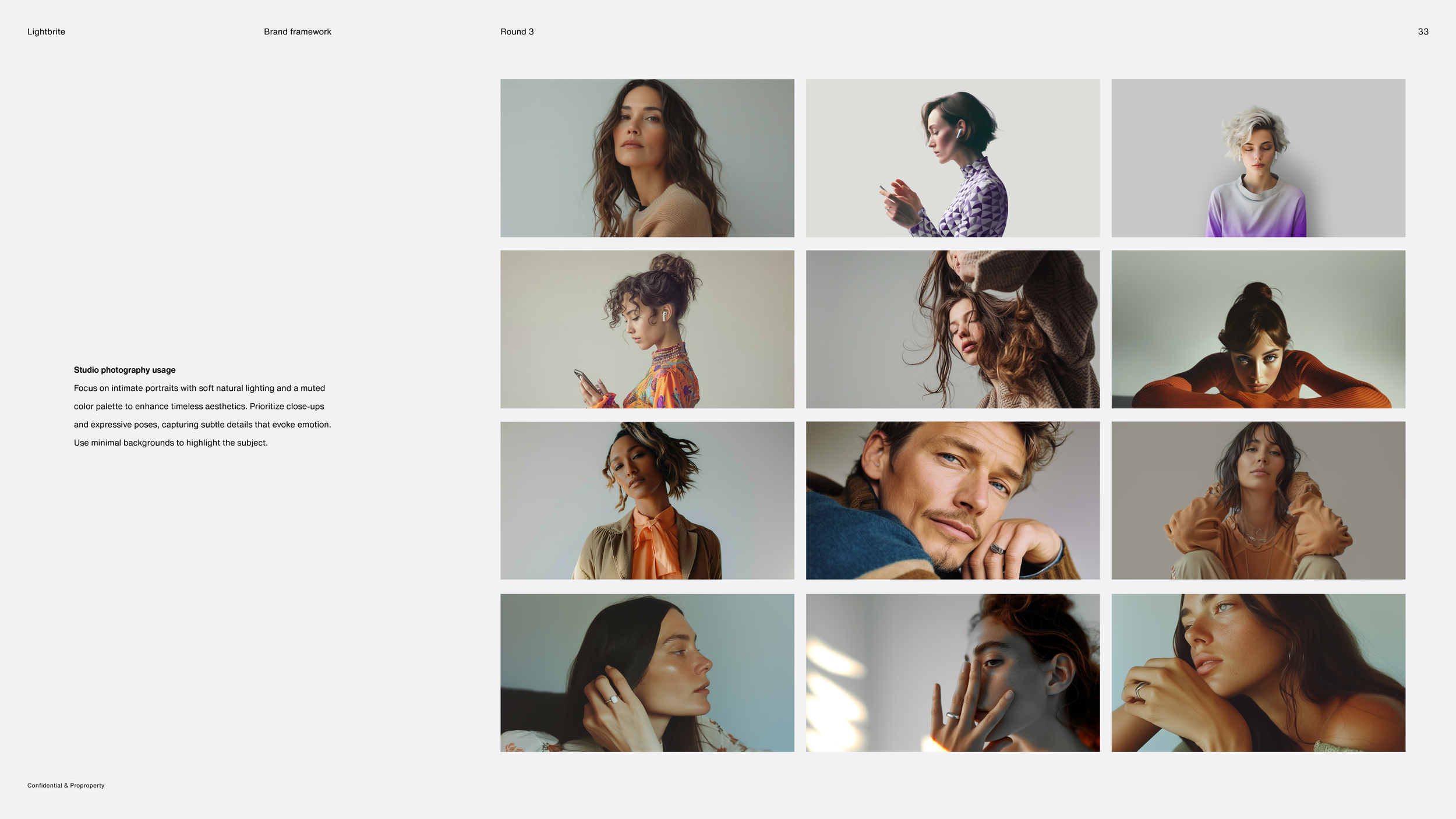
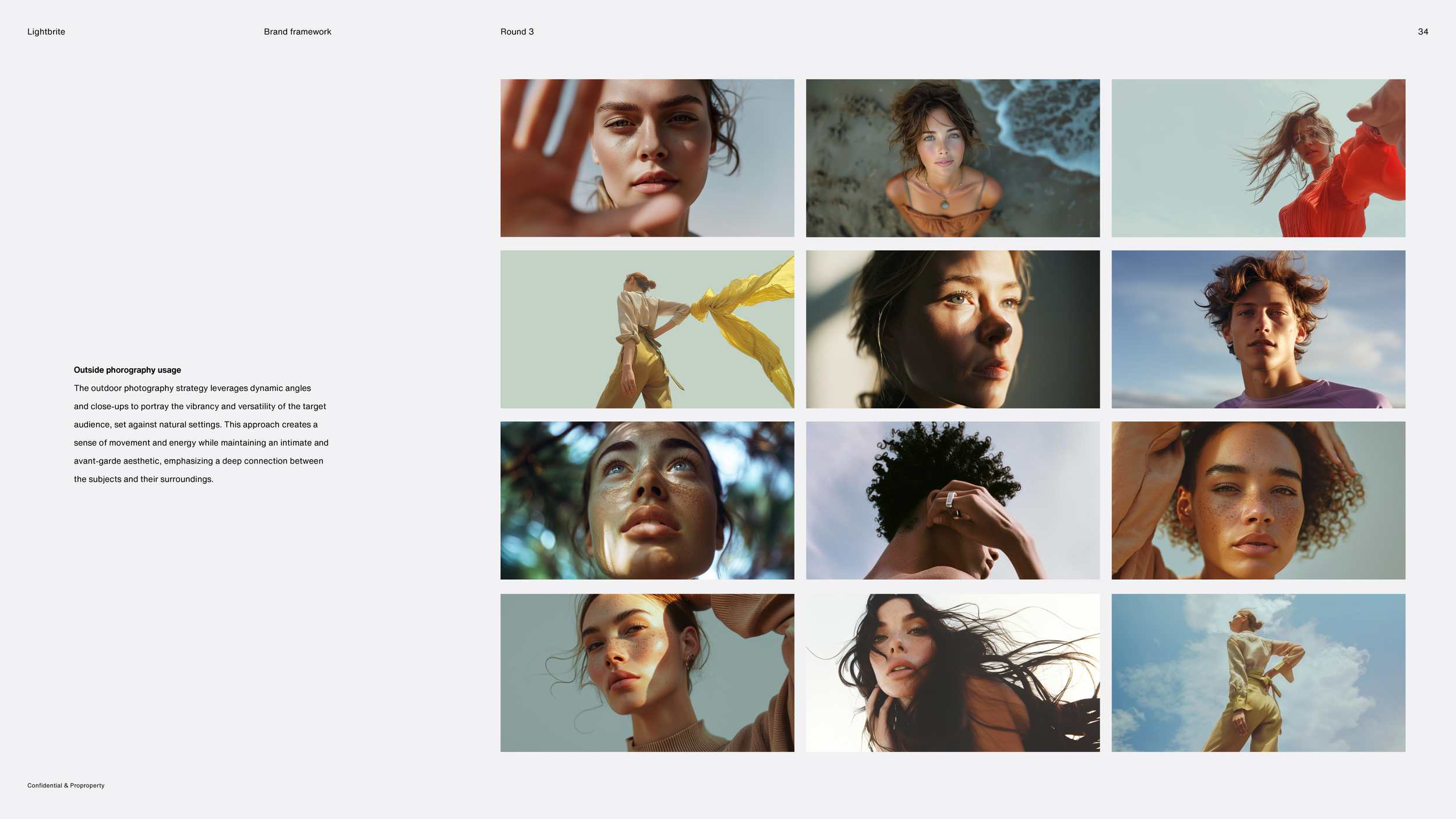
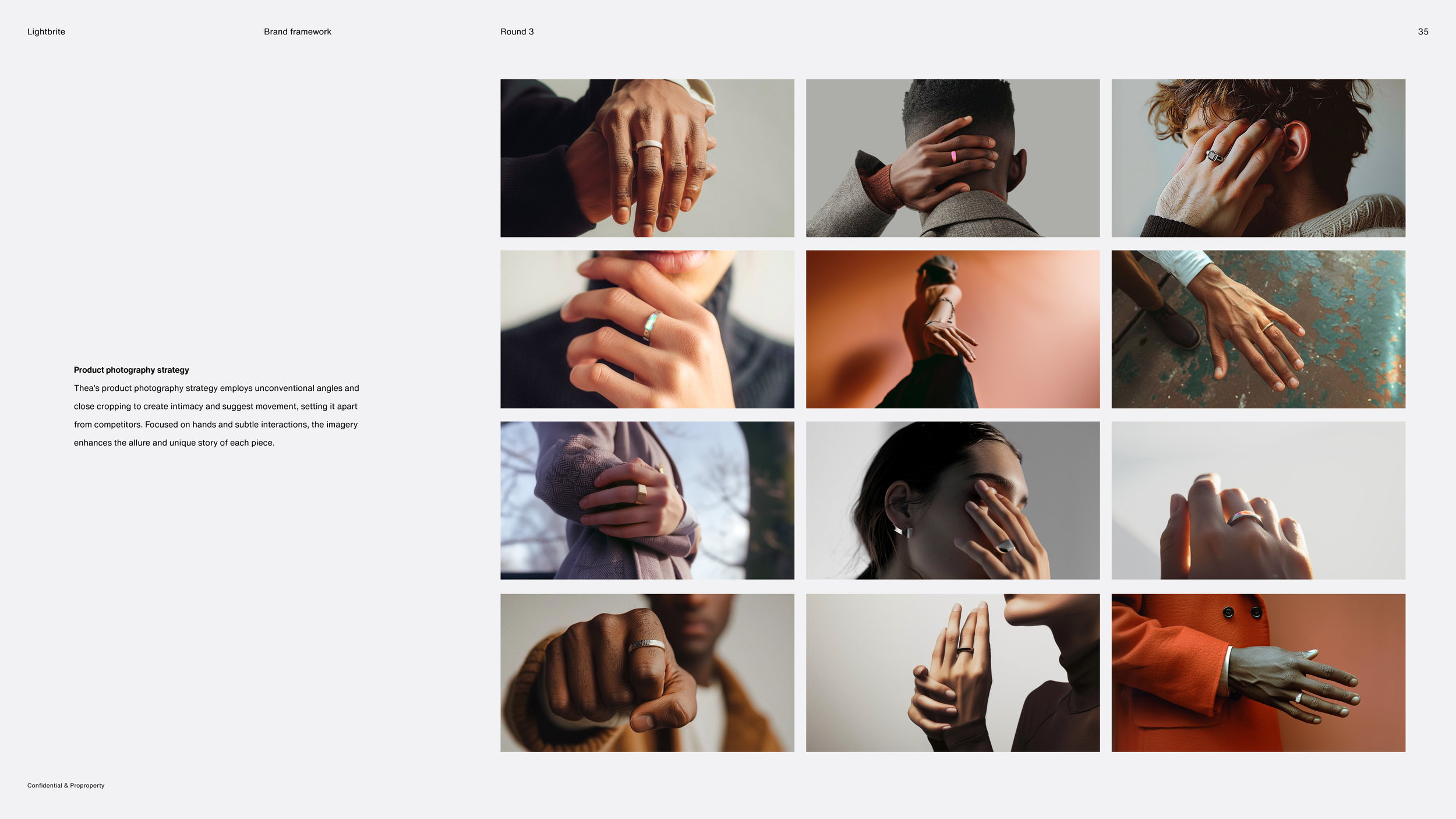
The framework included art direction for photography, establishing the visual tone and subject approach aligned with the brand's emotional register — human, intimate, and grounded rather than aspirational or clinical.
Outcome
The brand framework was met with strong enthusiasm from the founders and stakeholders. Rather than simply delivering a visual identity, it established a strategic brand system at a pivotal stage in the company's growth, serving as the foundation for Lightbrite's investor-facing communications.
I carried that system into the pitch deck through data visualization, copywriting, and messaging, ensuring the narrative and the visuals reinforced one another. Applied across both the MVP and investment materials, the brand generated significant investor interest and contributed directly to approximately $1.7 million in early-stage funding.
Ultimately, the project solved the dual-brand challenge that had defined the engagement from the beginning, giving Lightbrite a unified identity and a compelling platform from which to launch its product and secure investment.