Ethereal Matter is an early-stage wellness and fitness startup led by designer Scott Summit. Their first product — EVA — merges virtual reality with physical workouts, creating an entirely new category of immersive exercise.
Role: Product Designer & Creative Advisor
Client: Ethereal Matter
Type: 0→1 Product Design, Interaction Design, UX
Year: 2020–2021
Tools: Figma, Photoshop, Illustrator, Cinema 4d, Midjourney
Part 2 picks up where the kiosk experience left off — moving into the brand research, visual direction, and investor materials that gave Ethereal Matter a credible presence at the moment it needed one most.
Challenge & Context
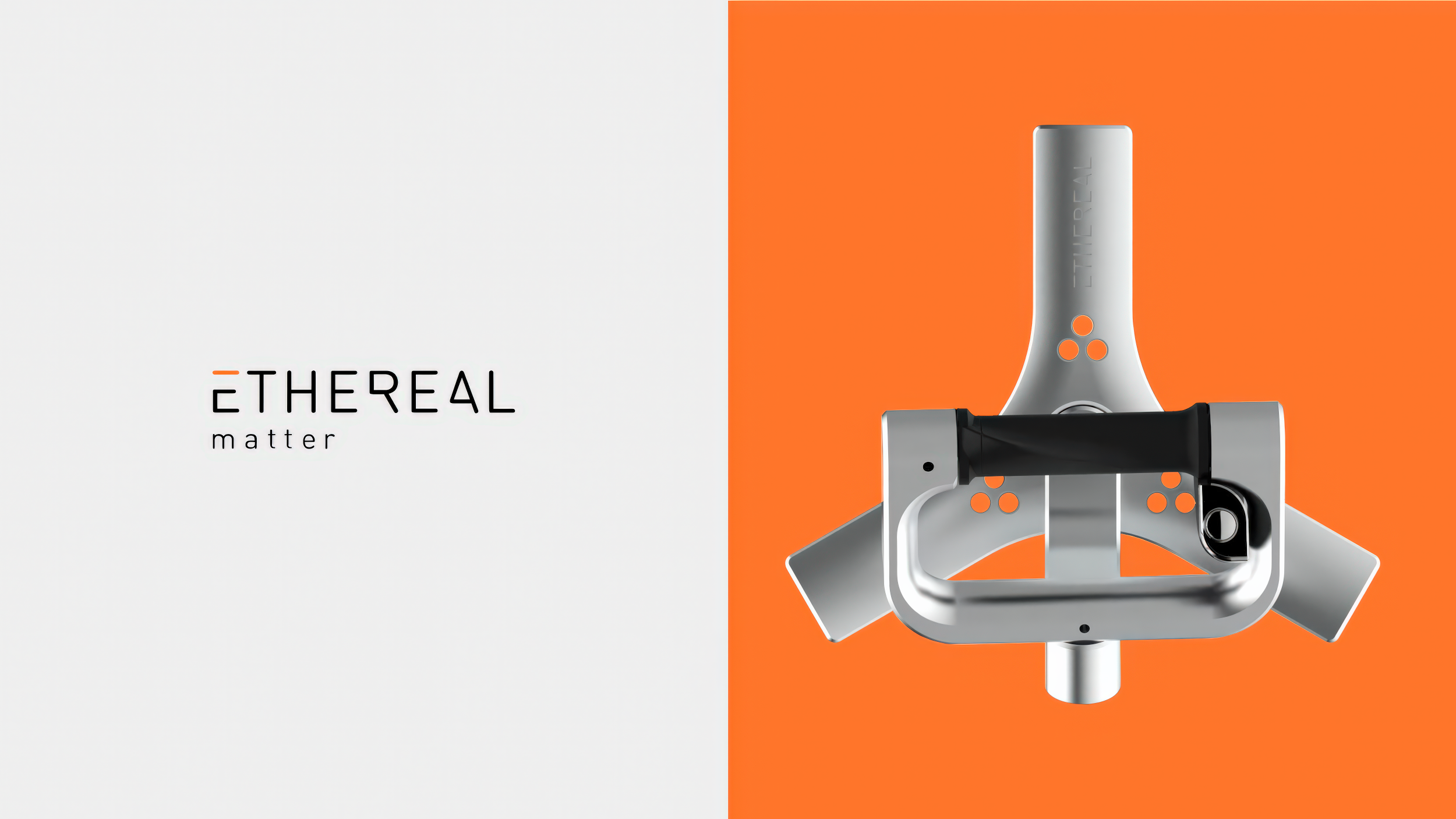
With an existing wordmark in place, Ethereal Matter had the initial foundation of a brand identity. However, with VR-based fitness being an emerging category lacking an established design language — and spanning two distinct markets — there was a clear need for a cohesive pitch deck and a broader visual framework. The branding work did more than convey innovative technology; it opened new pathways for defining the company's DNA, incorporating elements of industrial design, UX, and the founder's personal influences into a unified vision.
Process & Approach
Data Visualization
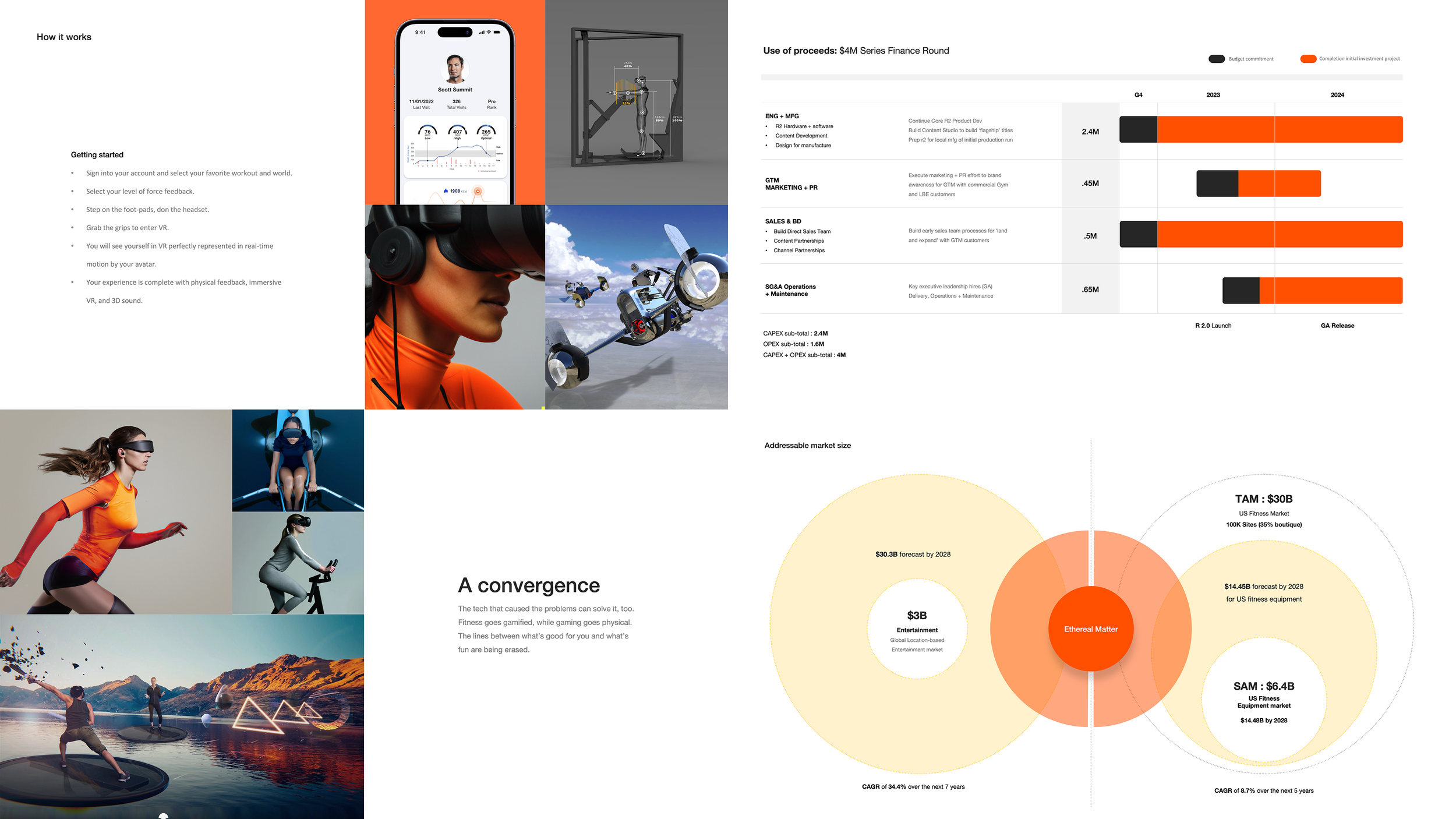
Concise charts and visuals were developed to simplify complex communications, effectively highlighting Ethereal Matter's market potential for investor audiences.
Brand Refinement
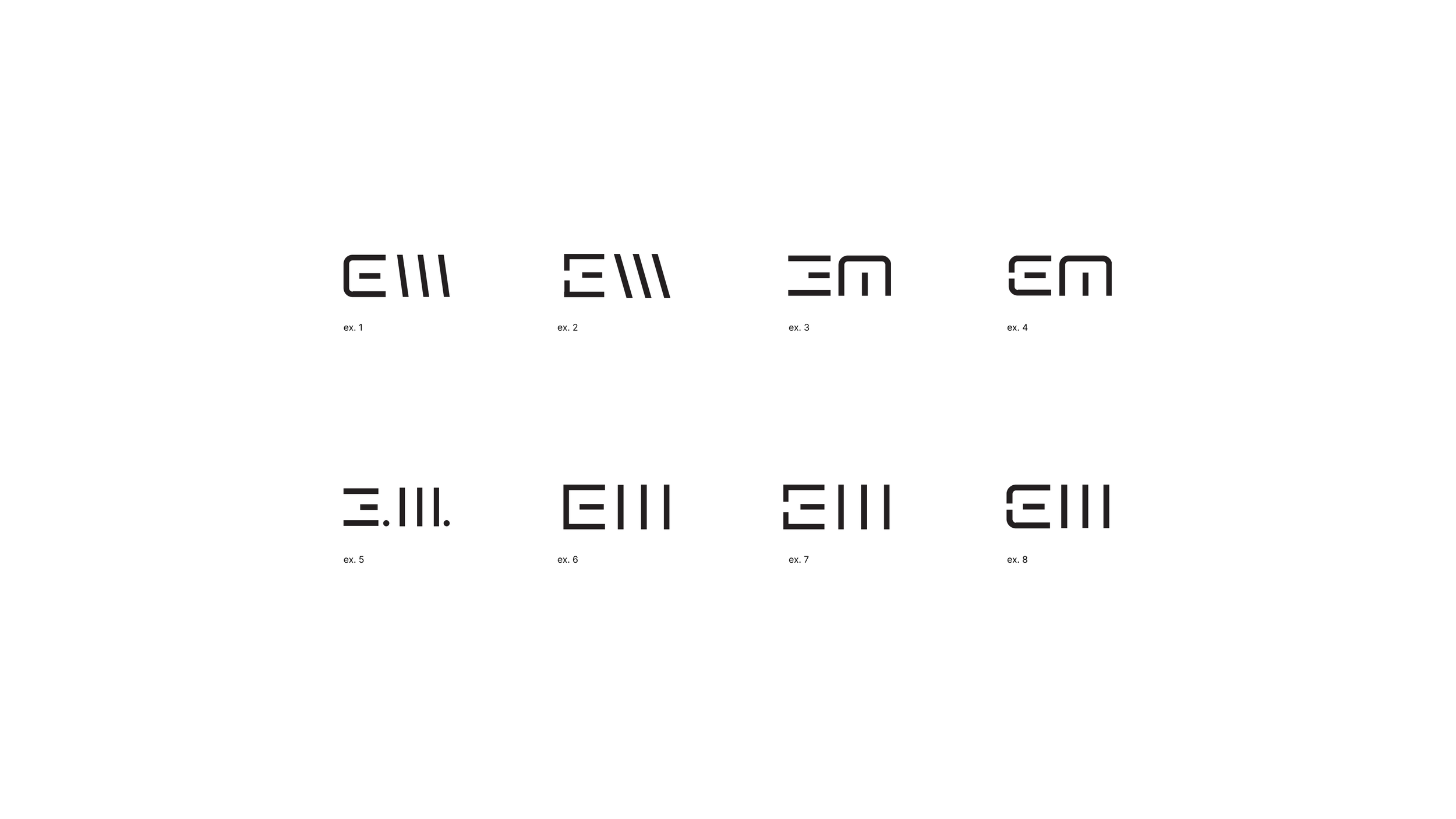
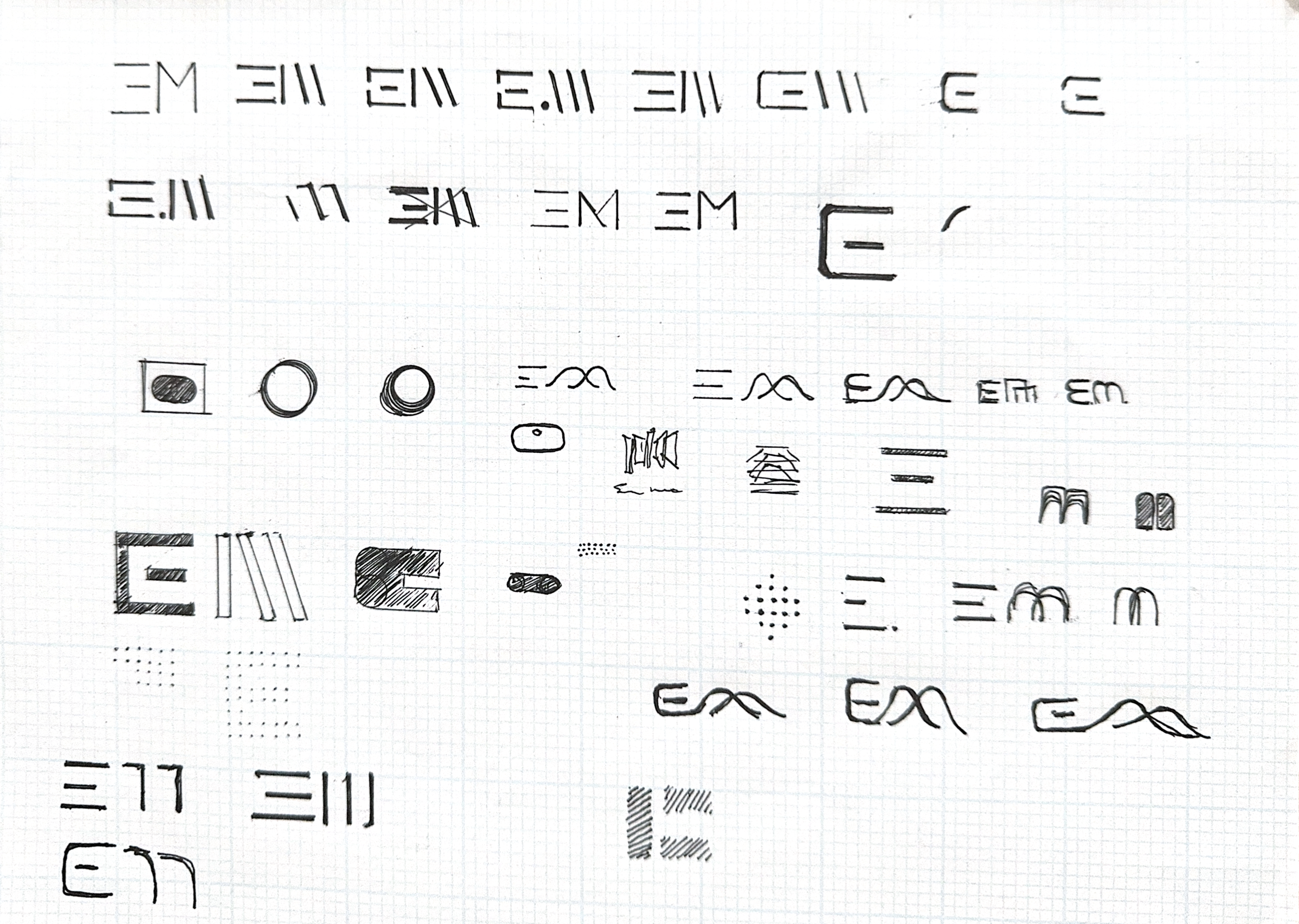
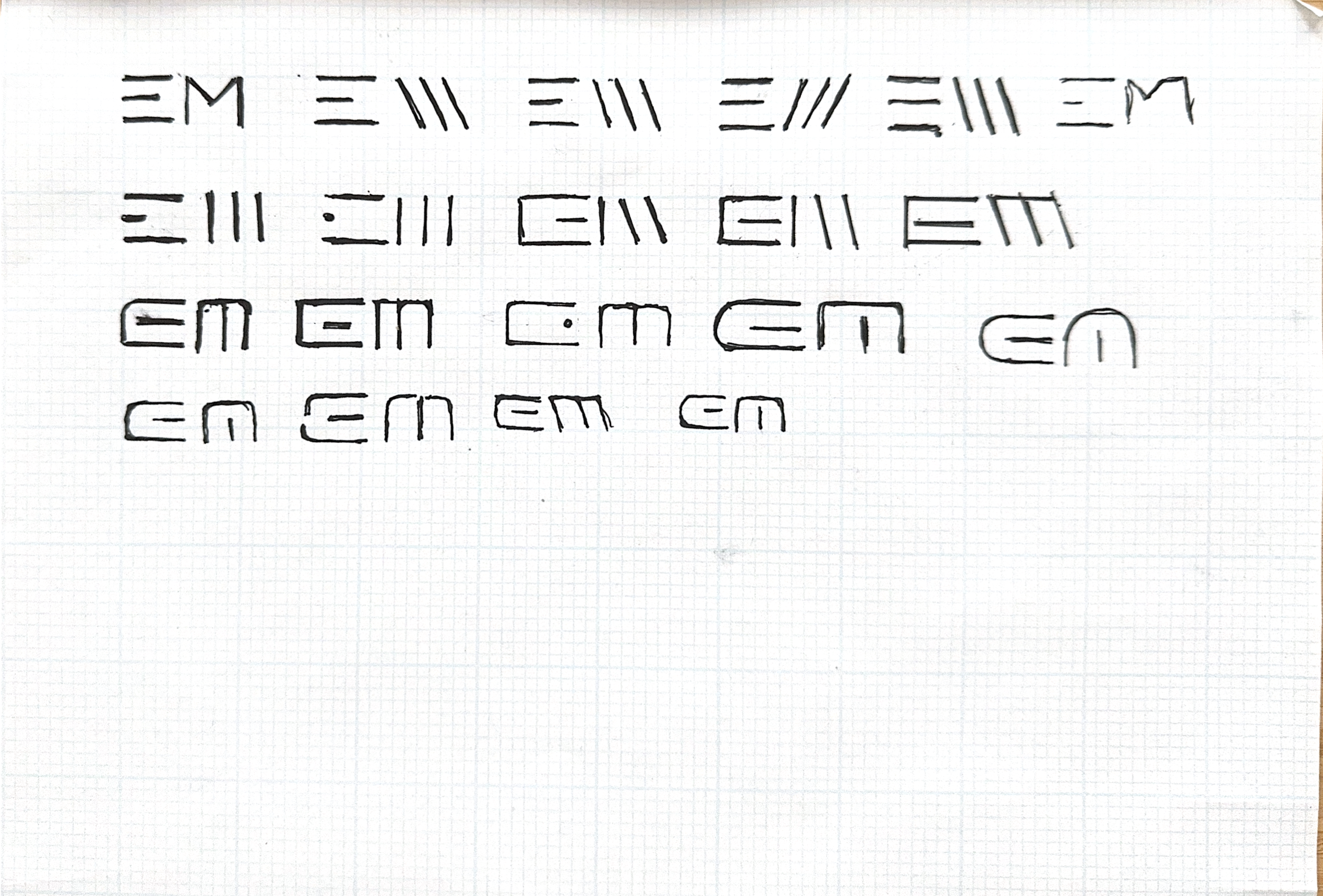
An existing word-mark served as the foundation for a comprehensive brand update. Kerning was adjusted and letter form stroke weights were refined to achieve typographic balance and improved readability. From there, explorations into color palettes, typographic treatments, and curated mood boards helped establish a visual identity that felt futuristic yet approachable — sitting at the intersection of fitness and gaming.
Generative AI Imagery
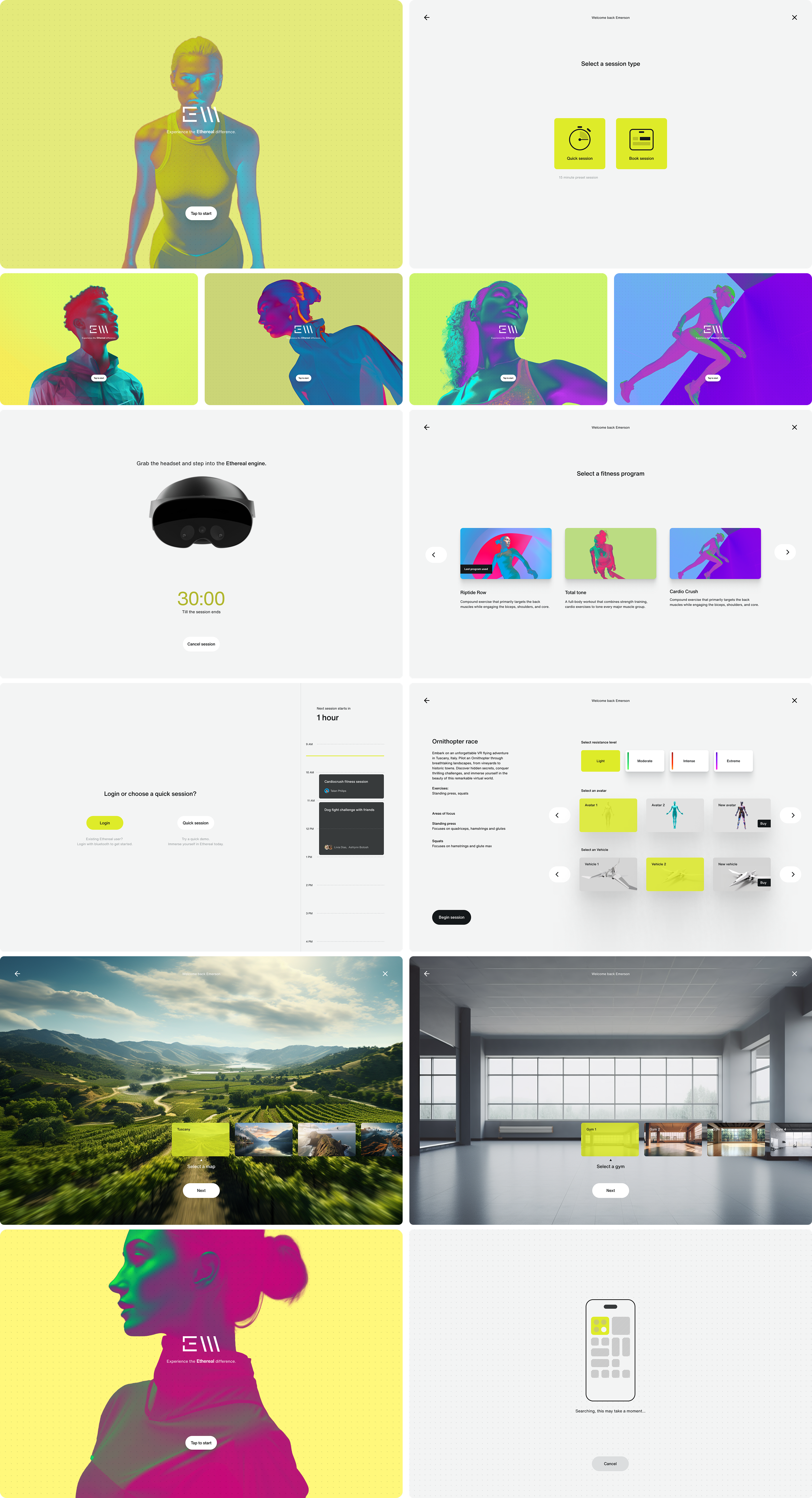
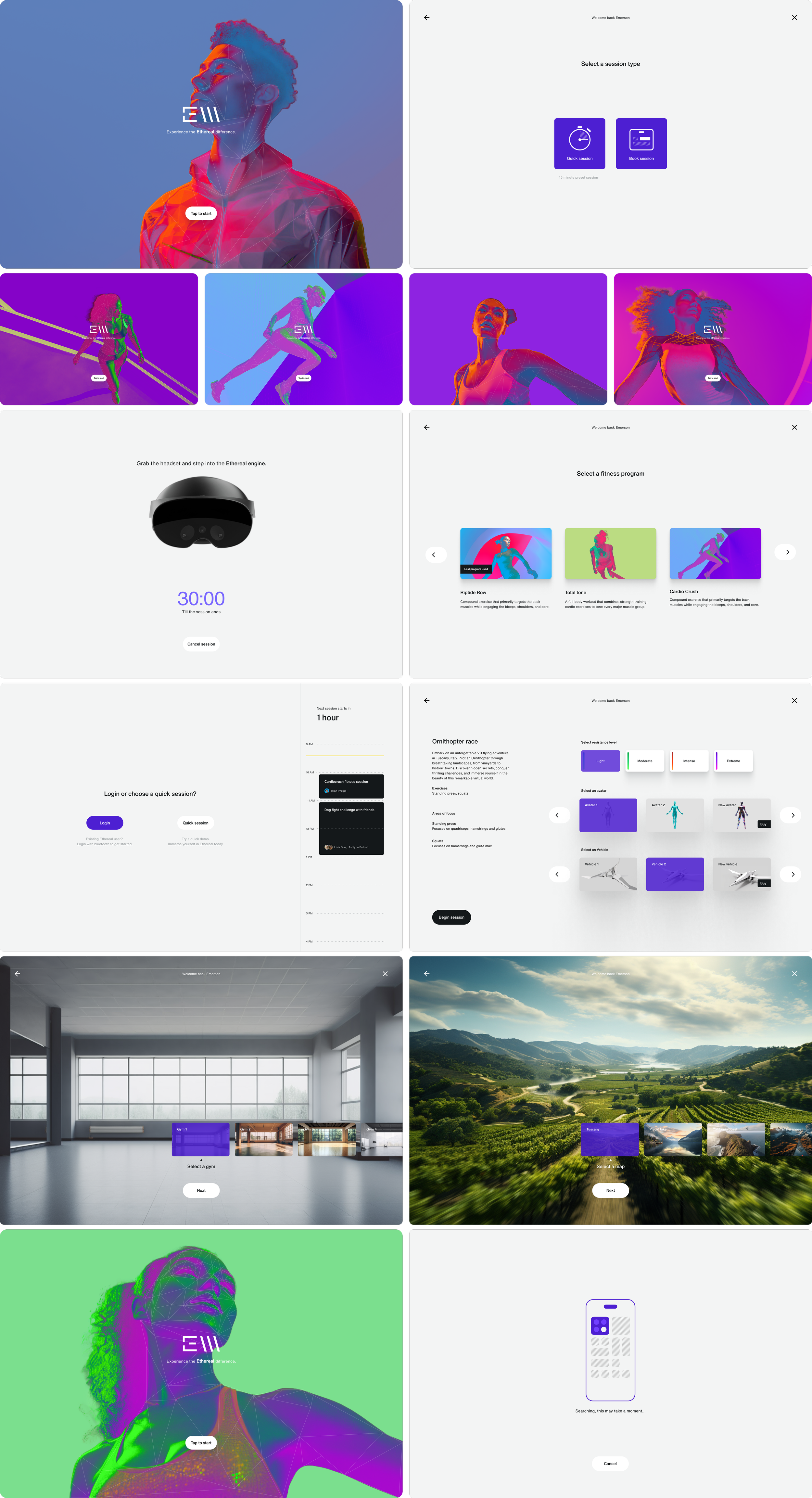
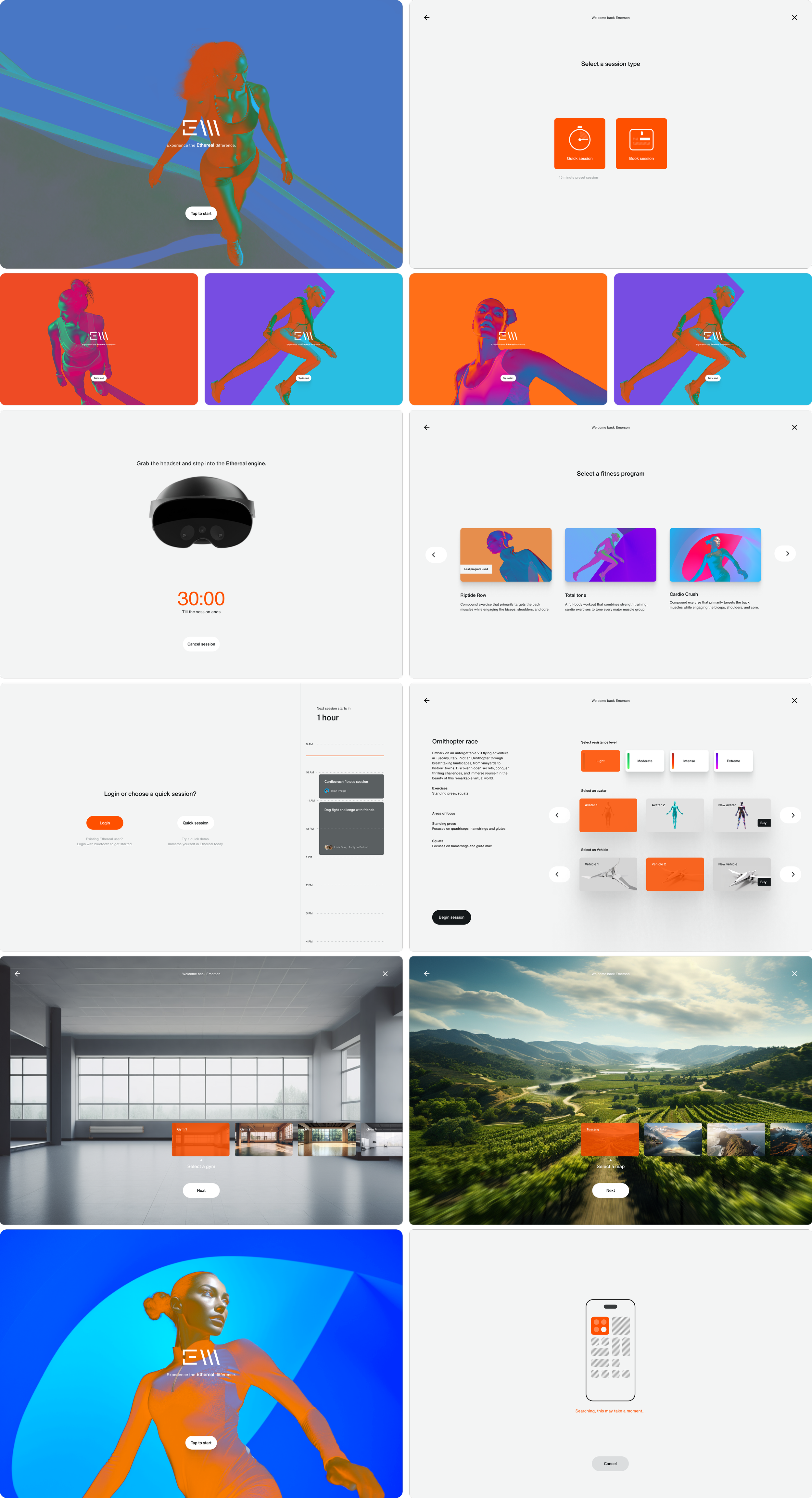
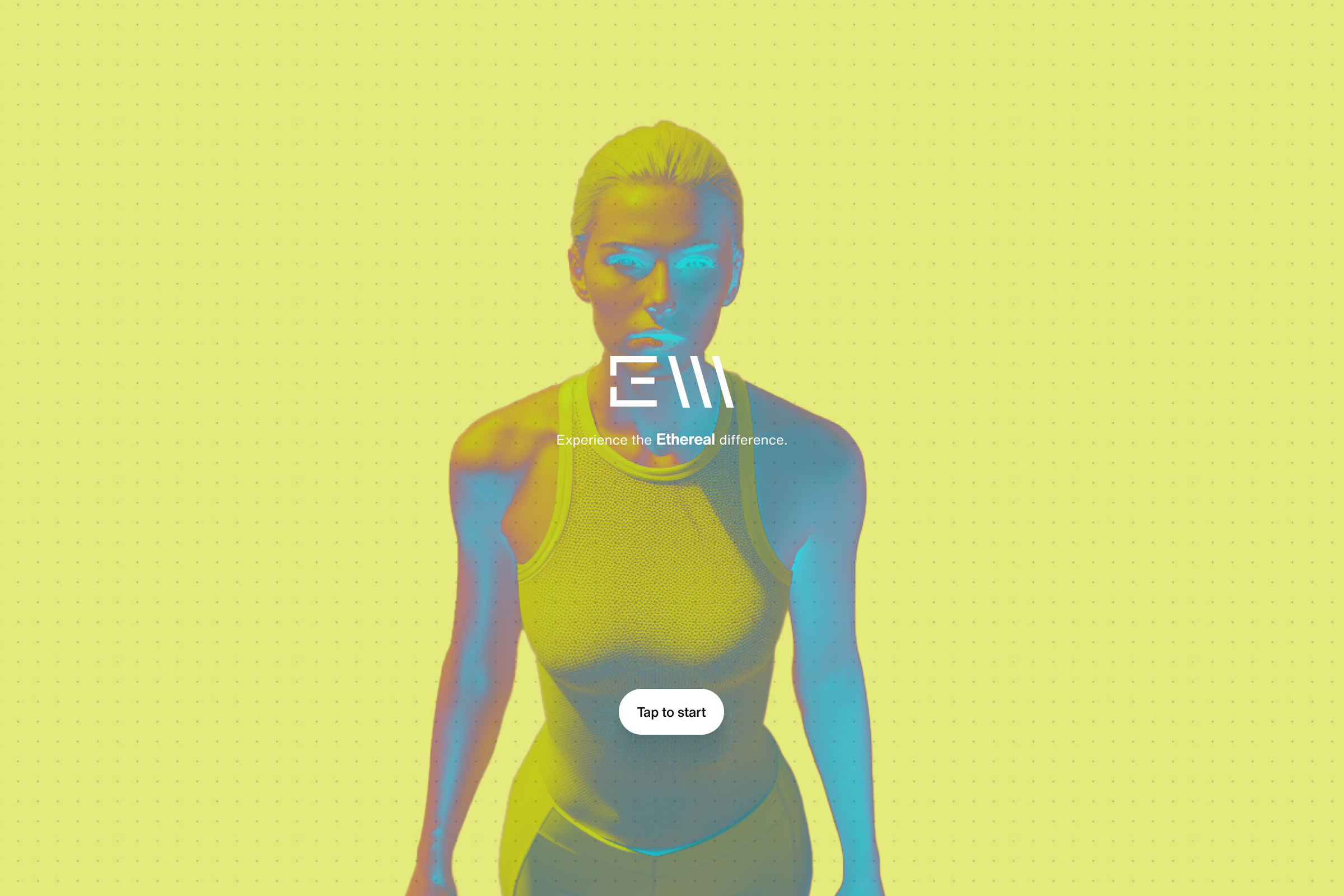
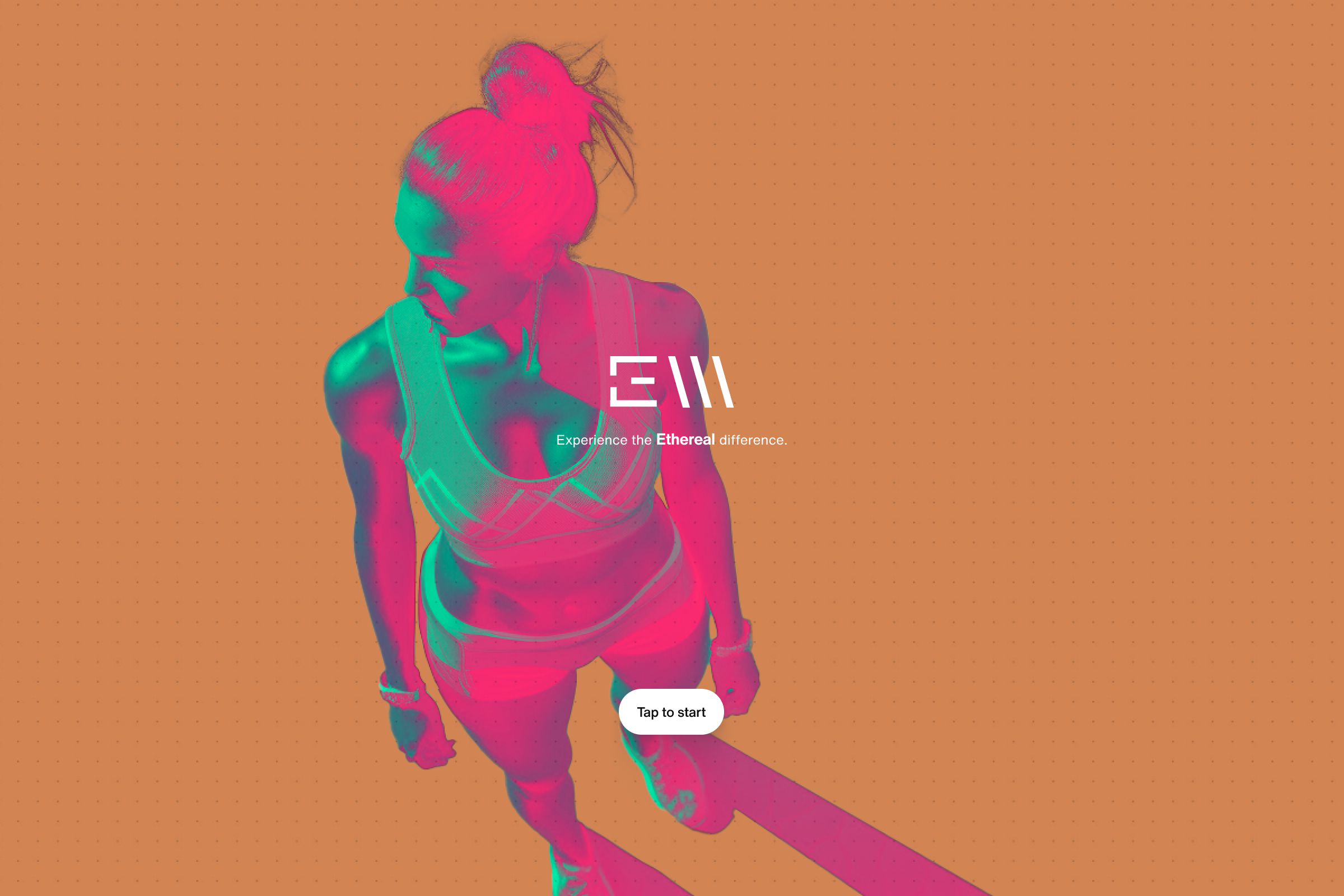
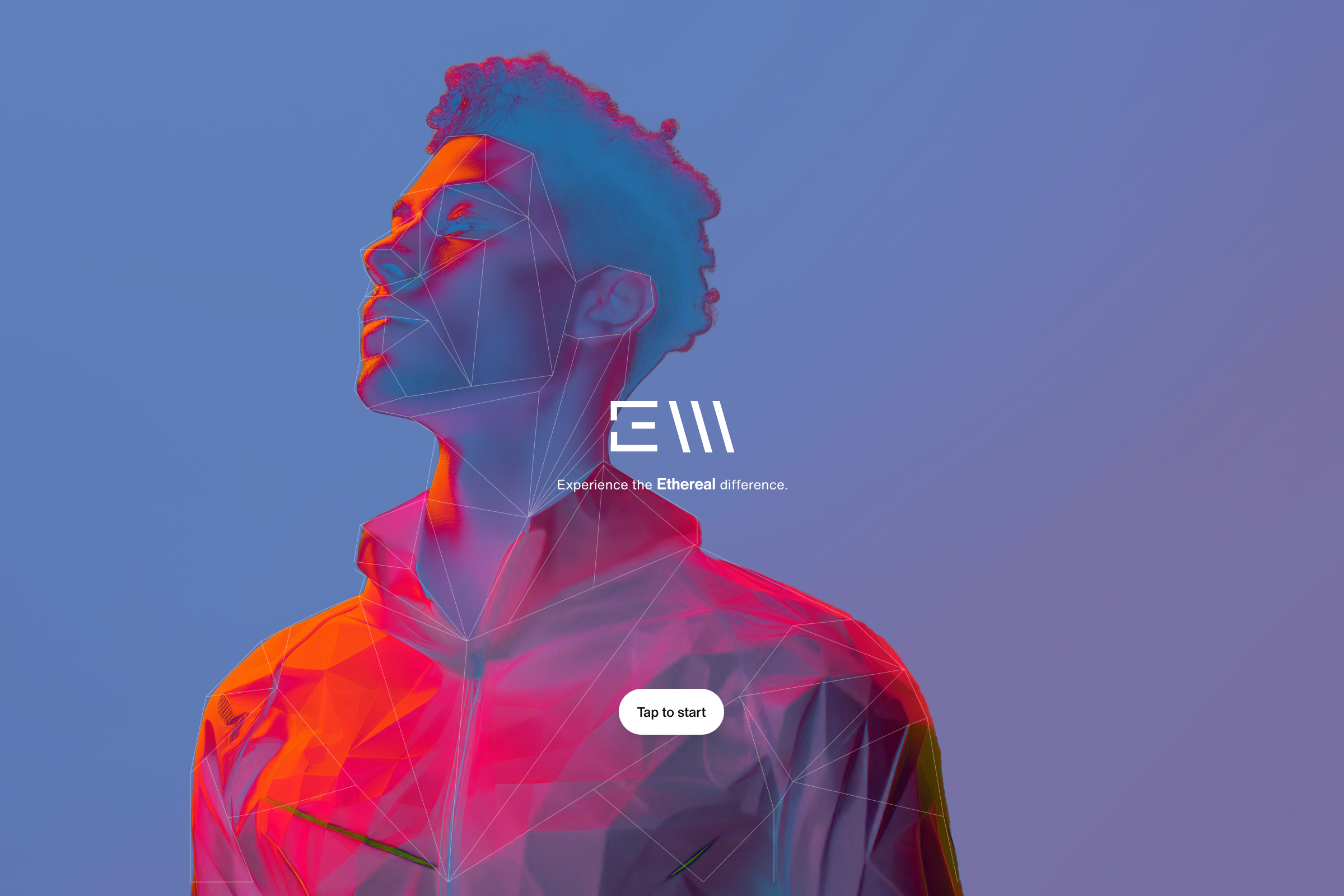
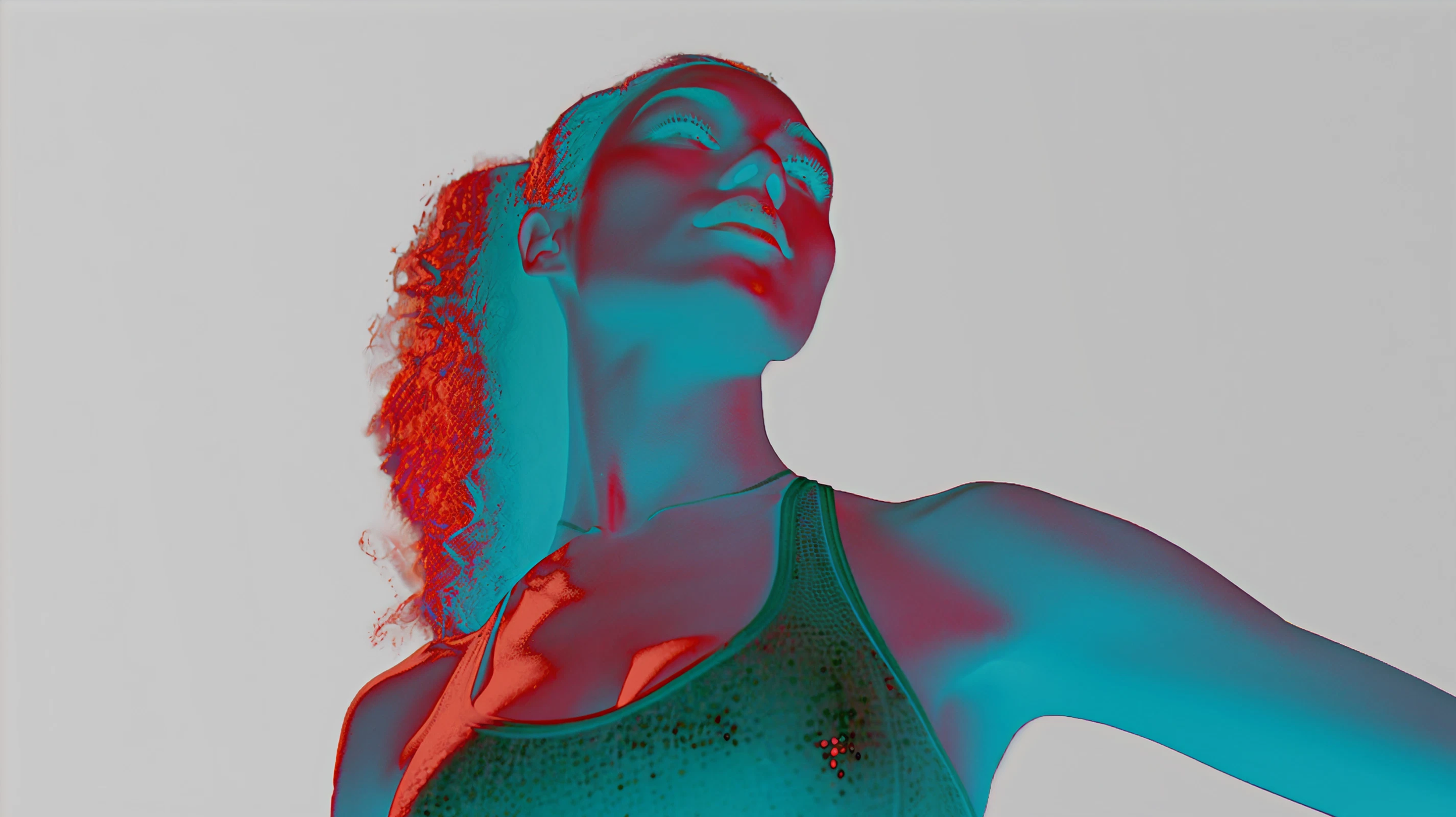
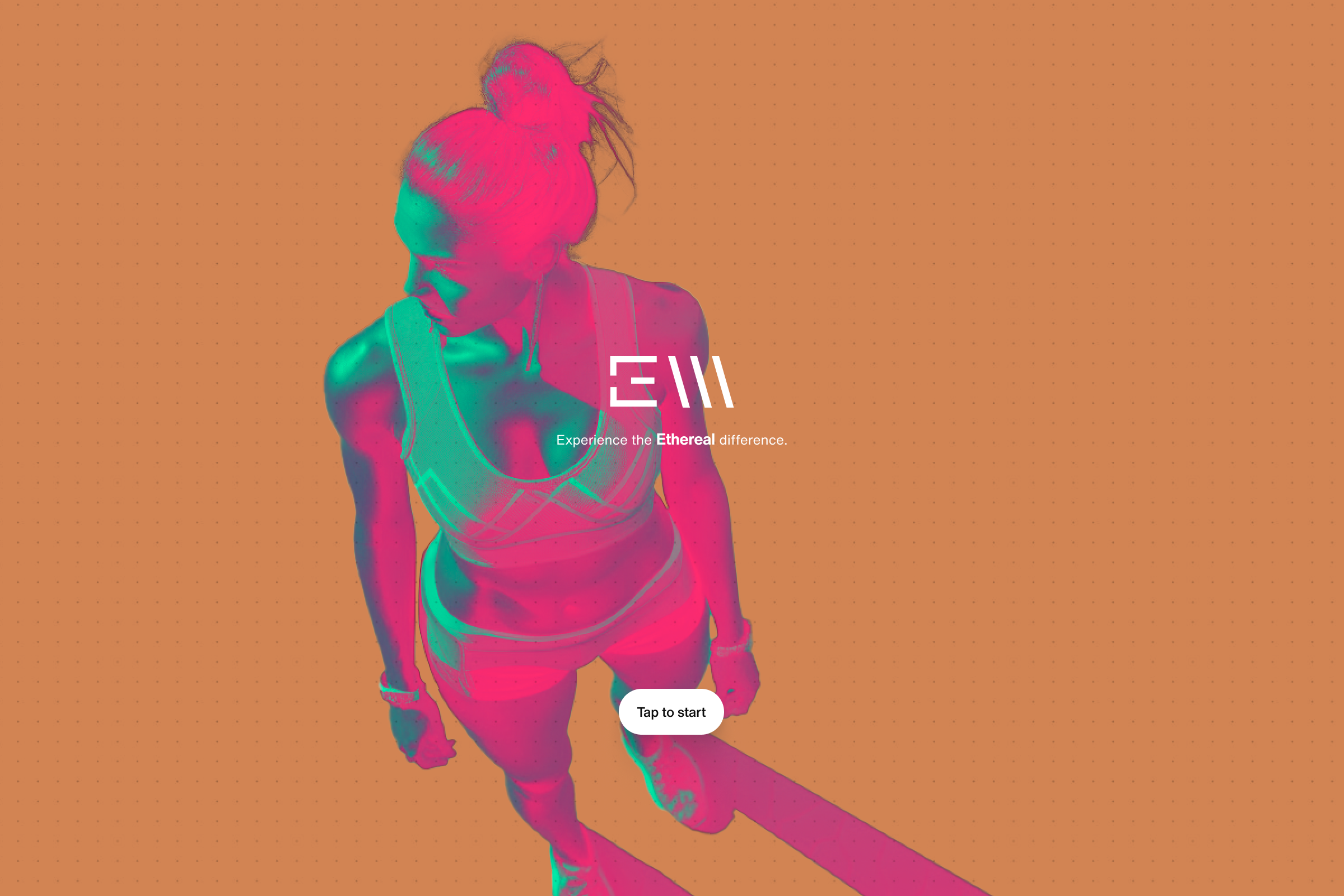
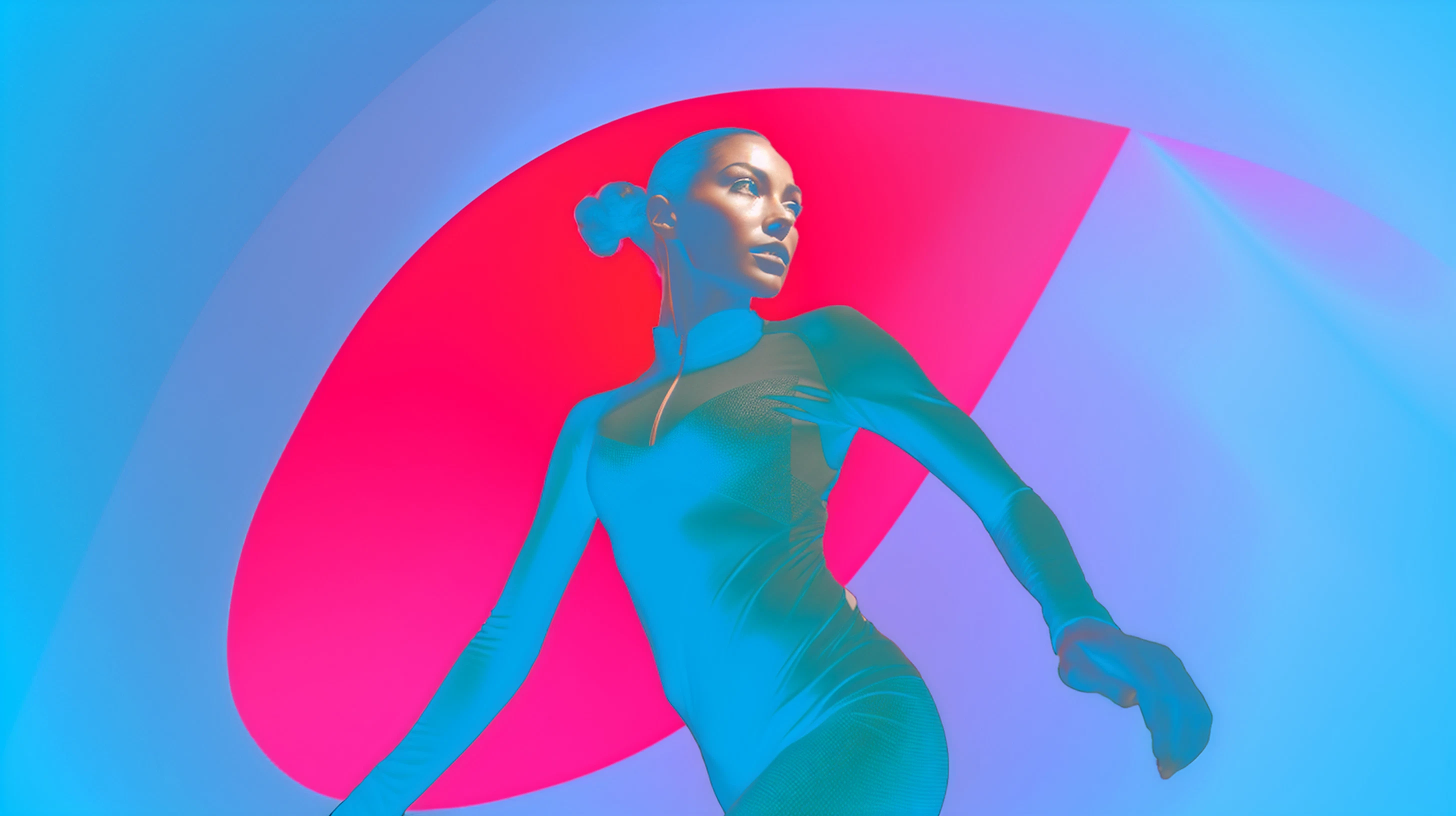
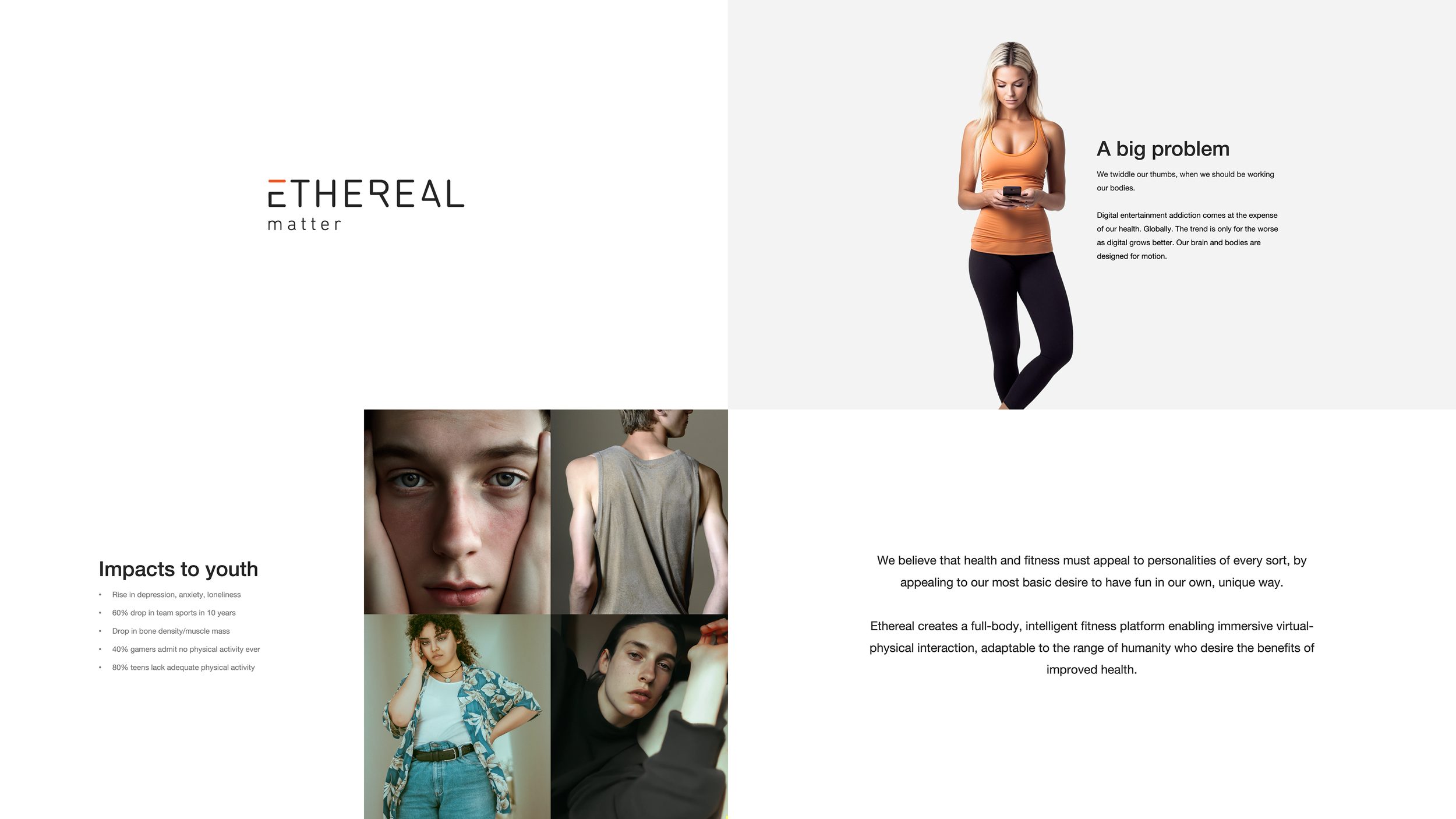
Early AI tools were used to produce cost-effective visuals that hinted at the immersive nature of EVA's VR experience — a practical solution for a stage where photography wasn't yet feasible.
My Role
Investor Communications — Led overall art direction and developed concise data visualizations, refining the product narrative to clearly communicate market opportunity including TAM.
Design Art Direction — Drove early brand concepts — color schemes, typography, and layout — to maintain consistency across all investor-facing materials.
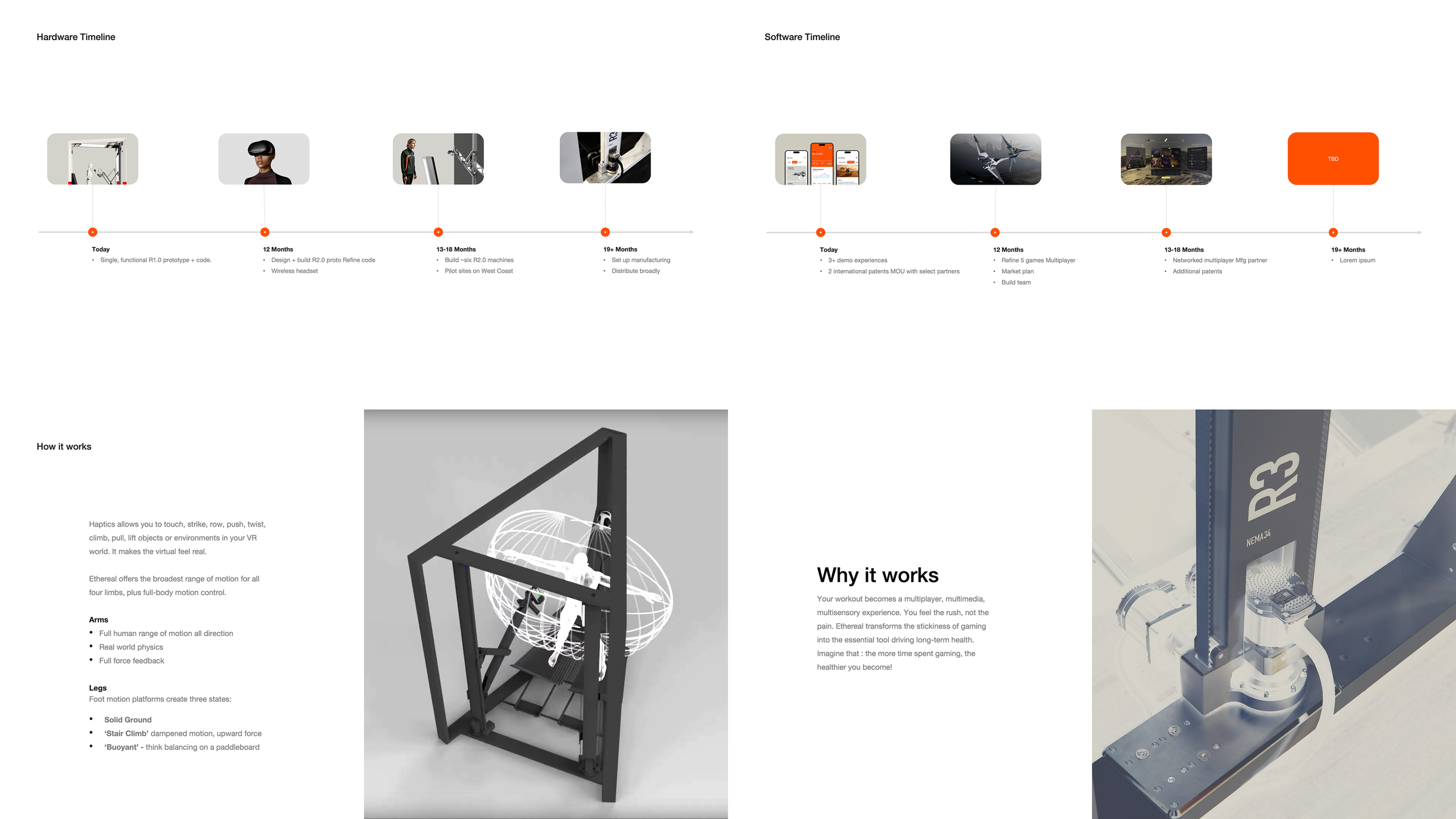
Visual Storytelling — Ensured the pitch deck flowed seamlessly from problem statement to solution, with each section building on the last.

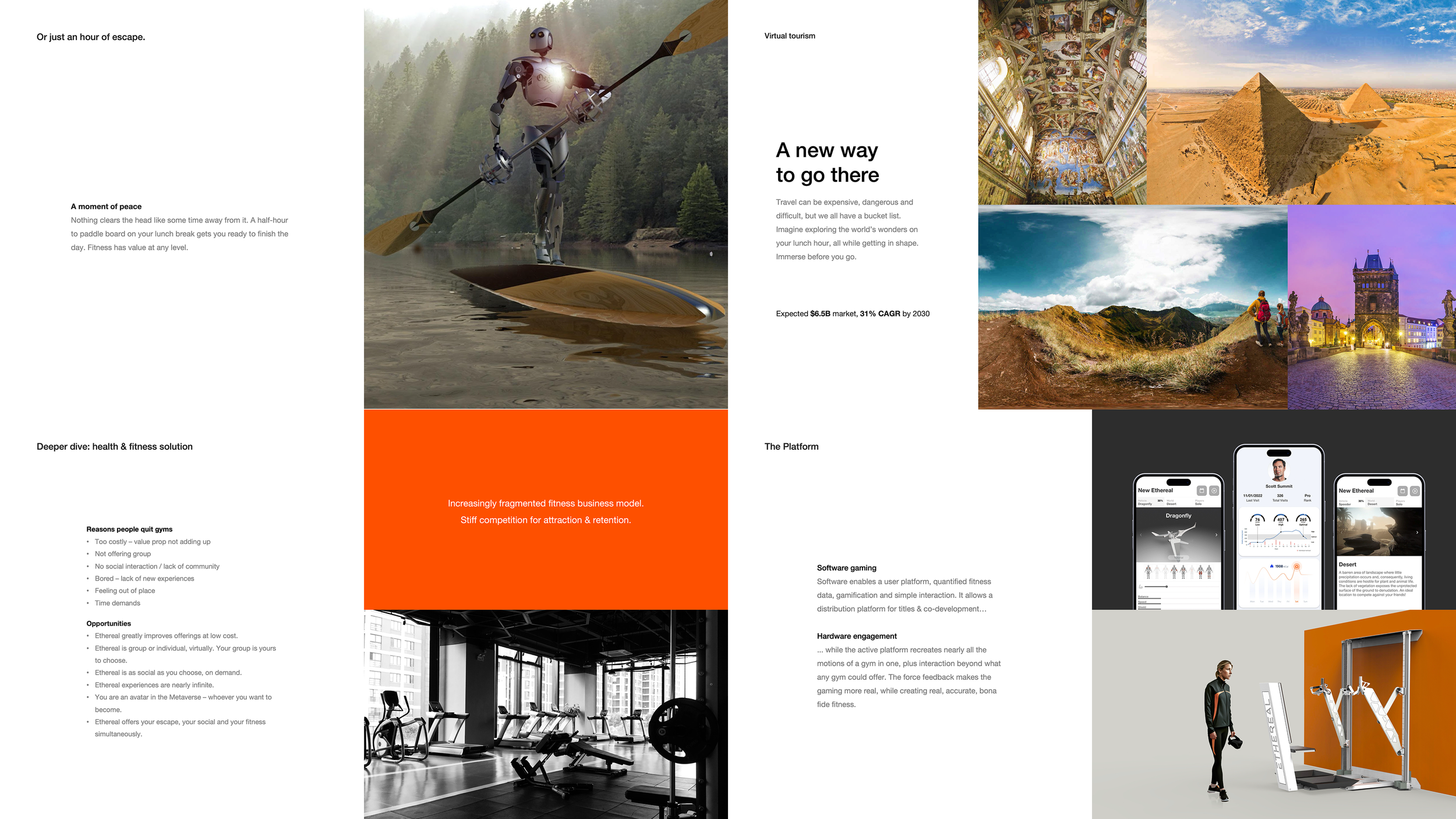
Brand Research & Definition
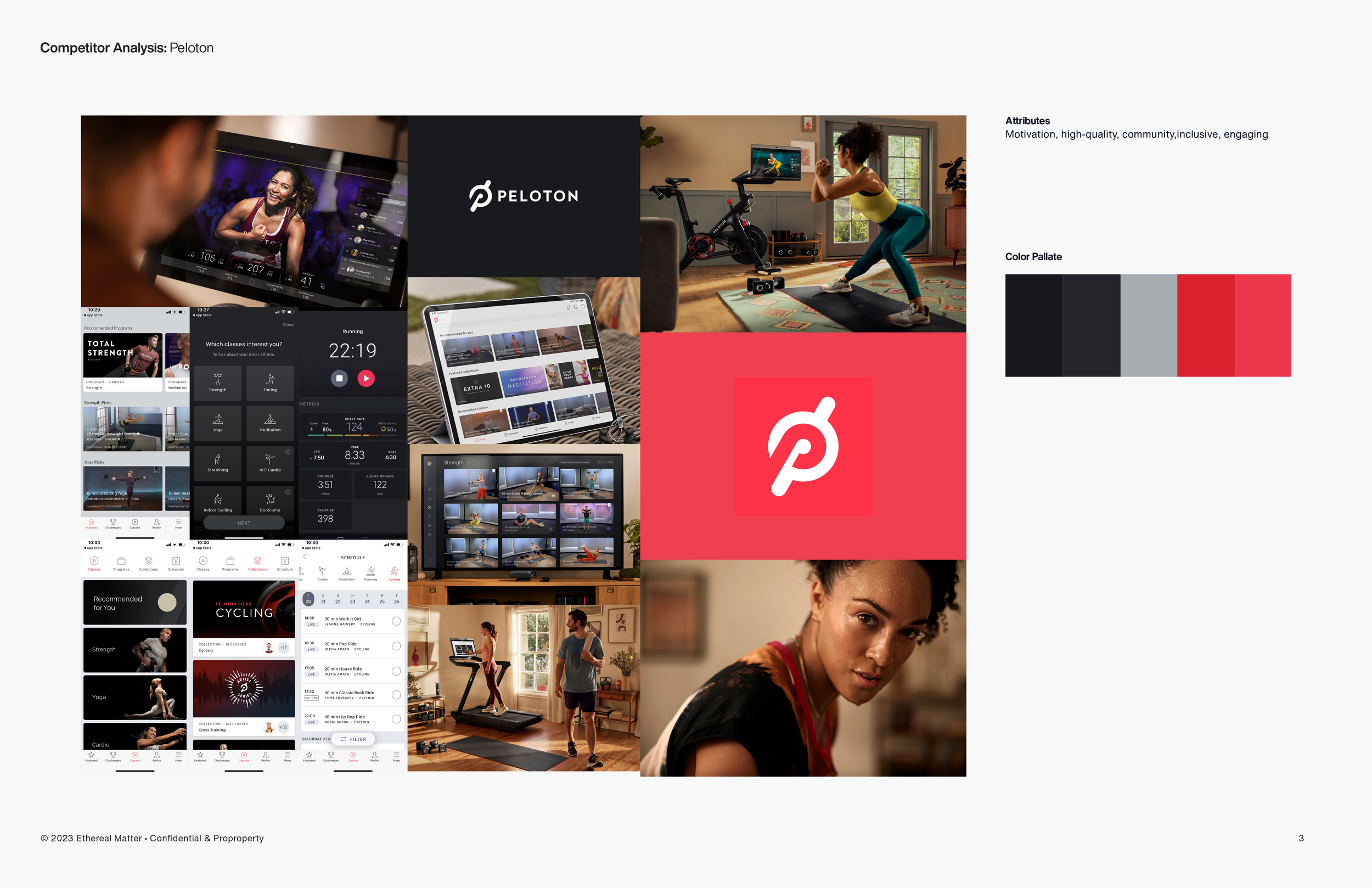
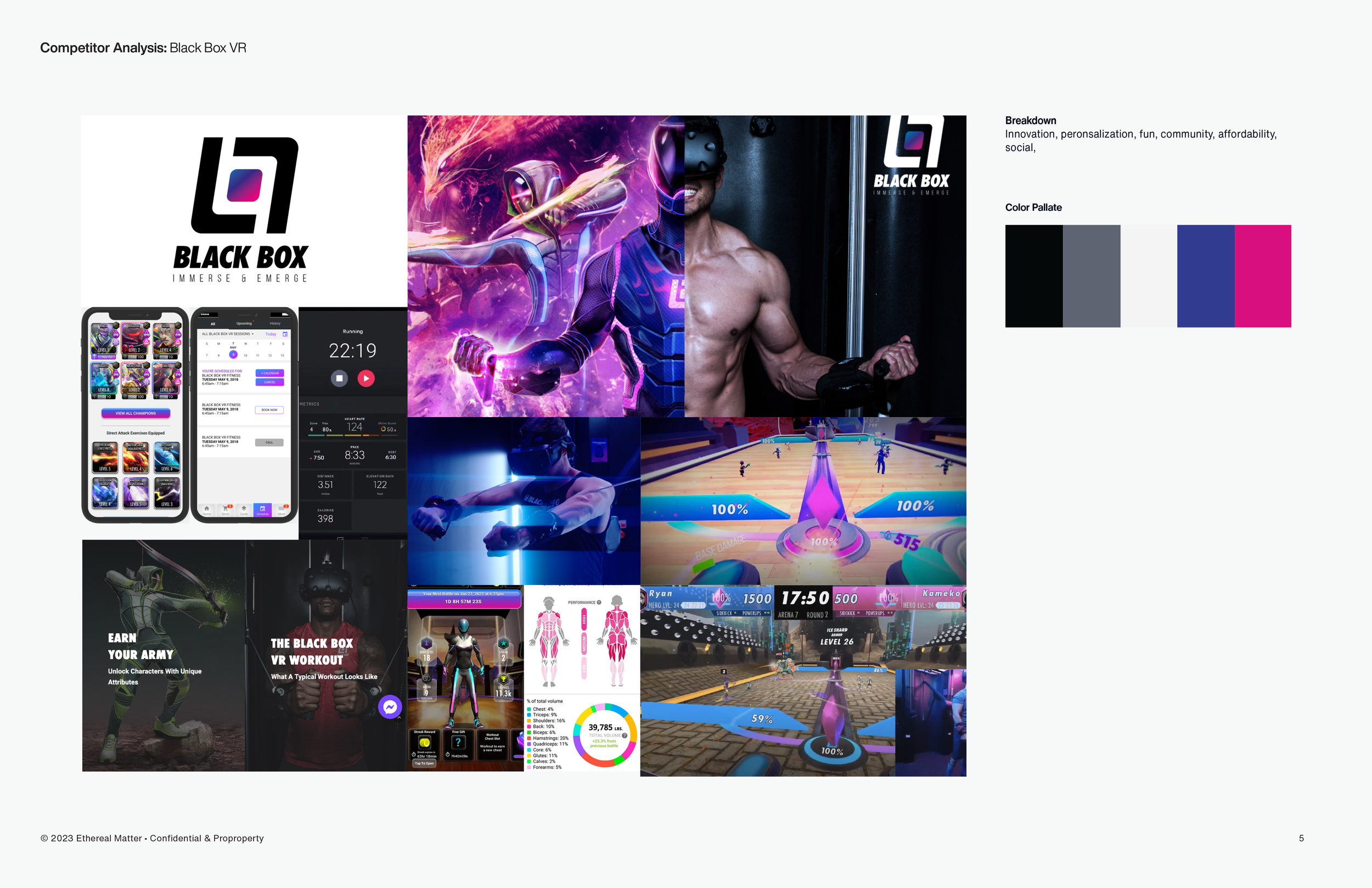
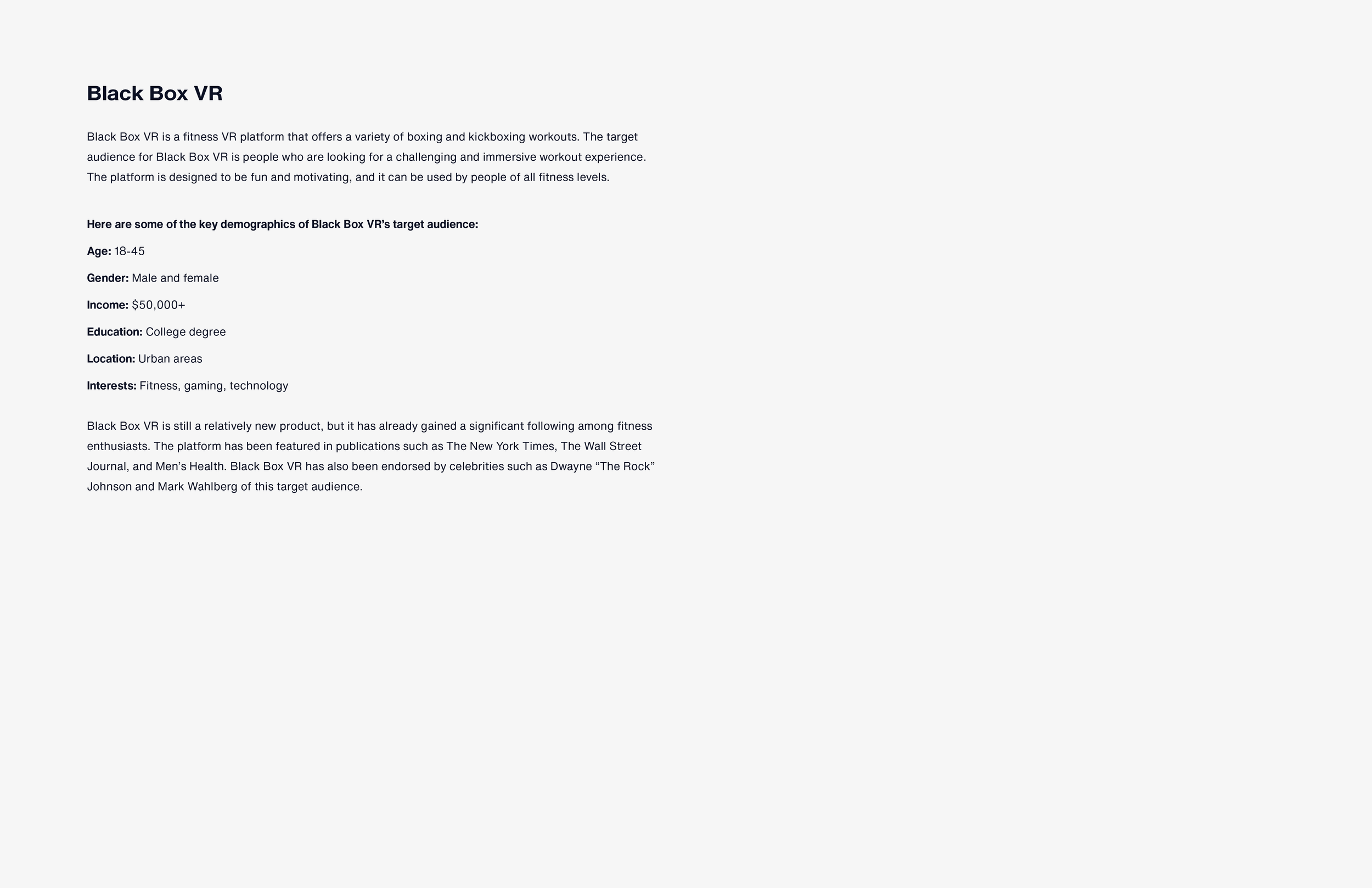
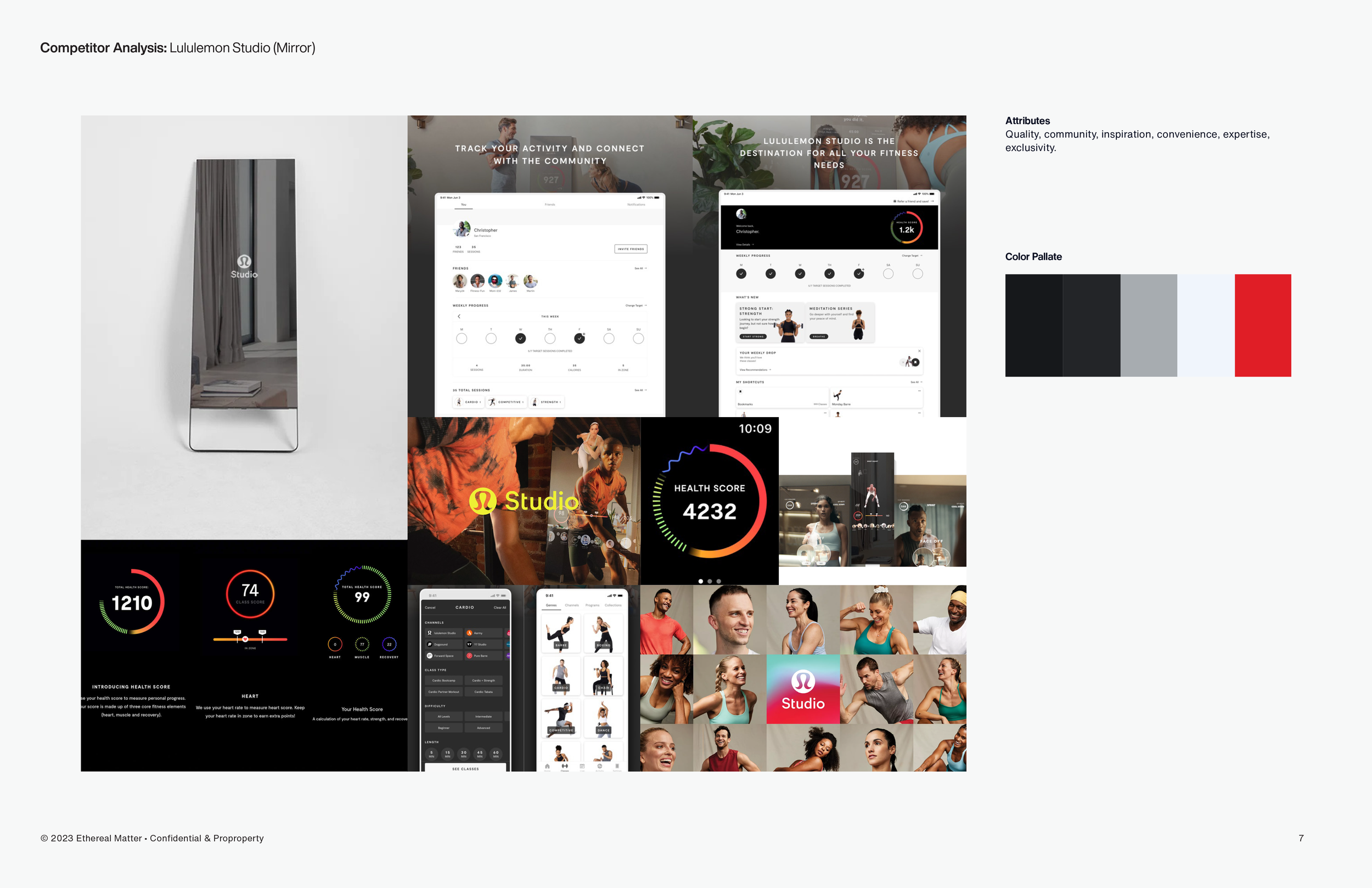
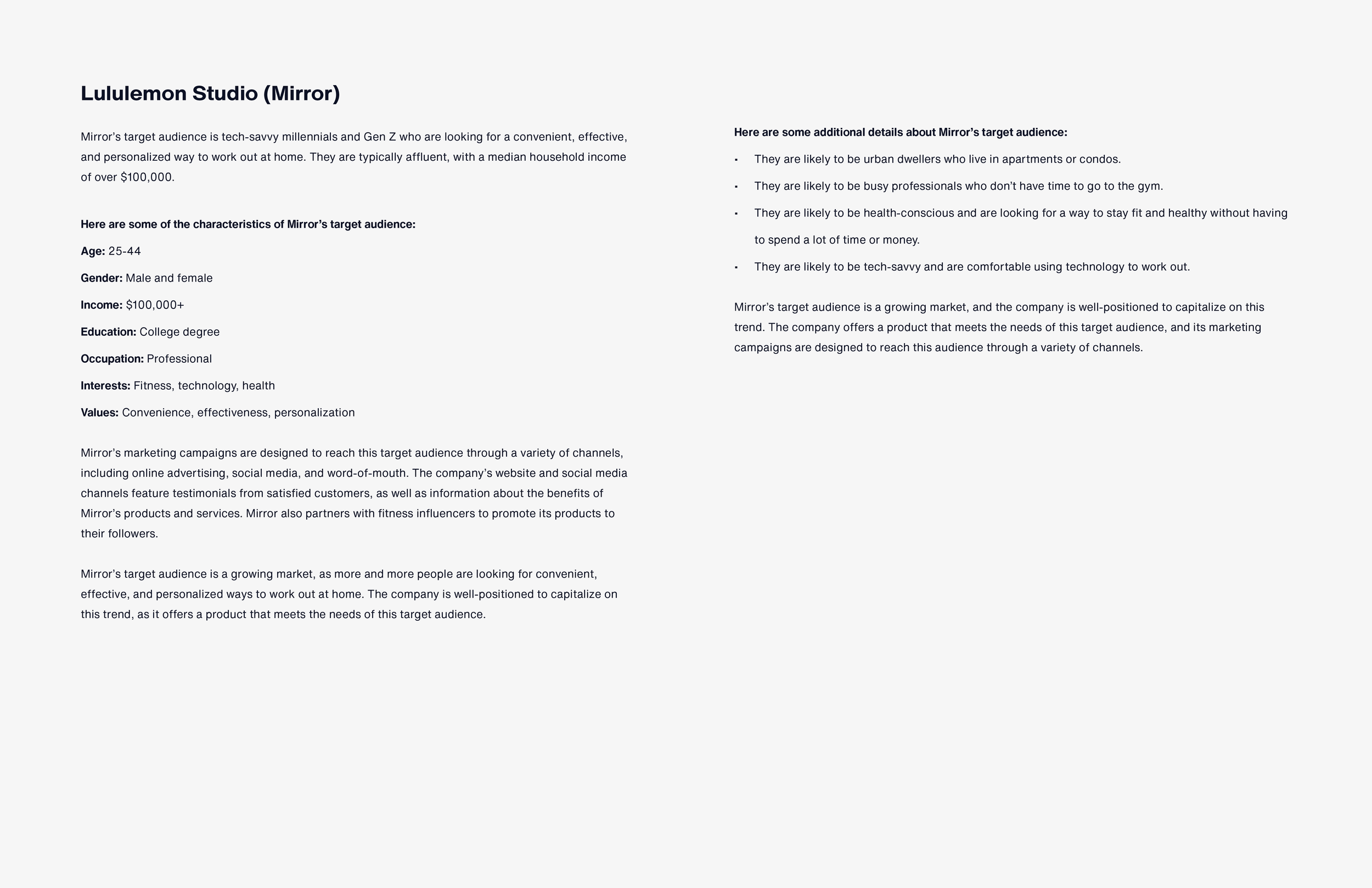
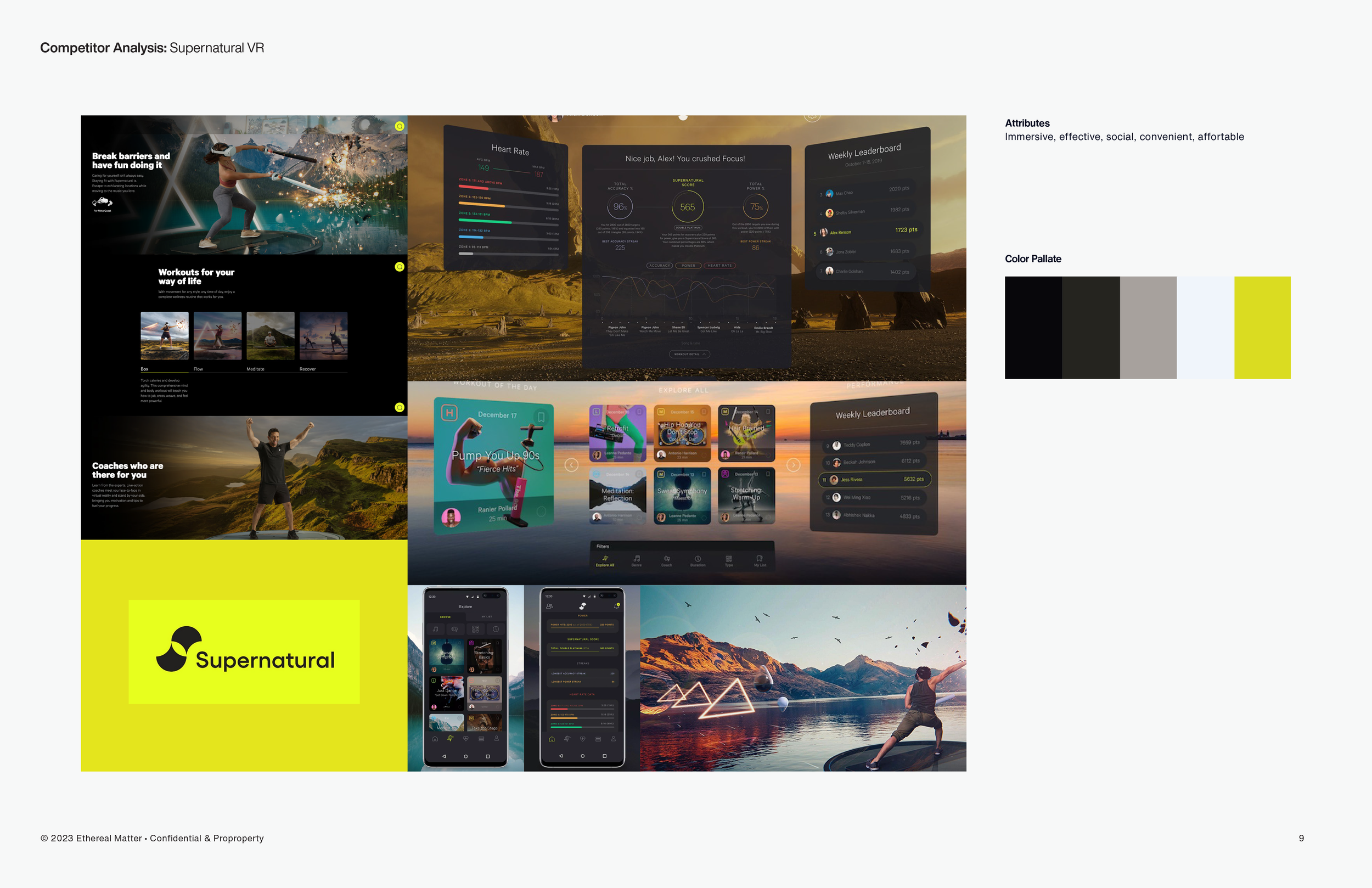
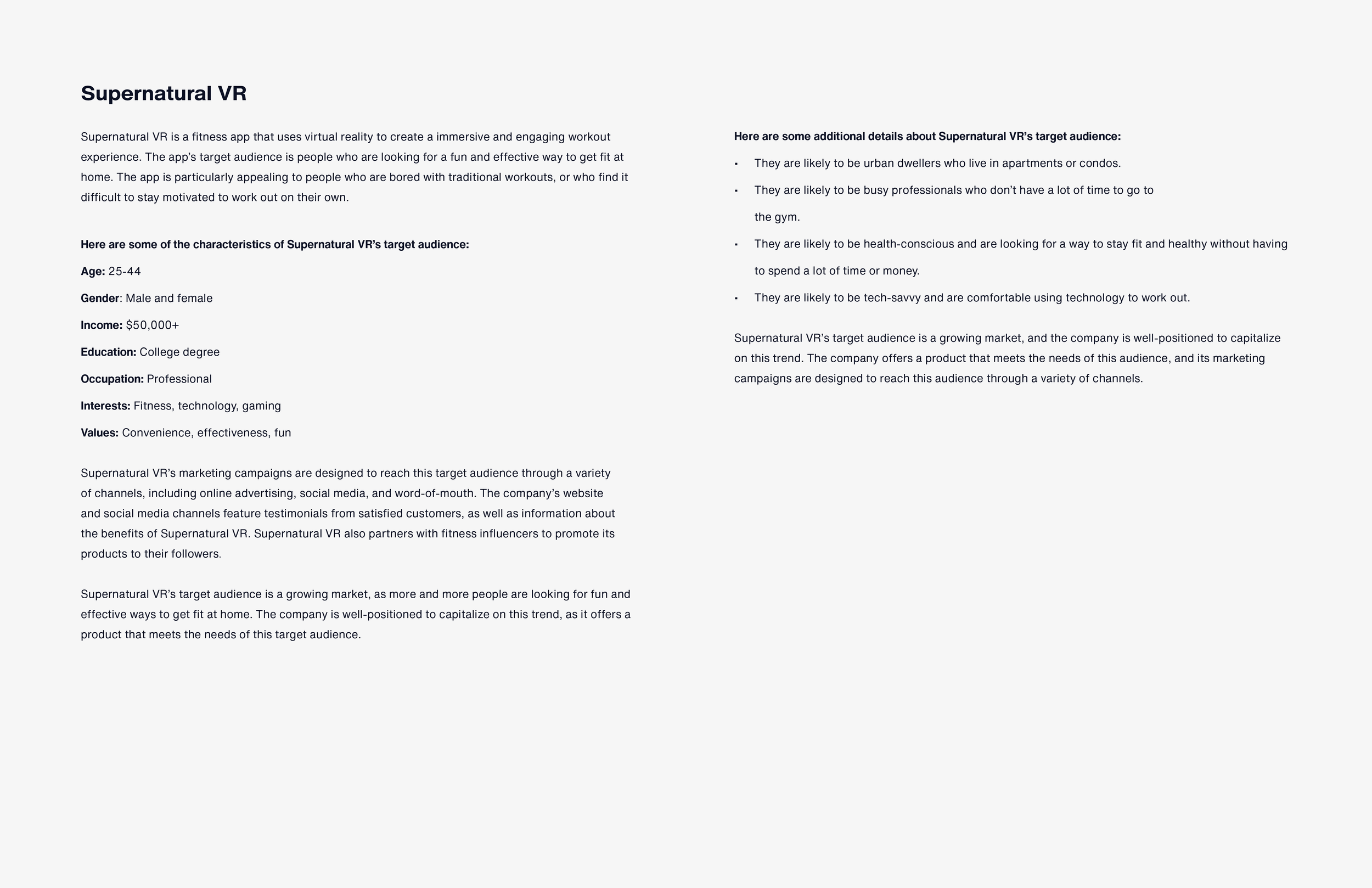
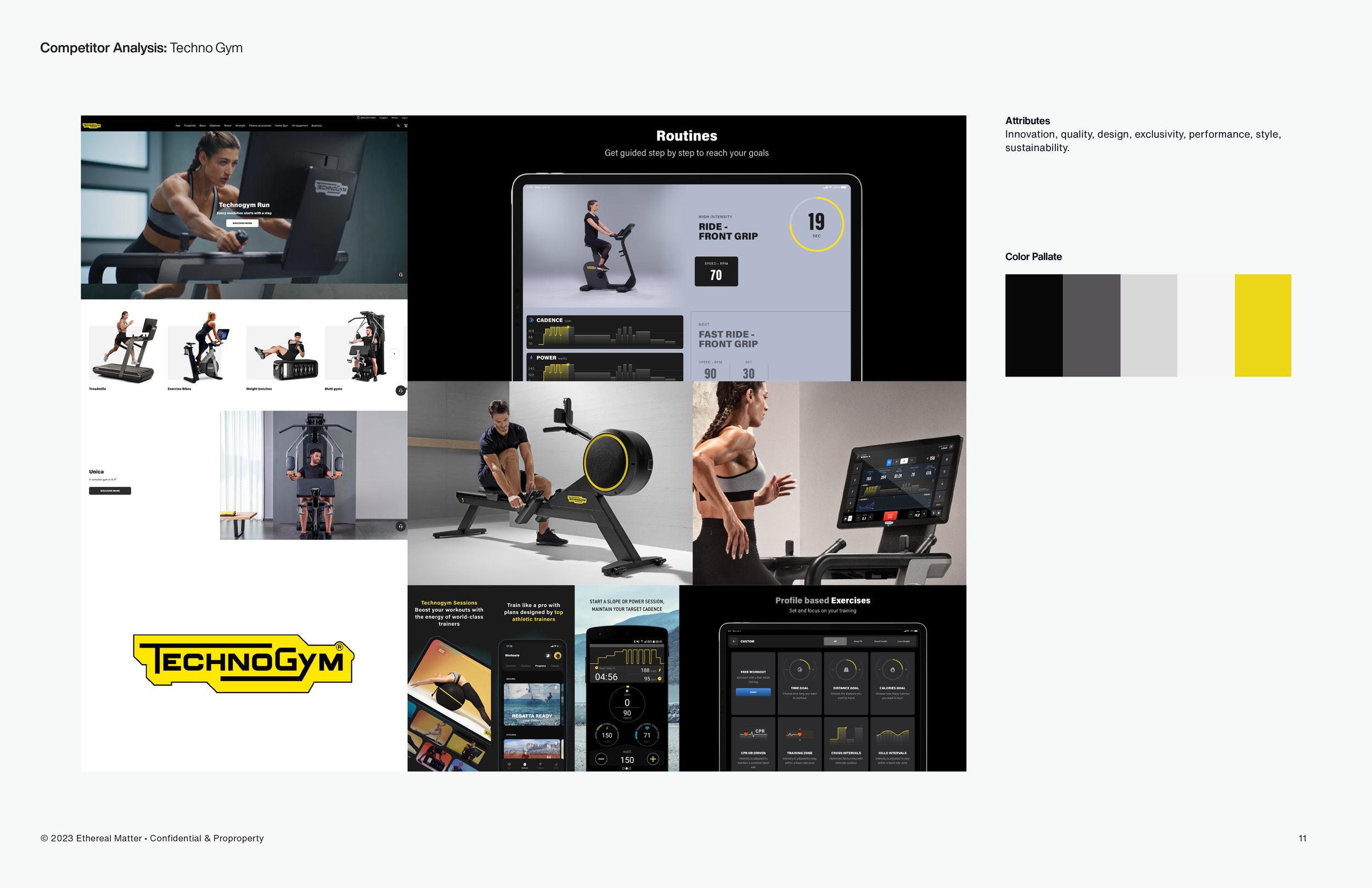
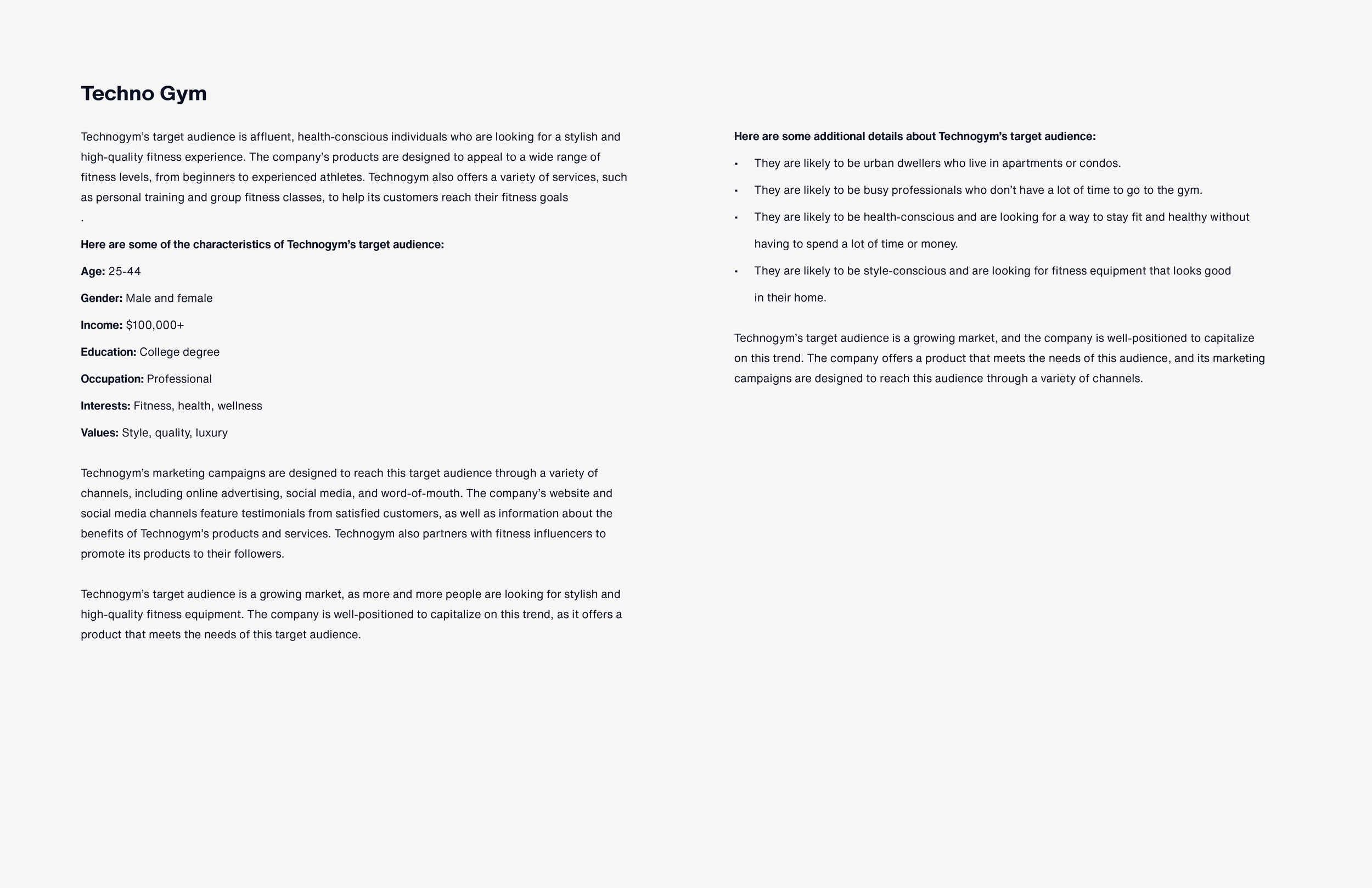
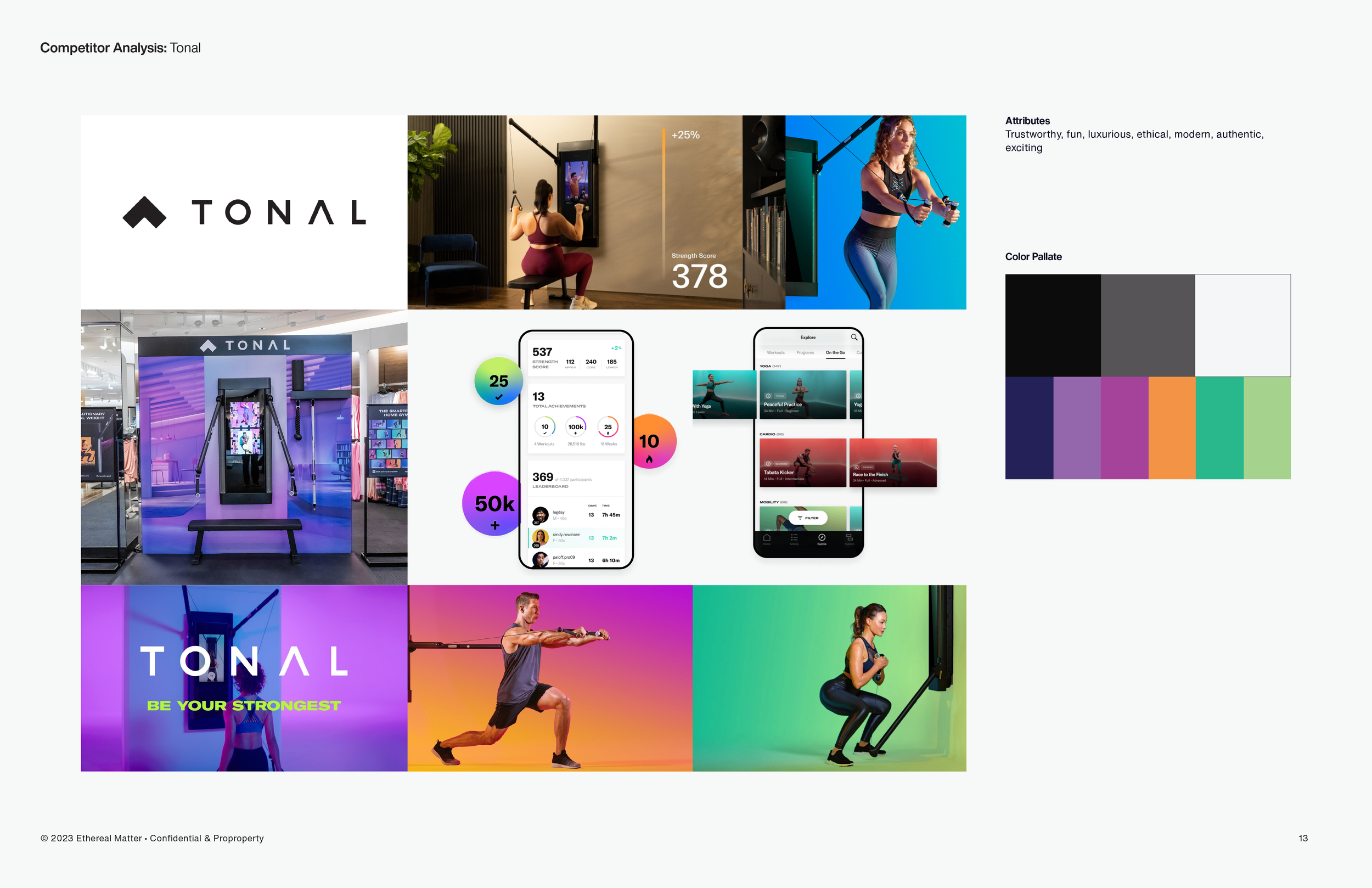
Brand research began at the outset of the engagement, focused on defining the ethos of Ethereal Matter. A competitive analysis was conducted across companies occupying the fitness and VR space — including Peloton, Technogym, Tonal, Blackbox VR, Lululemon Studio (formerly Mirror), and Supernatural VR — alongside a review of demographic trends across each.
Given that EVA was a category-defining product with no direct feature comparisons, a traditional competitive feature audit wasn't applicable. A design audit proved more valuable — surfacing where the brand and visual language could go, and how it might differentiate itself while drawing inspiration from adjacent verticals.
It also became clear that the product needed to feel premium — not in an overtly luxurious way, but in a way that signaled high design integrity. Refined at a glance, intentional under scrutiny. The brand had to speak to those who valued quality and craft without drifting into extravagance.
Mood Boards & Brand Definition
Early conversations with Scott Summit and the team centered on understanding the product's inspiration and getting into the founder's headspace. As an industrial designer, Scott brought a clear point of view — and those discussions directly shaped the mood boards that followed.
The references were grounded in modernist industrial design: Braun's work from the 1960s, and more contemporary influences like the design language of Teenage Engineering. Reductive, minimalist, and refractive patterns were explored alongside sports and fitness aesthetics.
The central challenge was developing a visual language that re-imagined high-tech through a gaming lens — while honoring a functional design ethos and carrying the dynamism and boldness associated with fitness and sport. Balancing all three without losing coherence was the defining tension of the brand work.

Brand Directions