Phy is an early-stage health-tech startup developing a LiDAR-powered diagnostic tool for physical therapists — and needed a UX foundation built from the ground up.
Role: UX Designer
Client: Phy
Type: UX Research & Product Strategy
Year: 2020
Tools: Figma, Zoom
In 2020, I joined Phy as a freelance UX designer to help shape an MVP iOS app built around the company's physical therapy diagnostic technology. New to the space, I opened with a three-week discovery phase to build a working understanding of the physical therapy industry, patient intake procedures, and the broader rehab process.
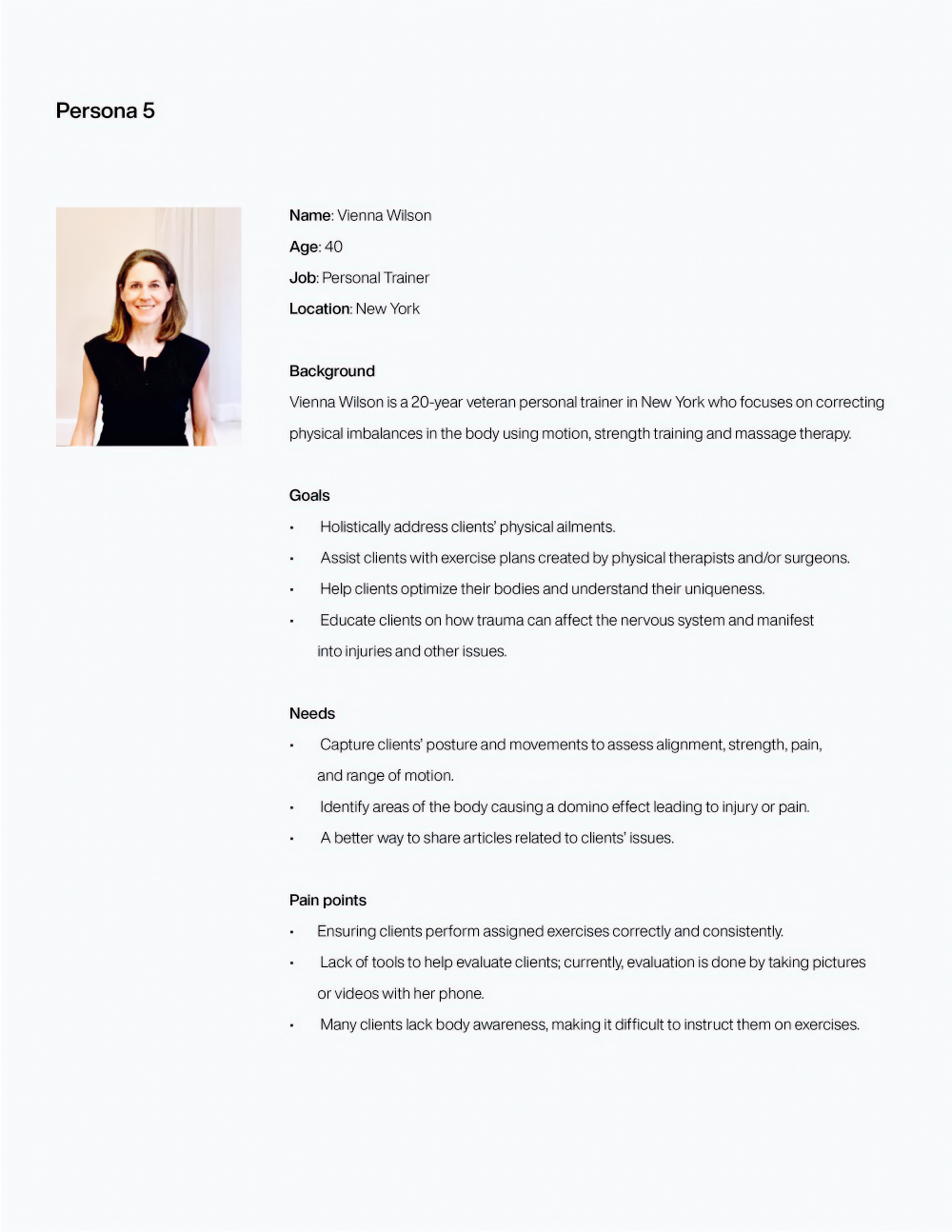
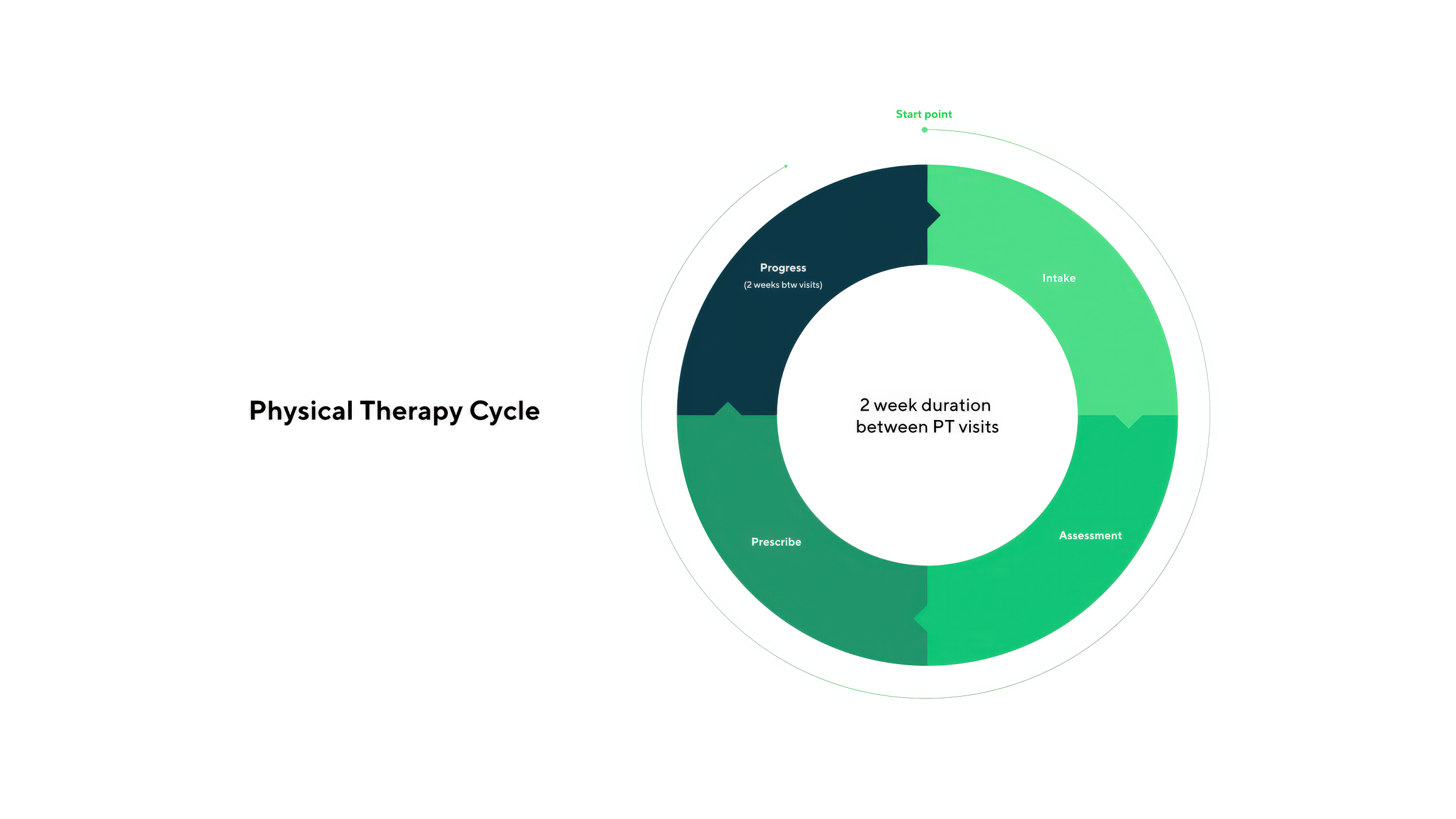
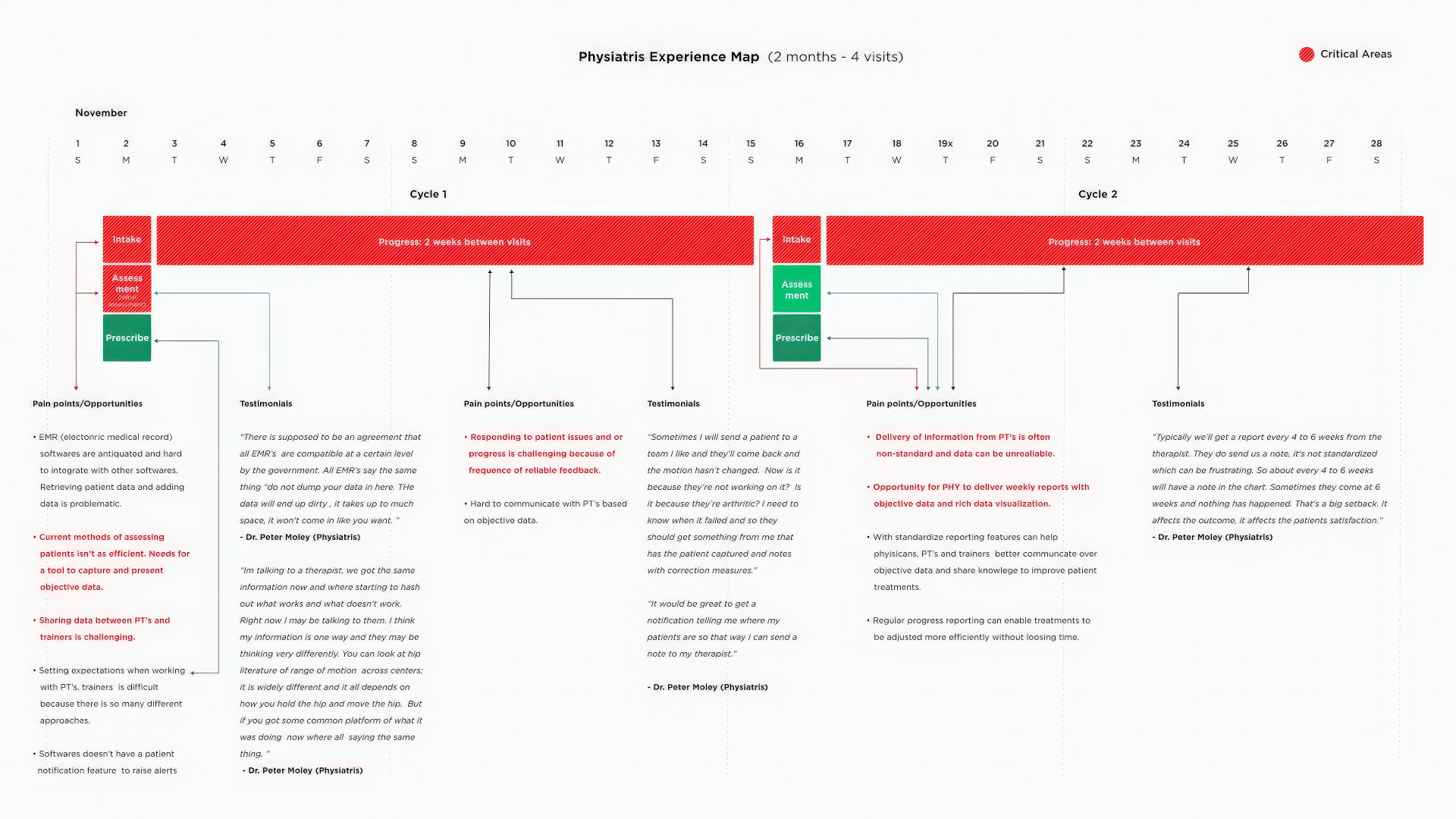
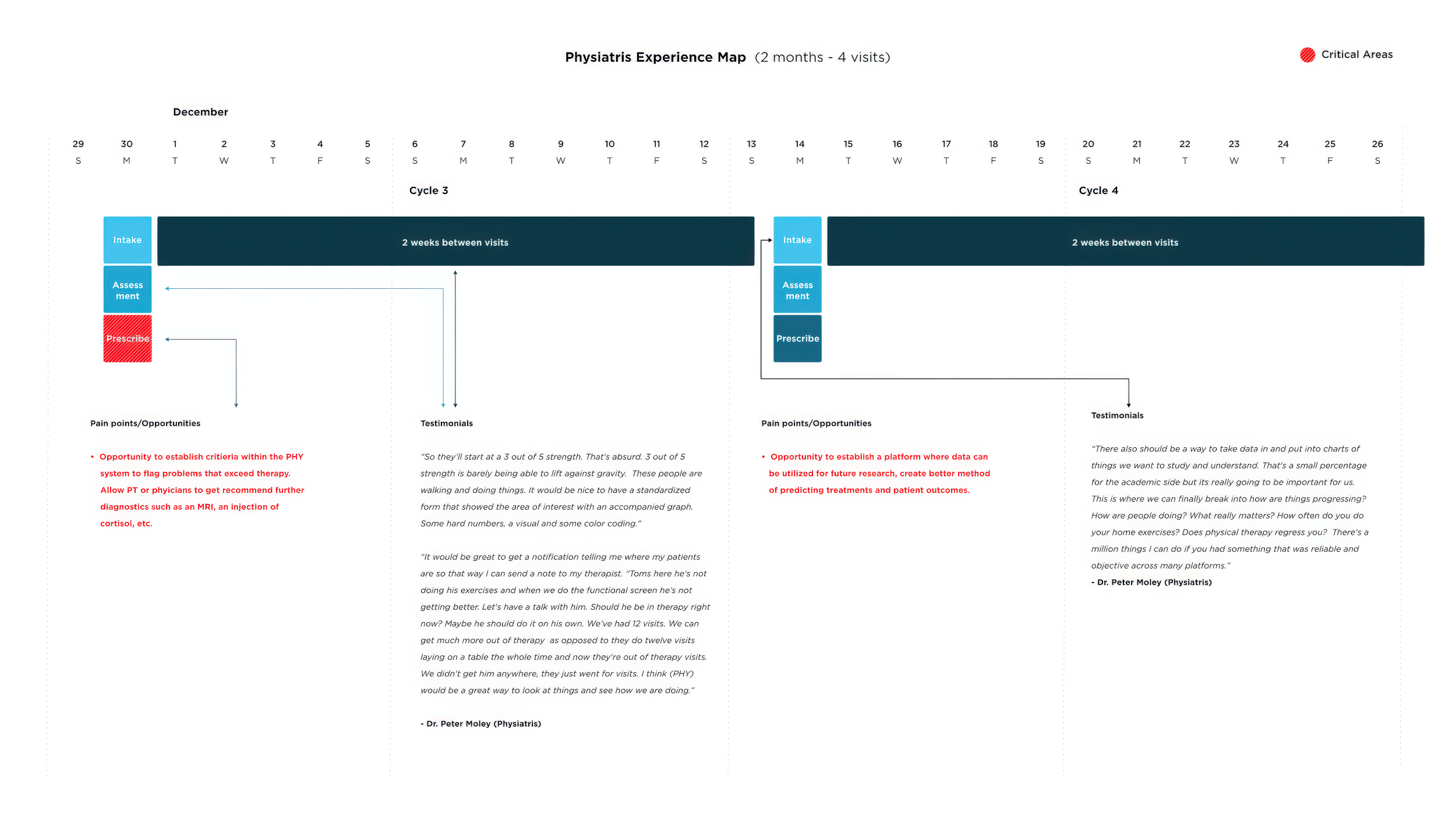
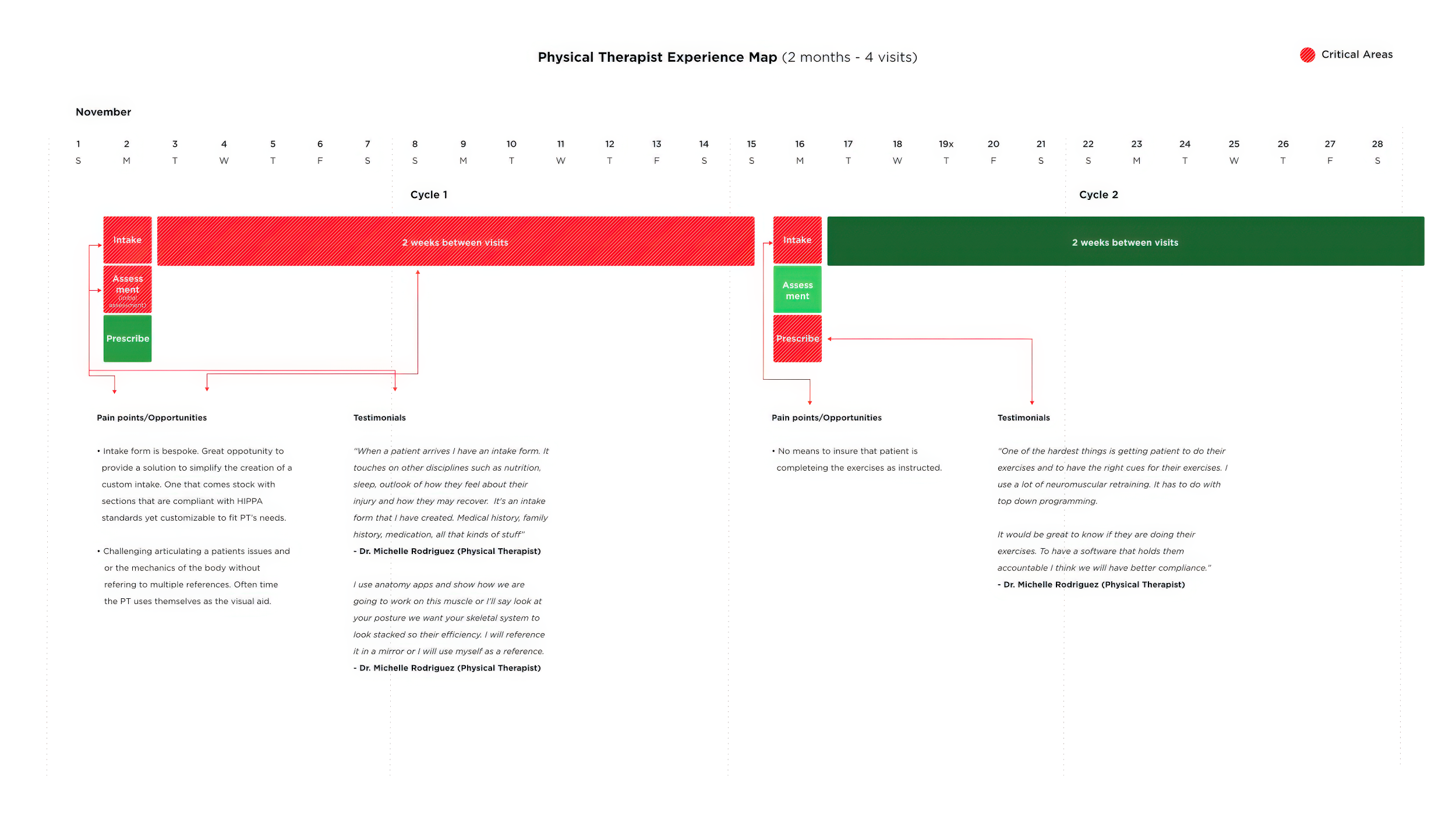
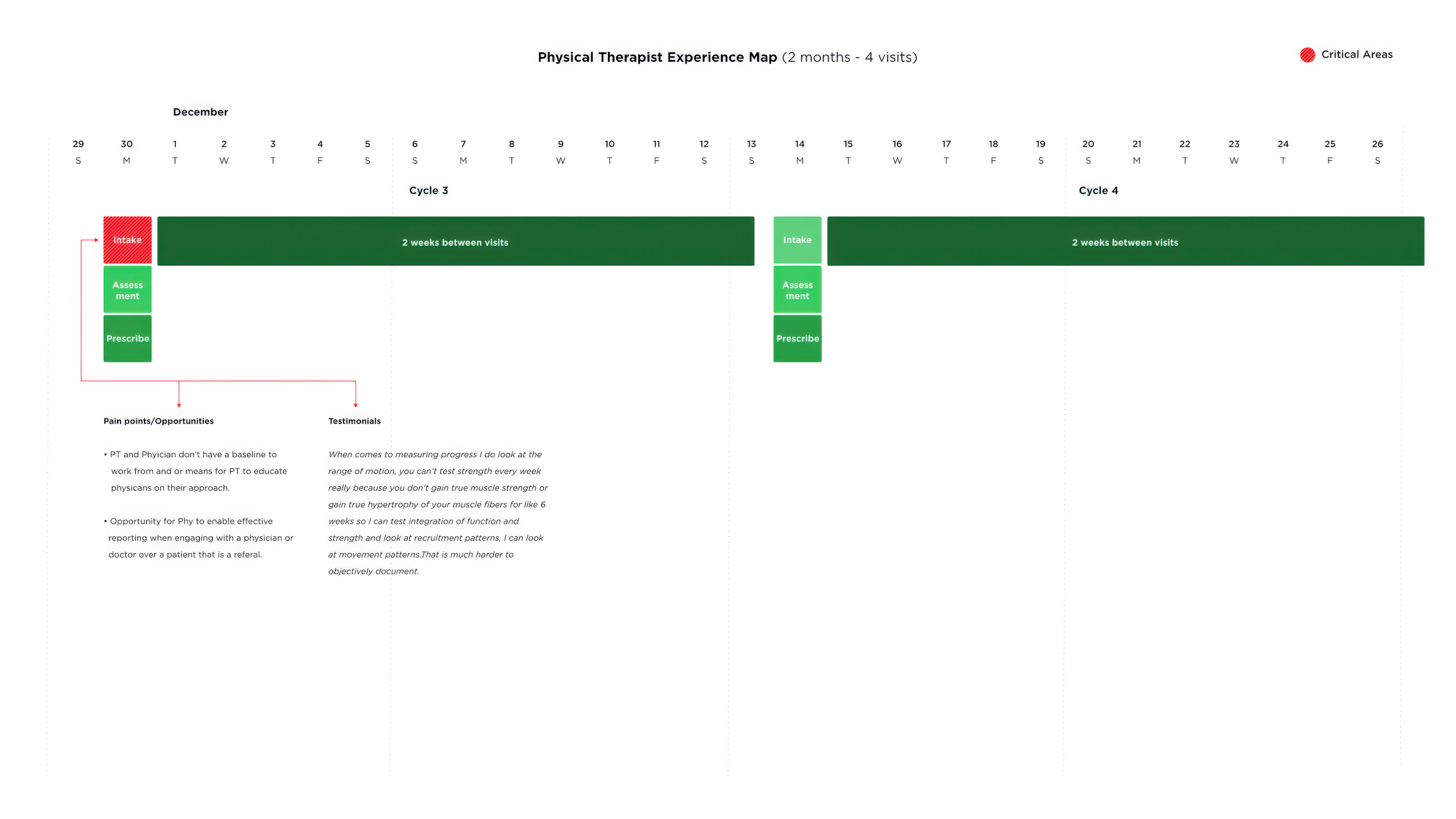
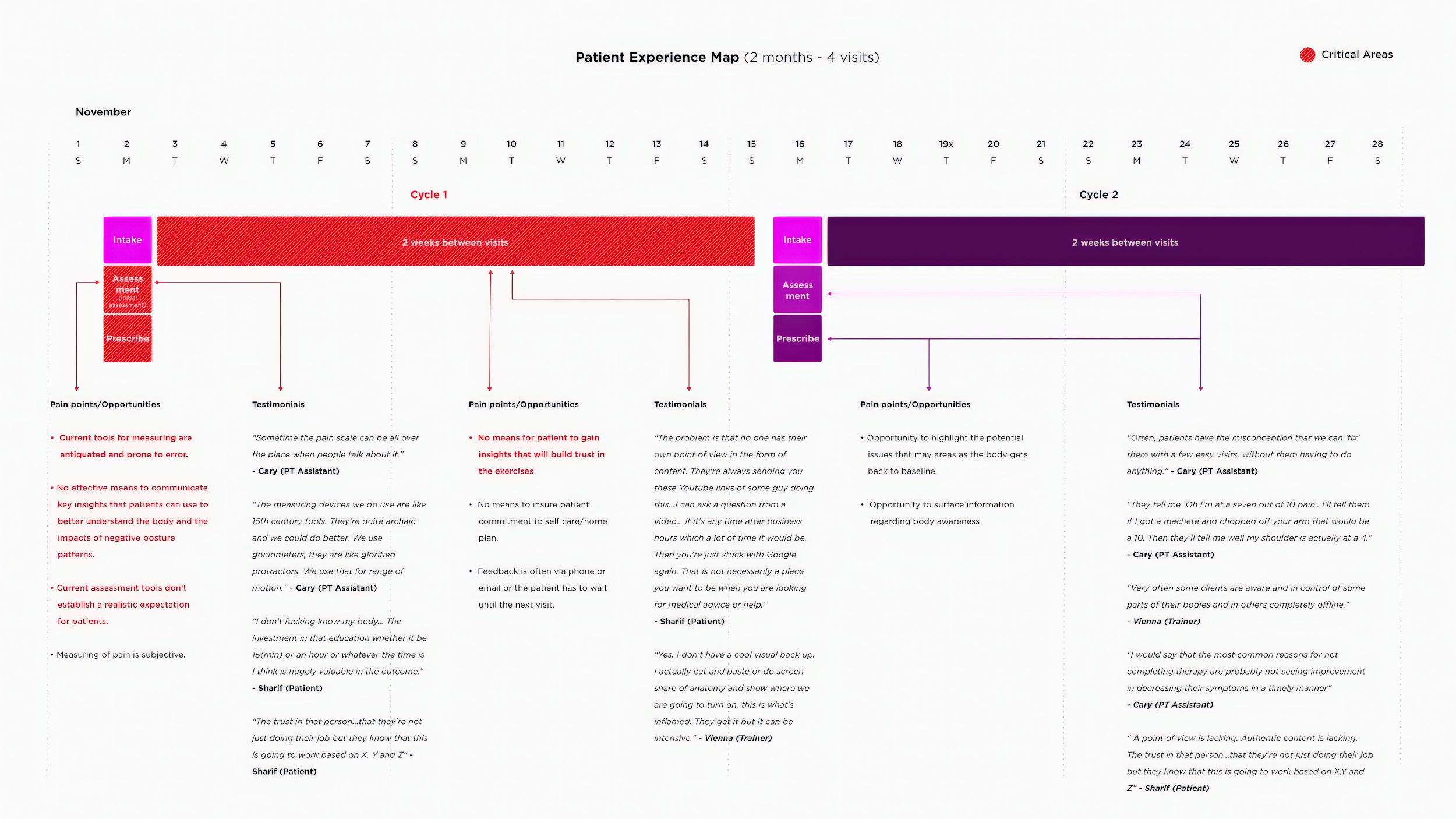
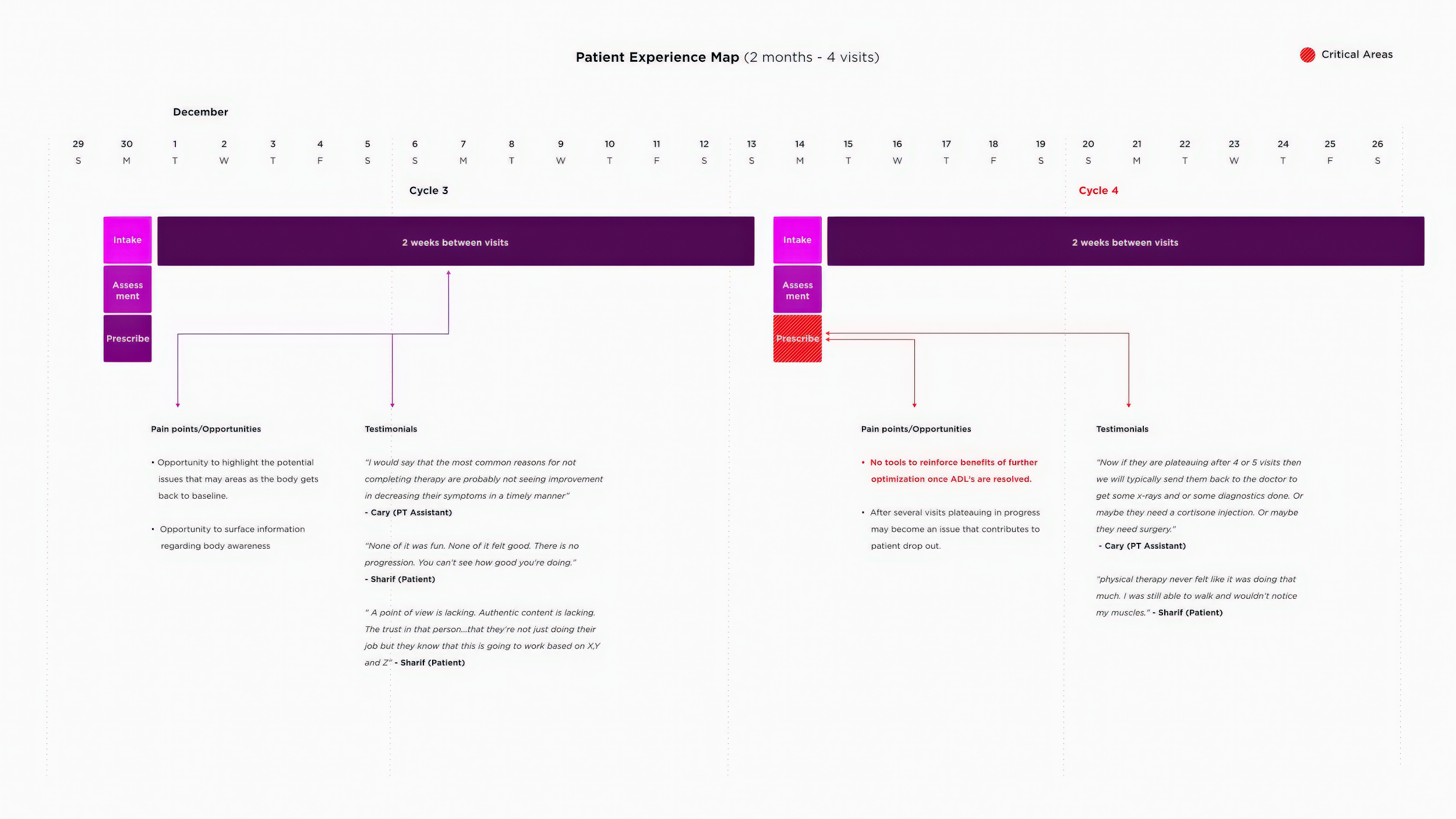
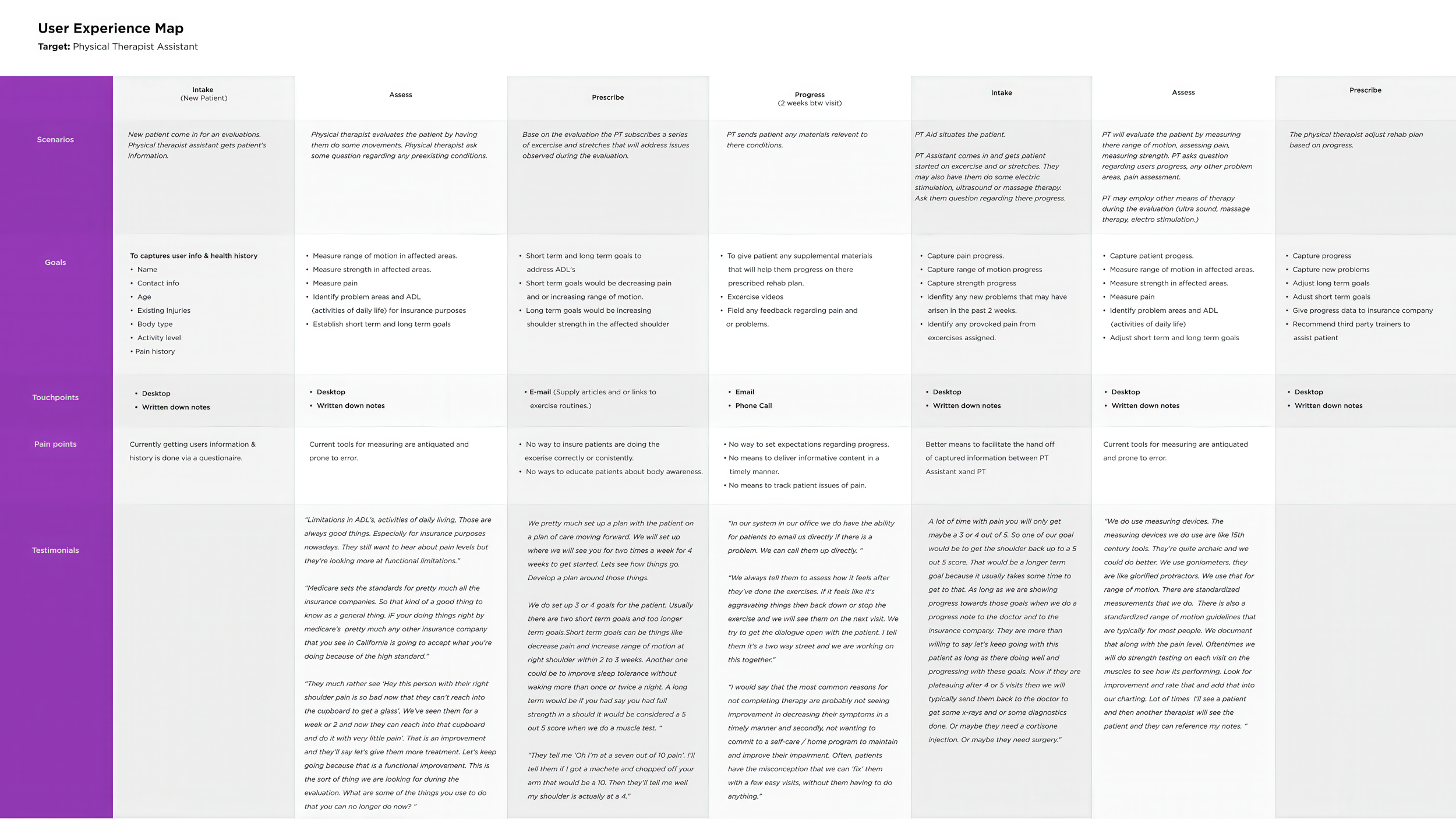
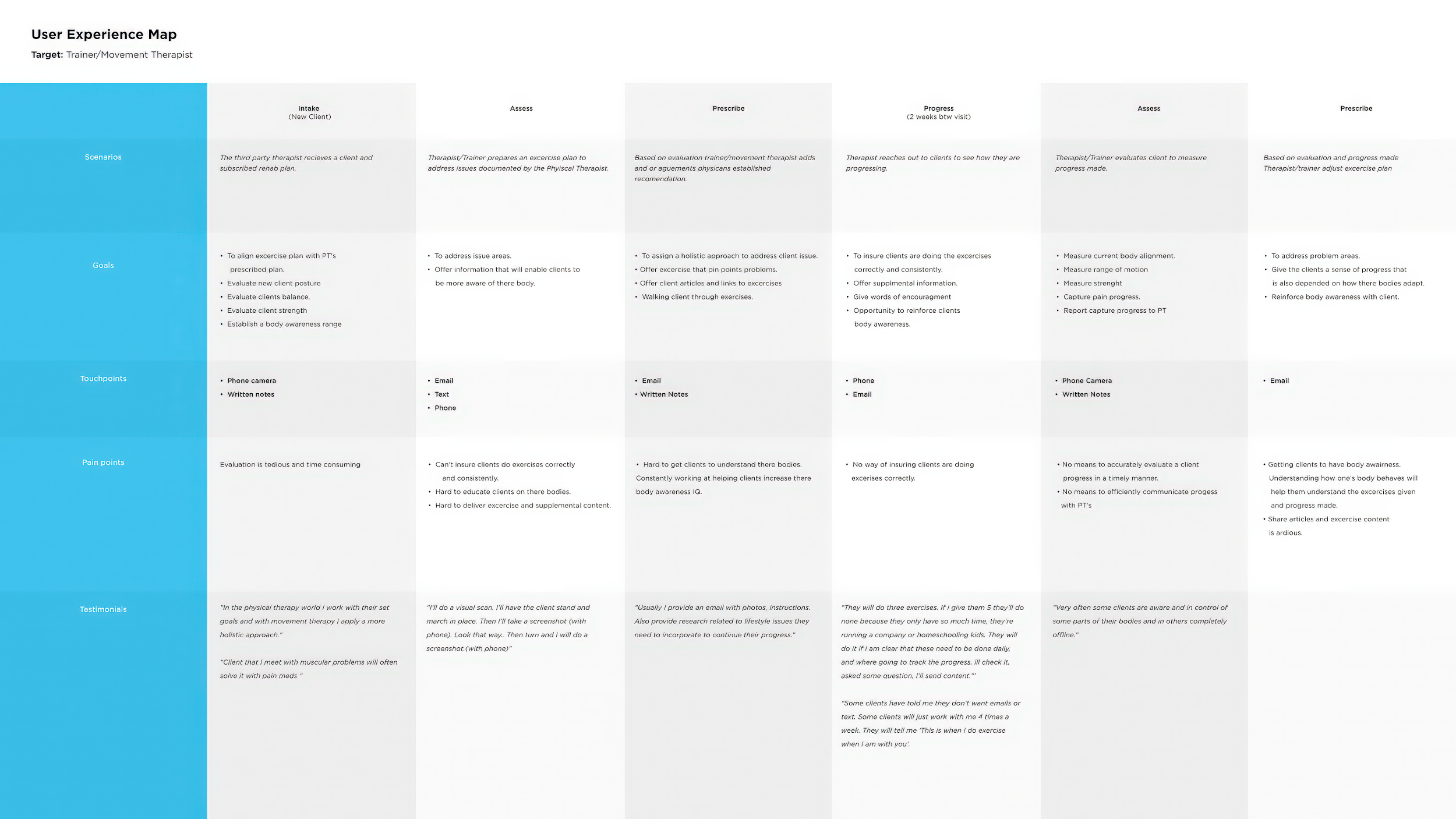
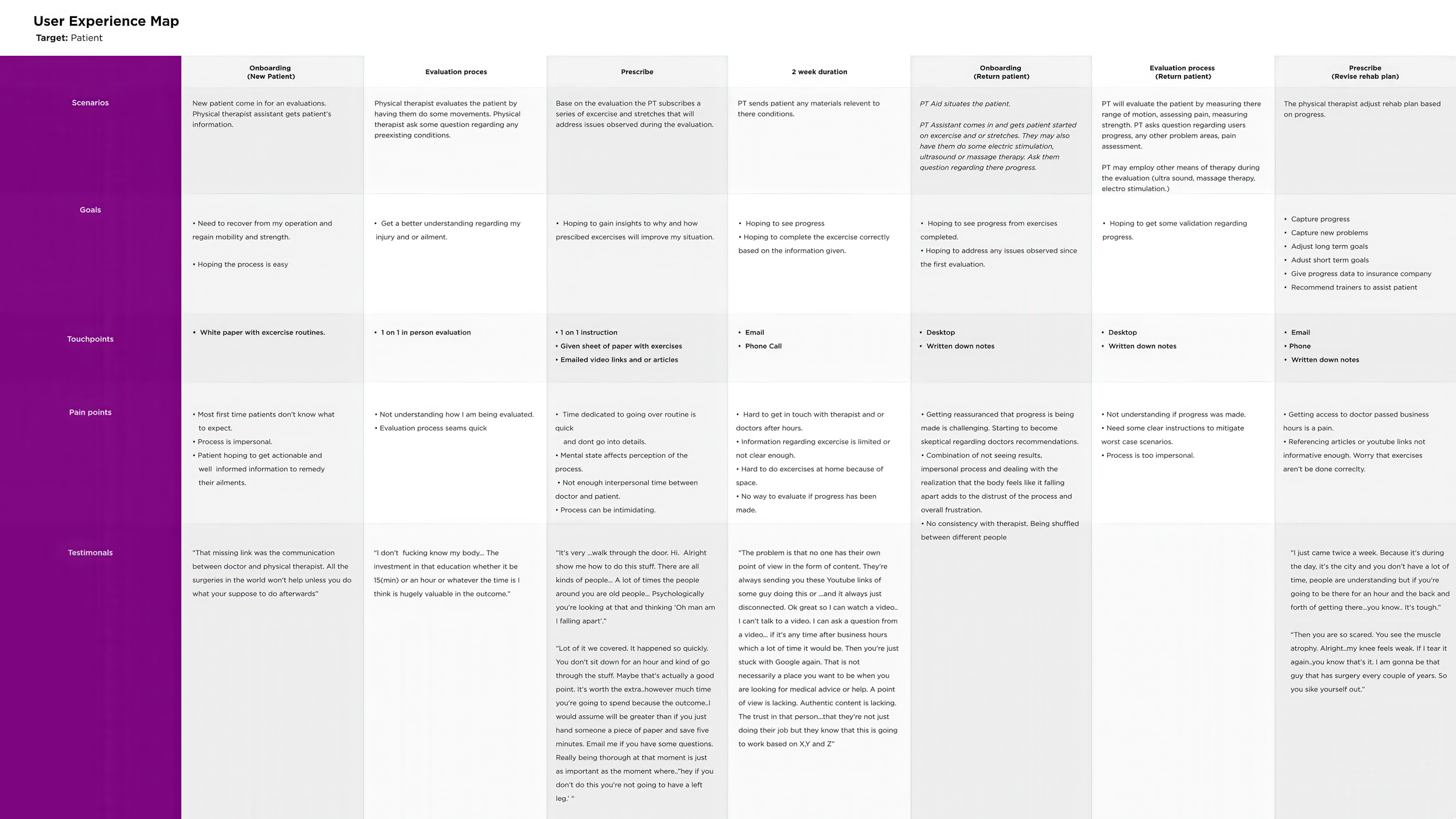
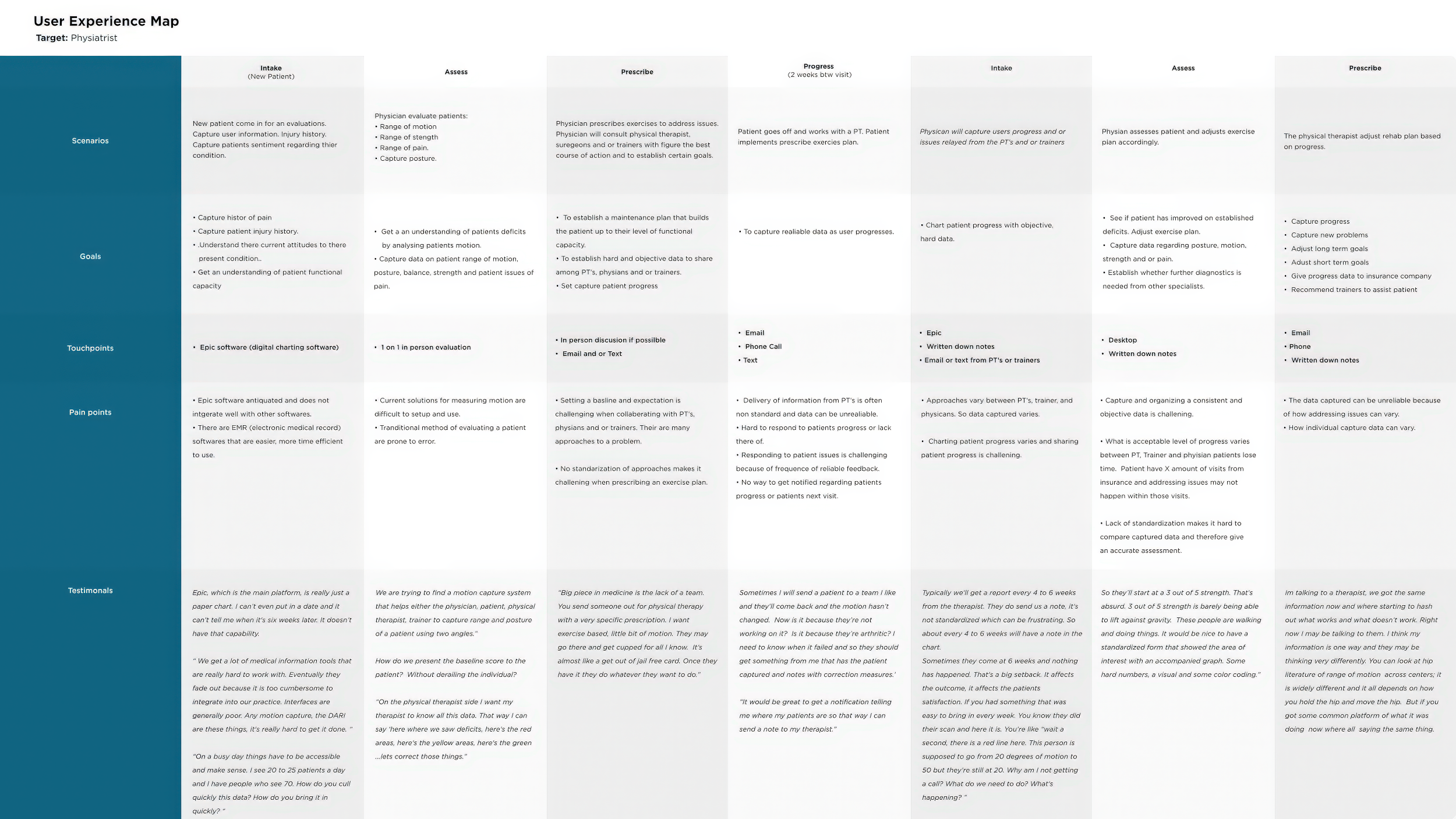
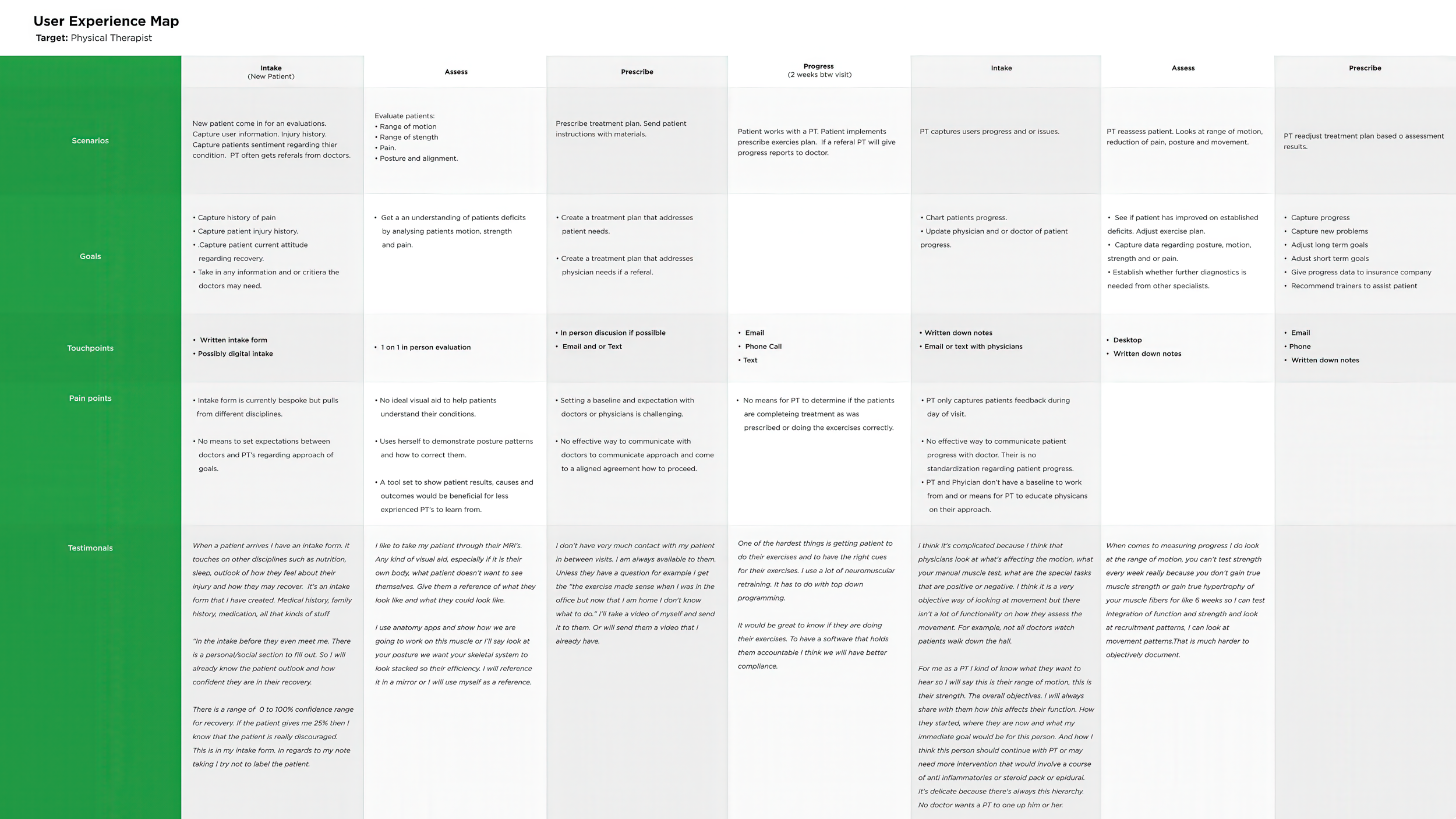
Discovery was conducted remotely due to COVID lock downs — interviews with physical therapists, assistants, trainers, and patients surfaced the pain points and friction embedded in the rehab journey. Those insights fed into personas, experience maps, and a data visualization I developed called the "physical therapy cycle," which mapped four core stages: intake, assessment, prescribe, and progress. A visual journey map was also created to highlight key moments within the critical first two months of engagement — a window that proved pivotal for user adoption and system calibration. A competitor audit and user journey pattern analysis rounded out the phase, directly informing the product's initial use cases and design direction.
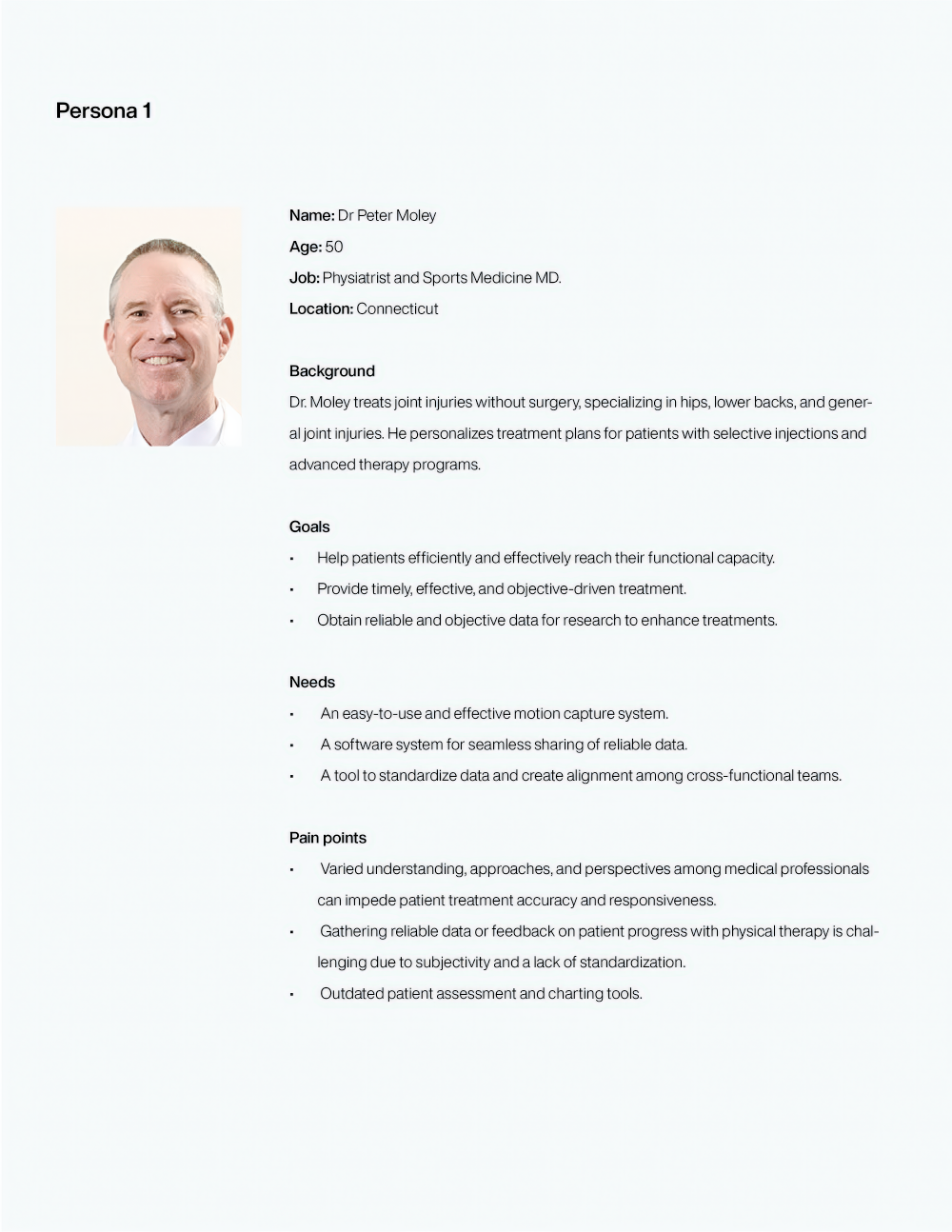
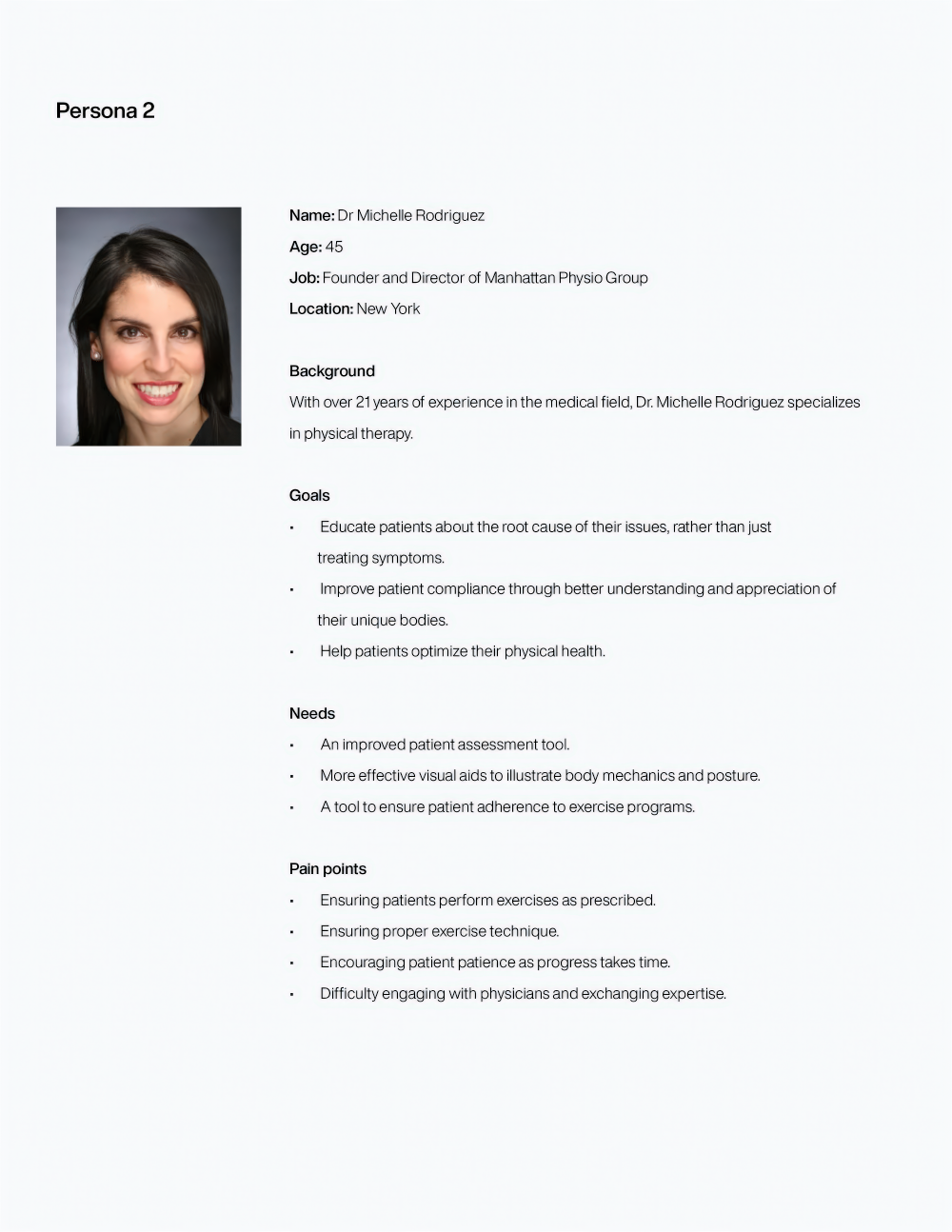
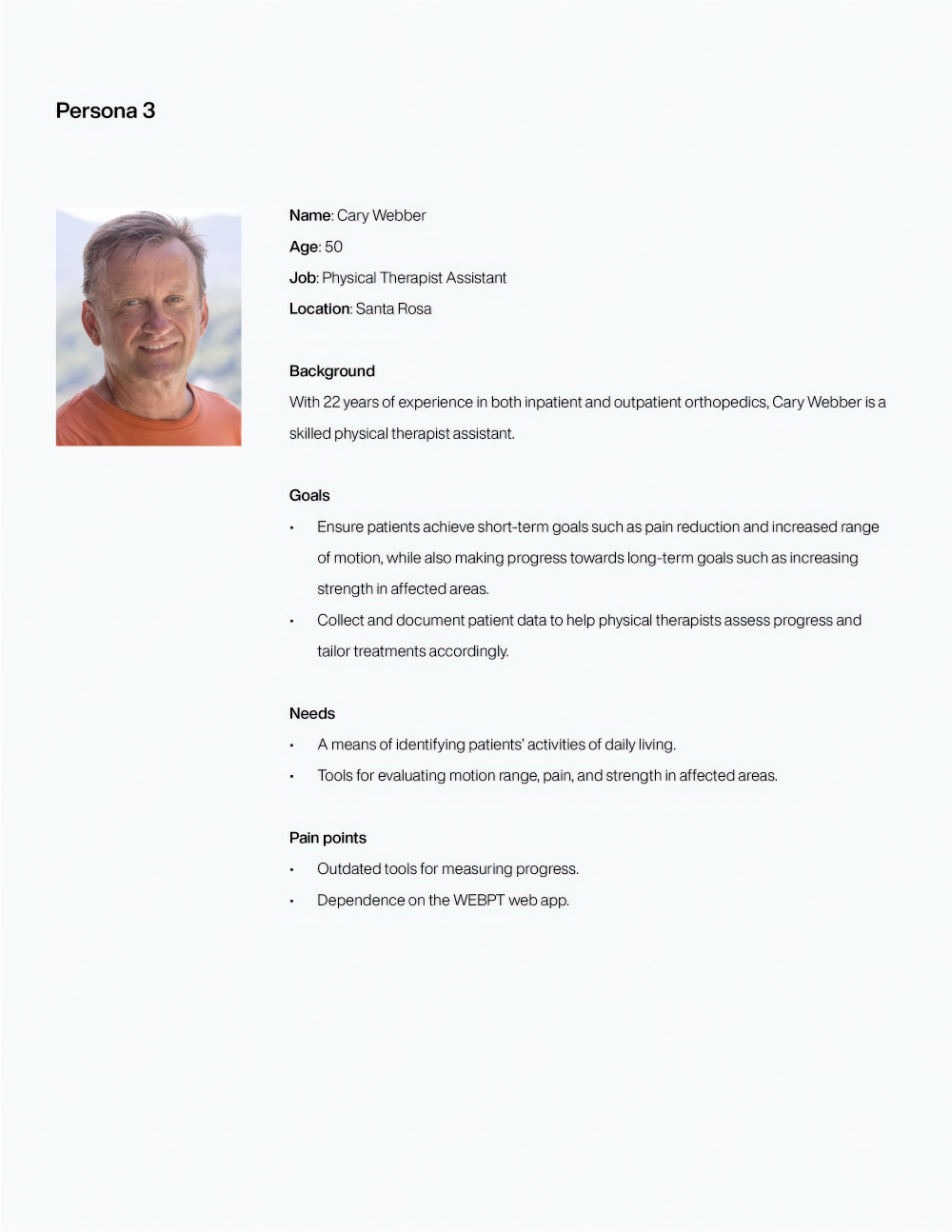
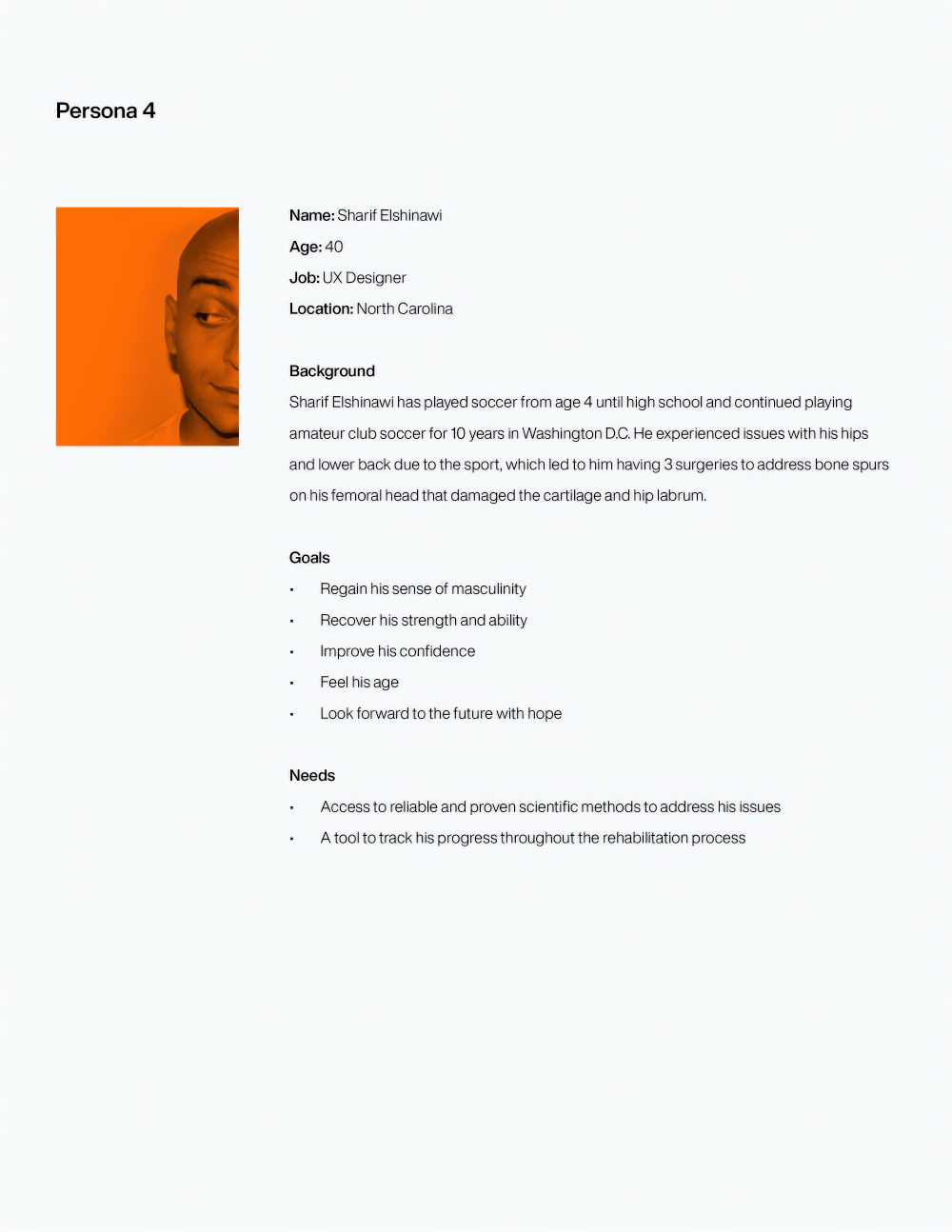
Insights & Opportunities
Discovery surfaced significant opportunities across both sides of the experience — physical therapists and patients. While the initial brief focused on the PT workflow, the research made a compelling case for a UX strategy that addressed both audiences. These insights shaped the design and functionality of the iOS app from the ground up.
Supporting Critical Moments for Physical Therapists
Streamlined Setup and Ease of Use
Simplify the intake process through intuitive forms and patient charting, with seamless integration into existing systems for low-friction adoption.Enhanced Patient Management and Charting
Deliver comprehensive volumetric scans and data-rich charts to strengthen patient care, and equip specialists with tools to monitor progress and flag concerns early.Data and Idea Exchange for Improved Outcomes
Create a collaborative platform enabling physical therapists and physicians to share expertise and surface reports in a format that travels easily across care teams.
Addressing Critical Moments for Patients
Building Trust and Managing Expectations
Use intelligent, interactive visual aids to establish credibility and set realistic expectations around recovery timelines.Education and Feedback
Provide content that deepened patients' understanding of their bodies and the recovery process, supported by feedback, input, and tracking features to keep them actively engaged.Promoting Body Maintenance and Optimization
Surface lifestyle and optimization content to encourage patients to think beyond recovery and take ownership of their long-term physical well-being.
Outcome
The discovery phase delivered more than MVP direction — it revealed how Phy could be positioned for the long term. The research pointed toward a platform with the potential to become a foundational medical record system, with room to expand well beyond its diagnostic core. Those insights fed directly into the mobile UX work that followed.
Ultimately, hardware limitations with the LiDAR sensor and other technical constraints led Phy to pivot away from the mobile app toward a dedicated hardware platform. The product never shipped in its original form — but the discovery work was rigorous, the strategic direction was sound, and the thinking it produced remained relevant through every iteration that followed.